Saxony-Anhalt Universities Overhaul Security for International Research
Universities across Saxony-Anhalt are overhauling security protocols for international research, moving to shield sensitive data and intellectual property from foreign espionage.
The shift marks an end to an era of unchecked academic openness, according to an MDR report from November 28, 2026.
Researchers must now work in a high-stakes environment where fields like artificial intelligence, quantum computing, and biotechnology have become targets. The Federal Office for the Protection of the Constitution warned in its 2025 report that China is employing a systematic strategy to harvest technology for its own military and economic expansion.
“This is not meant to exclude cooperation.”
Institutions are implementing rigorous vetting for new hires. Before sharing security-sensitive knowledge with partners in China, Iran, or Russia, projects must now undergo a formal risk assessment. Although the Ministry of the Interior for Saxony-Anhalt confirmed that no formal security clearances for university staff have been processed in the last three years, individual researchers report that participation in specific projects is increasingly blocked by background checks or embargo regulations.
The academic culture is shifting away from reliance on non-European cloud providers, fueled by fears that foreign authorities could gain access to research data. To counter this, universities in Saxony-Anhalt are rolling out internal cloud infrastructure for secure storage.
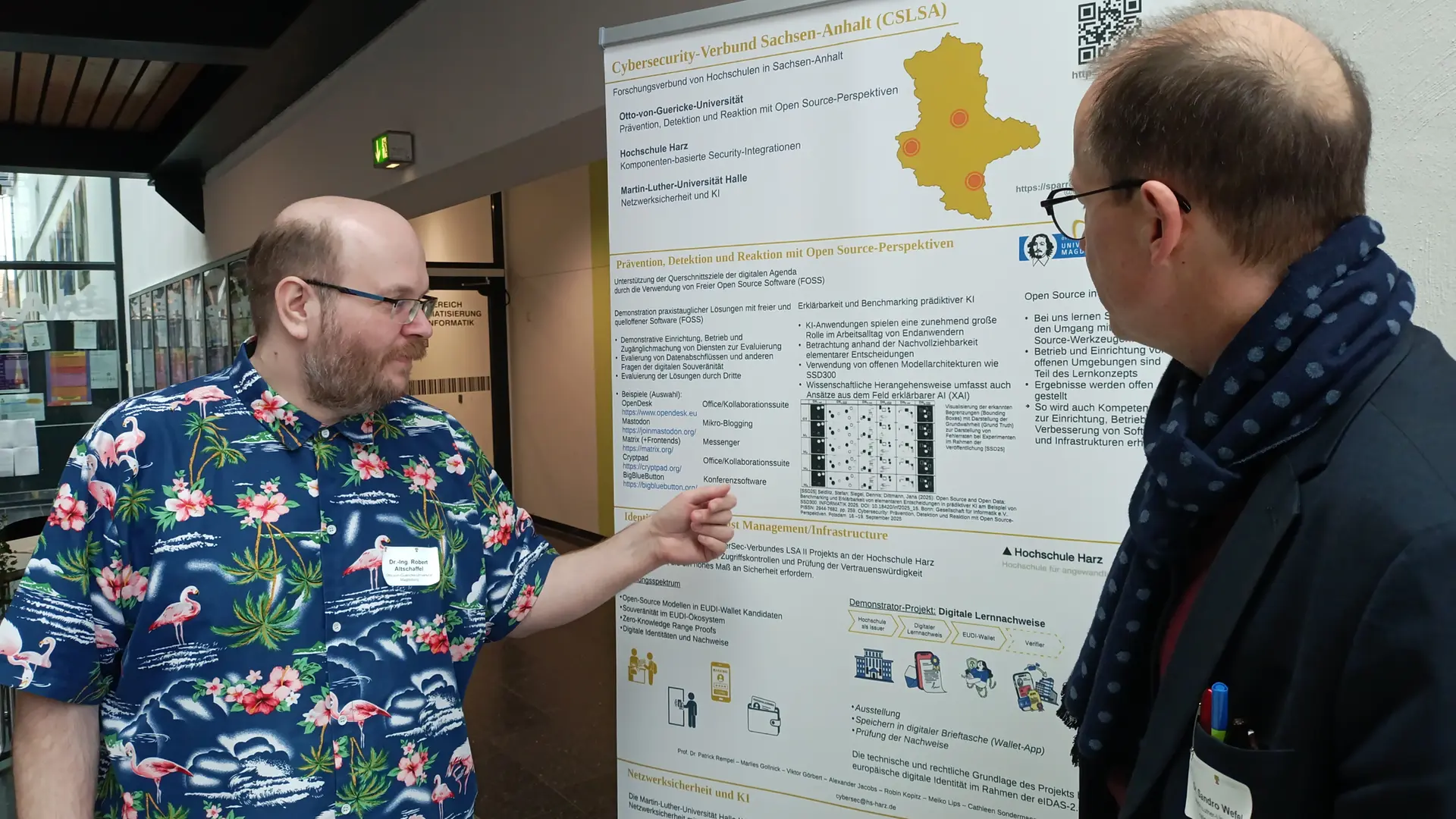
“Whoever works on digital sovereignty in computer science, for example, does not make friends everywhere in the world,” said Robert Altschaffel, a computer scientist at Otto-von-Guericke University Magdeburg, according to MDR.
International travel habits are also cooling. Andreas Nürnberger, a computer science professor at the University of Magdeburg, said some colleagues now avoid travel to the United States due to the risk of device inspections at the border. Researchers are now under instruction to scrub laptops of sensitive information before leaving for any non-European business trip.
The pressure to secure vulnerabilities in cybersecurity has led some researchers to suppress their own findings. Experts fear that publicly released data could be weaponized by artificial intelligence to facilitate cyberattacks.
“Then we restrict ourselves,” said Sandro Wefel, a computer scientist at Martin Luther University Halle-Wittenberg.
“Not everything we know is published,” Wefel added.
The federal government is moving to formalize this oversight through a National Platform for Research Security, which will embed security authorities directly into the academic pipeline. While the initiative has sparked anxiety over bureaucratic creep and the erosion of academic freedom, Thomas Wünsch, state secretary in the Ministry of Science for Saxony-Anhalt, insisted that his office does not intend to legitimize or control international partnerships.
“If we were to position ourselves autonomously, that would be the death of every new discovery,” said Wünsch.