Saudi Stock Market TASI Dips Amid Lower Trading Volume
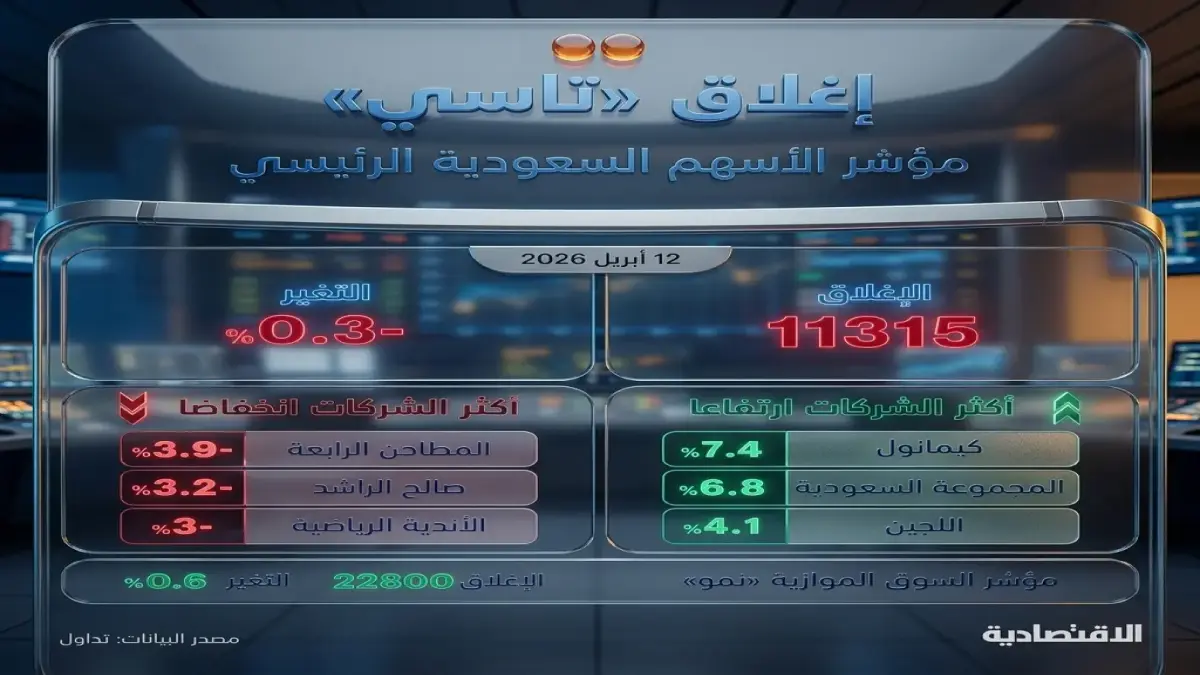
Saudi Arabia’s Tadawul All-Share Index (TASI) slipped 0.25% to close at 11,314.64 on April 12, 2026. Driven by selling pressure in key sectors and the collapse of US-Iran negotiations, the market saw trading values drop to 3.4 billion SAR, reflecting heightened geopolitical anxiety and short-term liquidity shifts.
Geopolitical friction is rarely a quiet catalyst. When high-stakes diplomatic talks end without a deal, institutional investors don’t wait for a press release to react; they pivot. The failure of US-Iran negotiations created an immediate risk-off sentiment, triggering a cascade of sell orders that weighed heavily on the Saudi equity landscape.
This volatility exposes a critical vulnerability for mid-to-large cap enterprises: the inability to hedge against sudden diplomatic ruptures. As market sentiment swings, firms are increasingly relying on enterprise risk management providers to insulate their balance sheets from the shockwaves of regional instability.
The Anatomy of a Market Slide
The numbers share a story of cautious retreat. According to data from the Saudi Exchange (Tadawul), the index shed 28.53 points, closing the session at 11,314.64. While a 0.25% drop might seem marginal on a surface level, the underlying liquidity metrics suggest a deeper hesitation. Trading value plummeted to 3.4 billion SAR—a 36% decline that indicates a significant withdrawal of active capital from the floor.
Market breadth was decisively negative. Out of the stocks traded, 156 finished in the red, while only 100 managed to post gains. Ten remained unchanged. This disparity confirms that the selling pressure wasn’t isolated to a few outliers but was a systemic reaction across the board.
The total market capitalization now stands at 9.82 trillion SAR. For a market calculated via a free-float market cap weighting, these shifts in the heavyweights can distort the perception of stability for smaller listed entities.
Macro Drivers: Why the Market Flinched
The reaction to the US-Iran deadlock is a textbook example of how external political variables dictate internal market liquidity. Three primary factors drove this session’s trajectory:
- Diplomatic Deadlock: The termination of US-Iran talks without a resolution injected immediate uncertainty into the energy and logistics corridors, prompting institutional desks to trim their exposure.
- Sectoral Selling Pressure: Vital sectors faced concentrated selling, overriding the gains made by a handful of high-performing stocks.
- Liquidity Contraction: The drop in trading value to 3.4 billion SAR suggests a “wait-and-spot” approach from major players, reducing the available liquidity for price discovery.
When diplomatic channels close, the legal implications for international trade agreements and cross-border investments multiply. Corporations are now scrambling to review their contractual obligations, frequently engaging corporate law firms to navigate the complexities of sanctions and trade volatility.
Winners and Losers in the Volatility
Even in a retreating market, certain pockets of resilience emerged. The session saw a handful of companies defy the trend, providing a glimpse into where investors are still finding value. Kayanol (2001) led the surge with a 7.37% increase, closing at 9.18 SAR. The Saudi Group (2250) followed closely, climbing 6.80% to reach 14.44 SAR.

Other notable gainers included Alujain (2170), which rose 4.09% to 27.98 SAR, and Sadarat (4140), which climbed 3.90% to 2.40 SAR. Sadarat also emerged as the most active stock of the day, with a staggering 25.85 million shares changing hands.
The downside was equally stark. The Fourth Mills (2286) took the hardest hit among the top losers, sliding 3.85% to 3.75 SAR. Al-Andiya for Sports (6018) fell 2.97% to 6.54 SAR, and Al-Aseel (4012) dropped 2.95% to 3.62 SAR. In the luxury and retail space, Almajed Oud (4165) retreated 2.90% to 157.30 SAR, while Musk (2370) dipped 2.51% to 28.76 SAR.
This divergence suggests that while the macro environment is bleak, sector-specific fundamentals still drive idiosyncratic gains.
The Fiscal Outlook for Q2 2026
The current dip is more than a one-day anomaly; it is a signal of the volatility that will likely define the upcoming fiscal quarters. Investors are no longer trading on growth projections alone—they are trading on geopolitical risk premiums. The basis points lost today are a reflection of a market pricing in a more unstable regional environment.
For CFOs and treasury managers, the priority has shifted toward capital preservation and liquidity optimization. The current environment demands a sophisticated approach to portfolio rebalancing, often requiring the intervention of strategic financial advisory firms to mitigate the impact of equity devaluation.
The TASI is currently navigating a narrow corridor between 10,193.83 and 11,809.40 over its 52-week range. While the index remains well above its yearly low, the sudden contraction in trading volume suggests that the market is bracing for further shocks.
The trajectory of the Saudi market will depend on whether the current selling pressure is a temporary correction or the start of a broader trend of capital outflow. In an era of “shock” catalysts, the only real defense is a vetted network of professional partners. To find the institutional support necessary to navigate these headwinds, explore the World Today News Directory for a curated list of global B2B experts.
Worth a look
- SpaceX shares rise as Morgan Stanley analyst sets $300 price target
- Indigenous Leaders Express Cautious Optimism Toward Parti Québécois Mandate
- Ivan Demidov Out 2-4 Weeks With Lower-Body Injury: Montreal Canadiens Update (newsdirectory3.com)
- SpaceX Stock Climbs Over One Percent Following AI Unit Rebrand (time.news)