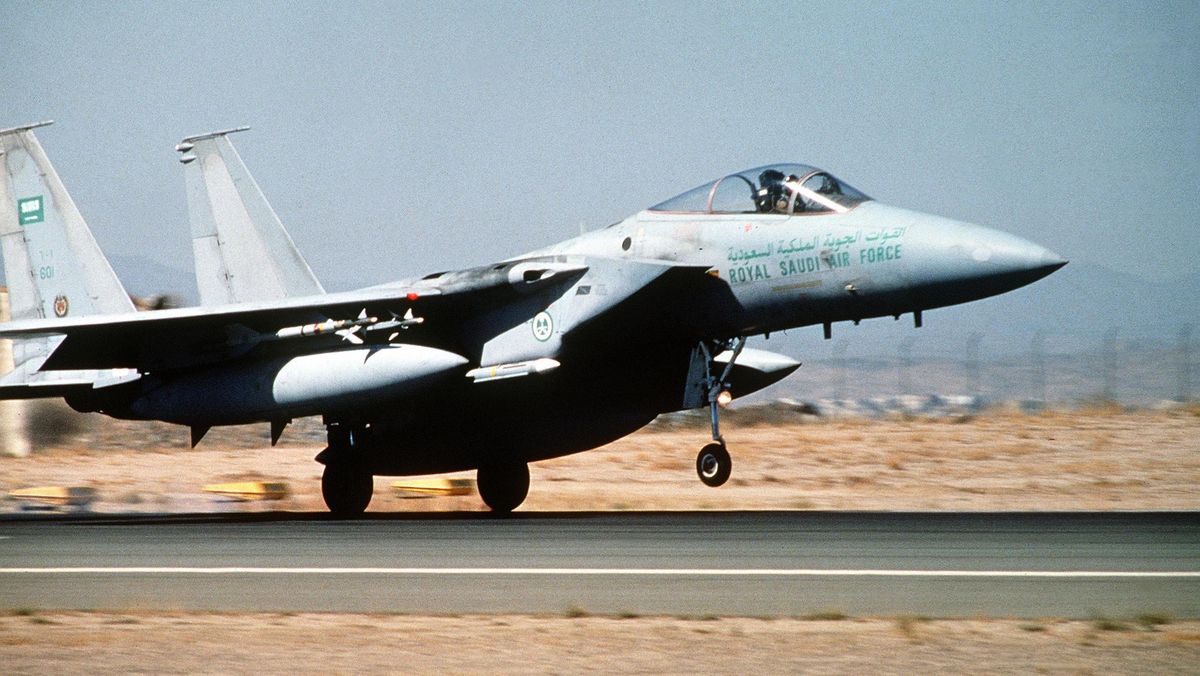
Saudi Arabia Approves $371.2 Billion 2027 Budget With Record Military Spending Amid Houthi Conflict
Arab Saudi has approved a 2027 state budget of 1.392 trillion riyals, or approximately $371.2 billion, to bolster national defense and infrastructure amid an ongoing conflict with Houthi rebels.
The budget was authorized during a cabinet meeting in Riyadh on Tuesday, November 24, led by Crown Prince and Prime Minister Mohammed bin Salman, CNN Indonesia reported.
The government allocated 263 billion riyals—more than Rp1,000 trillion—to the military, marking the largest single expenditure in the 2027 fiscal plan, according to CNN Indonesia. Mohammed Al Jadaan said that there will be “no price limit or cap” on defense spending if the conflict requires additional resources, as reported by Reuters.
The cabinet approved the spending package as the kingdom faces large-scale regional security threats. During the session, a projectile struck a tower in the King Abdullah Financial District (KAFD), according to internasional. Hours before the impact, the same district hosted the inaugural Security and Innovation Fair, featuring 1,200 teams from 55 countries.

| Category | Value (Riyal) | Value (USD/IDR) |
|---|---|---|
| Total Spending | 1.392 Trillion | $371.2 Billion |
| Military Allocation | 263 Billion | >Rp1,000 Trillion |
| Projected Revenue | 1.2 Trillion | $320.4 Billion |
Non-Oil Sector Stays Positive Despite GDP Drop
Despite a decline in total GDP, Al Jadaan said that the non-oil sector has maintained positive performance throughout the year. He said that the kingdom is “cukup tangguh untuk menahan konflik berkepanjangan” (sufficiently resilient to endure a protracted conflict), according to Mohammed Al Jadaan, Minister of Finance of Saudi Arabia.
He emphasized that the government is relying on fiscal reforms and the expansion of non-oil activities to balance short-term responses with long-term goals.
“Kami telah berinvestasi di muka dalam banyak sistem yang sekarang relevan,” (We have invested upfront in many systems that are now relevant) said Mohammed Al Jadaan, Minister of Finance of Saudi Arabia, according to Metapos.
Government Projects 1.2 Trillion Riyals Revenue for 2027
Mohammed Al Jadaan said that the kingdom’s non-oil sector maintained strong performance despite an overall decline in GDP throughout the year. He said that the country remains “cukup tangguh untuk menahan konflik berkepanjangan” (sufficiently resilient to endure a protracted conflict) while relying on fiscal reforms and infrastructure development to balance immediate responses with long-term objectives.
The government projects 1.2 trillion riyals in revenue for 2027, leaving a forecasted deficit of 50.8 billion riyals. To manage these fiscal pressures, the cabinet has emphasized proactive planning and expanding non-oil activities to maintain development momentum during regional instability.
Route Offers Energy Export Alternative If Hormuz Strait Closes
Following the cabinet session, Crown Prince Mohammed bin Salman stressed the government's resolve to protect "keamanan, kedaulatan, dan aset nasionalnya" (its security, sovereignty, and national assets). He instructed officials to ensure the effective execution of all developmental programs and social services despite the ongoing security threats facing the nation.
Energy Security Infrastructure
The 1,200-kilometer infrastructure transports crude oil from the eastern oil-producing regions to the Yanbu Port on the Red Sea, allowing exports to bypass the strait. The pipeline has a capacity of millions of barrels per day. The network has faced recent physical threats, including an October 26 drone attack on pumping stations attributed to Houthi forces and a November 9 fire in the Madinah province, though the latter did not disrupt operations.
In a statement published by Asharq Al Awsat, the Crown Prince affirmed that the kingdom will protect its interests with “strength and determination.” Regarding the kingdom’s stance on current threats, the Prime Minister stated his commitment to preserve “Keamanan, kedaulatan, dan aset nasionalnya,” (Its security, sovereignty, and national assets) according to Mohammed bin Salman, Crown Prince and Prime Minister of Saudi Arabia.
To support this record $371.2 billion budget, Saudi Arabia is leveraging its status as the world’s second-largest oil producer, a position established since the discovery of petroleum in 1938. By utilizing these vast natural resources, the kingdom maintains the largest economy in the Middle East, which provides the necessary fiscal foundation to sustain high military spending.
Furthermore, the government is actively expanding non-oil activities to diversify its revenue streams, a strategic shift for the nation that has functioned as a G20 major economy. This dual approach of relying on historic energy exports while pursuing modern economic reforms allows the state to balance its extensive defense requirements with long-term developmental goals amid regional instability.