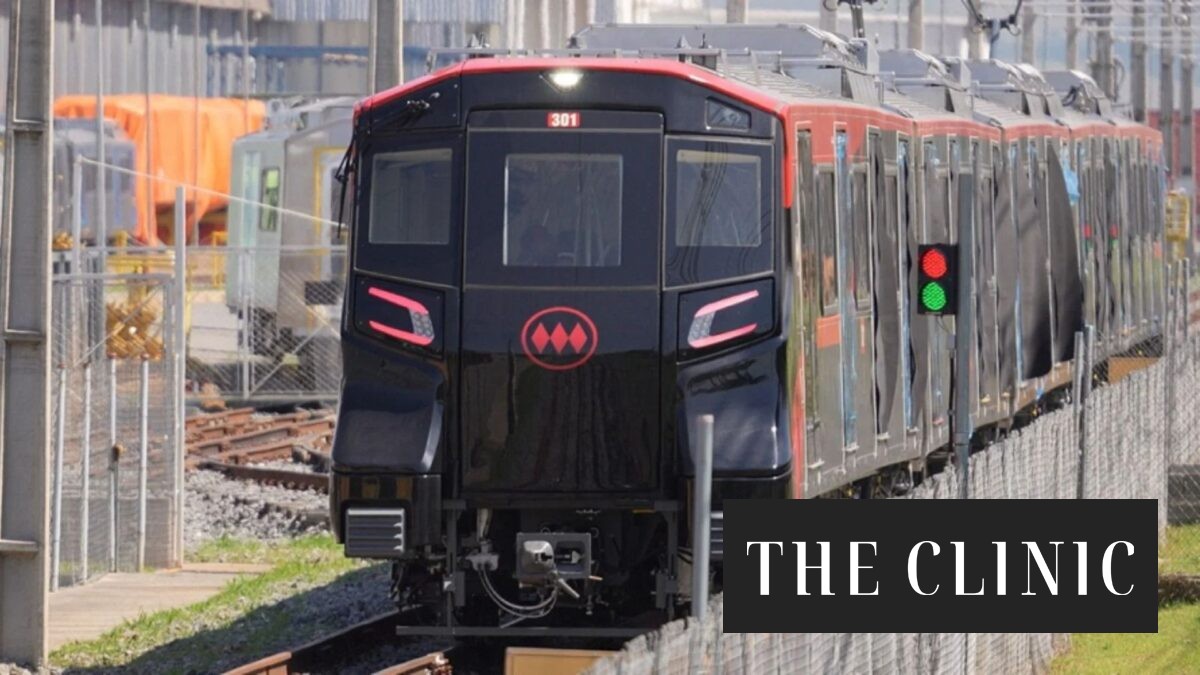
Santiago Metro Line 9 Third Segment Approved by Commission; RCA Expected December
The Environmental Assessment Commission unanimously approved the third segment of Santiago Metro Line 9 on November 19, clearing the final regulatory hurdle for a 9-kilometer extension to Puente Alto that will bring rail service to Bajos de Mena for the first time, according to Metro de Santiago.
The vote allows Metro to proceed toward a formal Environmental Qualification Resolution (RCA) expected in early December, after which preliminary works contracts — currently in public tender — can begin in the first quarter of 2027, Metro de Santiago reported. The segment adds five stations south of the future Plaza La Pintana stop, completing a 27-kilometer, 19-station line linking eight communes.
“These are state projects that transcend governments and will generate a very significant reduction in travel time for residents of Puente Alto, La Pintana and the entire Santa Rosa corridor.”
First trains slated for 2030
Construction on the first two segments is already underway, with global project progress at 5 percent as of October, according to figures Metro provided to La Tercera. The initial 14-kilometer stretch — ten stations between Bío and Plaza La Pintana — targets a 2030 opening, El Mostrador reported.
A second phase in 2032 would extend service four kilometers north to Puente Cal y Canto, where Line 9 will become the network’s first quadruple-transfer station connecting with Lines 2, 3 and 7. The newly approved third phase, reaching Plaza de Puente Alto with a Line 4 transfer, follows in 2033.

| Segment | Stations | Length | Target Opening |
|---|---|---|---|
| Tramo 1: Bío – Plaza La Pintana | 10 | 14 km | 2030 |
| Tramo 2: Santa Rosa/Ñuble – Puente Cal y Canto | 4 | 4 km | 2032 |
| Tramo 3: Plaza La Pintana – Plaza de Puente Alto | 5 | 9 km | 2033 |
Travel time cut by more than a quarter
Metro projects the end-to-end journey between central Santiago and Puente Alto will drop from roughly 48 minutes today to 35 minutes — a 27 percent reduction — once the full line operates. The trip from Plaza La Pintana to the city center would take under 30 minutes, El Mostrador noted.
Daily ridership is estimated at 247,000 weekday trips in the first year, rising to 62 million annually, serving a catchment of about two million residents across Recoleta, Santiago, San Miguel, San Joaquín, La Granja, San Ramón, La Pintana and Puente Alto.
Third segment costs US$787 million
The third segment alone carries a US$787 million price tag, Revista Electricidad reported, citing the Environmental Impact Study filed in May 2025. Metro estimates the entire project will generate more than 22,000 jobs across its construction phases.
On the 14-hectare La Pintana worksite, foundations for five operational buildings are advancing and the main tunnel link has reached 280 meters excavated — 75 percent complete — while shaft and gallery digging continues in San Ramón and La Granja, LOS40 detailed.
“We are not just facing a good transport story; we are facing an act of social justice for the south of Santiago.”
Gonzalo Cruces, the Metropolitan Region’s Environment Secretary, told the Commission during the session.
Historical arc from Piñera announcement to Boric redesign
Originally unveiled in President Sebastián Piñera’s 2018 state-of-the-nation address, the alignment was substantially revised under President Gabriel Boric in 2023 to prioritize historically underserved neighborhoods such as La Legua, La Pintana and Bajos de Mena, The Clinic reported. The project entered environmental review in three separate tranches to avoid delaying segments already in advanced permitting.
Santiago Metro opened its first line on 15 September 1975 under the military government, becoming Chile’s first rapid transit system. Originally planned in the 1960s with five lines totaling roughly 60 kilometres by 1990, expansion was halted by the 1982 economic crisis and the 1985 earthquake that diverted funds to reconstruction.
Today the network spans seven lines, 143 stations and 149 kilometres, carrying about 2.5 million passengers daily. It ranks as the second largest metro system in Latin America after Mexico City and was named the best underground system in the Americas in 2012.

With the RCA expected in early December, Metro aims to mobilize preliminary crews by March 2027, marking the start of physical work on the final link to Puente Alto, according to El Mostrador.