
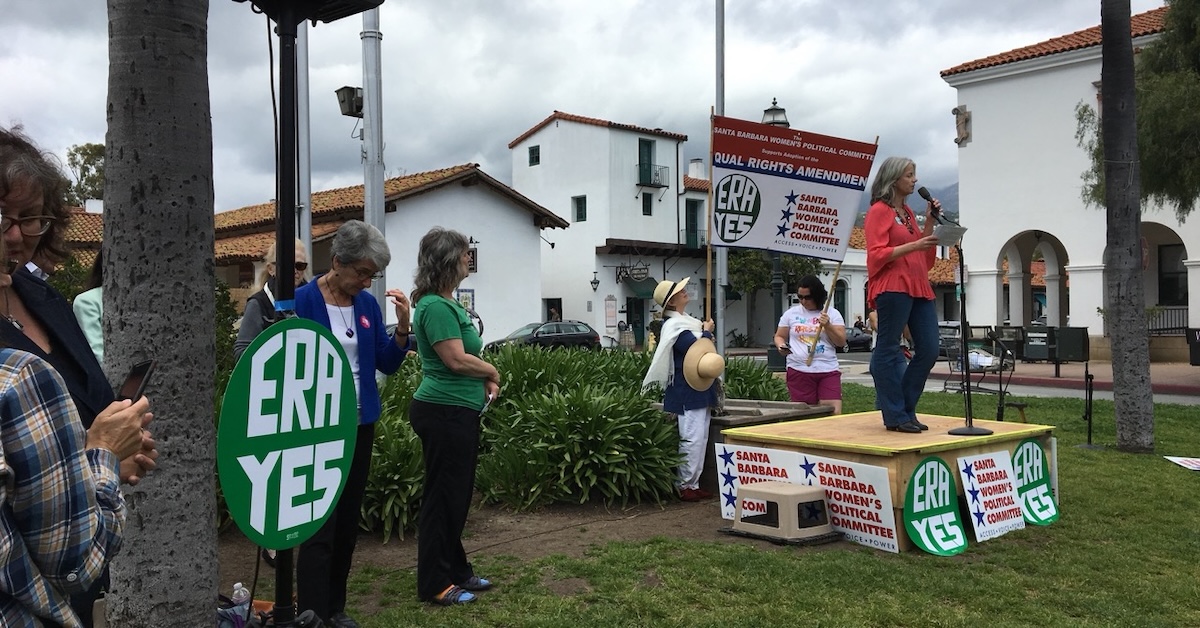
Santa Barbara Advocates Renew Push for Equal Rights Amendment Amid Legal Debate
Santa Barbara’s Women’s Political Committee is mobilizing to certify the Equal Rights Amendment amidst 2026 legal ambiguity. This constitutional uncertainty creates tangible compliance liabilities for multi-state employers. Corporate counsel must navigate divergent state statutes while managing ESG exposure. The fiscal stakes involve potential litigation costs and human capital valuation risks.
The gap between implied equality and codified law isn’t just social rhetoric; it’s a balance sheet risk. When constitutional protections remain unresolved, corporate liability exposure expands. Multinational corporations operating across state lines face a fragmented regulatory landscape. Compliance costs escalate as legal teams scramble to interpret conflicting statutes. This uncertainty demands proactive risk mitigation strategies rather than reactive legal defense.
California’s Civil Rights Department reported recently that women and people of color remain disproportionately concentrated among the lowest-paid workers across nearly eight million employees surveyed. This data point signals more than a social disparity; it indicates a systemic inefficiency in human capital allocation. Companies ignoring these metrics face heightened scrutiny from institutional investors. Fiduciary duties now extend to workforce equity as a material financial factor.
Legal scholars remain split on whether the amendment can still be adopted without renewed congressional action. Some argue that the Constitution imposes no binding ratification deadline. Others contend the expired timeline renders the amendment legally void unless Congress restarts the process. This judicial ambiguity creates a fertile ground for litigation. Plaintiffs’ attorneys are already positioning themselves to leverage state-level equity laws in the absence of federal clarity.
Corporate governance structures must adapt to this volatility. Boards of directors are increasingly held accountable for human capital management outcomes. Shareholder proposals targeting pay equity gaps are gaining traction in proxy seasons. Ignoring these trends invites activist intervention. The cost of settling discrimination suits often exceeds the investment required for proactive compliance audits. Smart capital allocates resources to prevent liability before it materializes.
Three specific market shifts define the current landscape for enterprise leaders:
- Litigation Risk Escalation: Without a federal constitutional floor, plaintiffs rely on a patchwork of state laws. This inconsistency increases defense costs for national employers. Legal teams must maintain parallel compliance frameworks for different jurisdictions. The variance in statutory protections creates arbitrage opportunities for litigants.
- Talent Acquisition Valuation: Top-tier talent prioritizes employers with verified equity commitments. Recruitment costs rise when brand reputation suffers due to perceived regulatory lag. Human resources departments must integrate pay equity data into retention strategies. Failure to codify internal equality standards risks losing competitive advantage in labor markets.
- ESG Scoring Volatility: Environmental, Social, and Governance ratings heavily weigh labor practices. Uncertainty around federal rights impacts the ‘S’ component of ESG scores. Lower ratings increase the cost of capital for sustainability-linked bonds. Asset managers utilize these metrics to determine portfolio weighting.
Institutional investors view regulatory uncertainty as a material risk factor. BlackRock’s Investment Stewardship team consistently highlights board oversight of human capital as a key voting issue. Their public guidelines emphasize that companies must demonstrate robust management of workforce diversity and pay equity. Ignoring these expectations risks voting against management during annual meetings. Capital flows toward entities with clearer governance structures.
Regulatory ambiguity is a tax on efficiency. Companies that wait for federal clarity before adjusting compliance frameworks will find themselves paying a premium in legal fees and reputational damage.
The Santa Barbara Women’s Political Committee says that the current political climate complicates the path forward. Advocates note they must not let the effort fade while political opposition remains strong. This persistence signals a long-term pressure campaign rather than a transient news cycle. Corporate strategists should treat this as a enduring variable in their risk models. Preparation requires engaging with specialized corporate law firms capable of navigating constitutional ambiguities.
Recent data suggests the gap in regard to equal pay remains wide. Locally, the Santa Barbara County Commission for Women has been promoting the state’s Equal Pay Pledge. This coalition includes more than 200 employers committed to narrowing wage disparities. Participation in such pledges serves as a defensive mechanism against future litigation. It demonstrates good faith efforts to regulators and courts. Documentation of these efforts becomes critical evidence during discovery phases.
Aside from pay equity, the ERA carries a range of potential implications that have pulled it into broader political conflicts. Its potential implications for abortion law remain a flashpoint. Opponents have raised questions about transgender participation in athletics. These cultural battlegrounds translate into operational headaches for HR departments. Policy manuals require constant updates to reflect shifting legal interpretations. Consistency across regions becomes nearly impossible without federal standardization.
Enterprise leaders should consult HR compliance technology providers to automate monitoring of these divergent statutes. Manual tracking of state-level amendments introduces human error. Automated systems flag discrepancies in real-time. This technological layer reduces the burden on internal legal counsel. It allows management to focus on strategic growth rather than defensive posturing.
For committee members, readiness means narrowing what they see as the gap between the public perception of equality and its constitutional reality. They aim to sustain awareness now in hopes of future legislative action. This long-game approach mirrors activist investment strategies. Pressure builds slowly until a tipping point forces change. Corporations caught off guard by this shift face abrupt operational disruptions.
The minute that political leadership changes, advocates hope to be ready to pass the amendment. This potential velocity of change requires agile corporate governance. Static policies become liabilities in dynamic regulatory environments. Management teams must build flexibility into their compliance architectures. Resilience depends on the ability to pivot quickly when federal standards shift.
Action that would make equality not implied, but written into the law of the land remains the ultimate goal. The United States remains one of the last developed nations without such a provision. This outlier status complicates international operations for US-based multinationals. Global subsidiaries often operate under stricter equity mandates than the parent company. Harmonizing these standards requires sophisticated ESG advisory services.
Market trajectory suggests increased volatility in labor-related litigation over the coming fiscal quarters. Investors should monitor companies with significant exposure to single-state jurisdictions lacking robust equity laws. Diversification of operational footprint mitigates this specific regulatory risk. The World Today News Directory connects enterprises with vetted partners capable of navigating these complexities. Finding the right B2B support ensures stability amidst constitutional uncertainty.