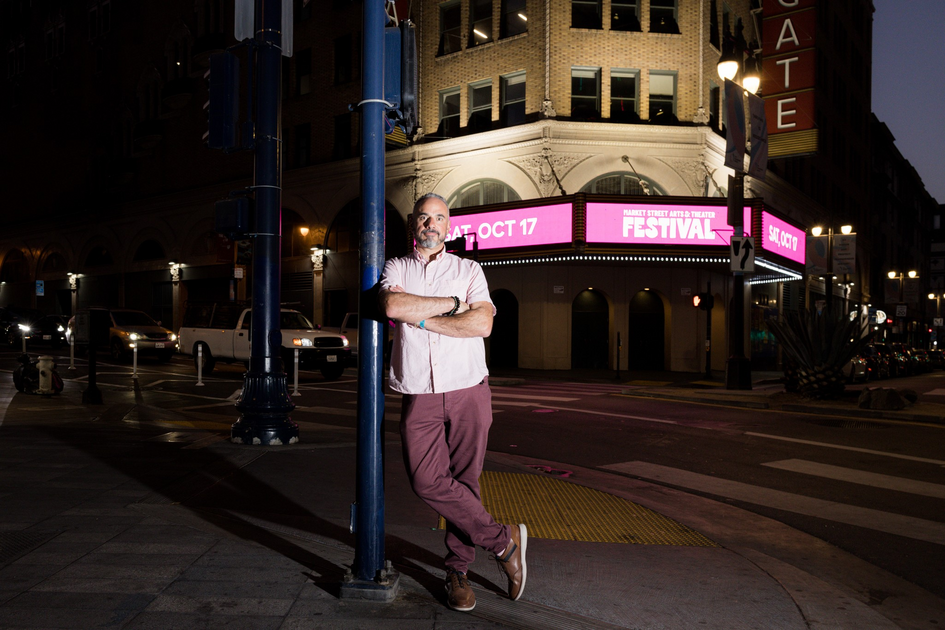
San Francisco’s Mid-Market Bets on Arts Festival to Revive Neighborhood
On Oct. 17, Mick Glenn followed the sound of a cabaret band playing on the granite steps of The Hibernia bank building, stepping out onto Market Street with his dog Choco to witness an ambitious test of San Francisco’s Mid-Market neighborhood. Across six blocks and 35 locations, the inaugural Market Street Arts & Theater Festival sought to prove that local arts could anchor a long-awaited neighborhood recovery after years of retail and tech departures.
A Neighborhood Bets on Live Performance
For years, Mid-Market lagged behind Union Square and Yerba Buena in capturing downtown foot traffic. The recent closure of the San Francisco Centre mall further compounded a sense of urban isolation.
City leaders point to the district’s deep cultural infrastructure as a vital economic engine. Supervisor Bilal Mahmood noted that Mid-Market represents the largest theater district outside of New York City, drawing up to $1 billion annually. However, pandemic disruptions hit local venues hard, with concert bookers frequently routing major touring acts to Oakland instead of historic spaces like The Warfield. Street conditions and safety concerns along the central blocks have continued to complicate efforts to attract evening crowds.
High-Profile Headliners and Street Events Draw Cohesive Crowds
The festival featured high-profile headliners including Jessie Ware at The Warfield and Sara Bareilles at the Bill Graham Civic Auditorium, alongside street-level happenings such as drag queen D’Arcy Drollinger riding the Hotsy Totsy Cable Car down Market Street. While afternoon events occasionally dispersed indoors, the evening hours brought cohesive energy as crowds shifted between DJ sets, salsa, and cabaret.
Funding for the initiative arrived via a Svane Family Foundation Culture Forward grant, backed by the Office of Economic and Workforce Development. Additional financial support came from the Downtown Development Corporation, which also funded the grant, expanding its investment in tourism- and retail-focused projects.
Infrastructure and the Future of Local Artists
Stakeholders emphasize that revitalizing the district requires permanent solutions for artists beyond weekend programming. Affordable housing and workspace remain critical prerequisites for retaining creative talent in the neighborhood. Projects like Warfield Commons, which provides below-market-rate workspaces, and city-backed housing developments near Market and Gough Streets aim to alleviate those financial pressures.

Commercial spaces are also integrating cultural programming into their daily operations. At the Ikea building on Market Street, the Ingka Group partnered with organizers to host ballet dancers and an art exhibition by the artist collective in the third-floor atrium. For longtime theatergoers like Amy and Bob Wong, who have attended shows on Market Street for two decades, the festival offered a reassuring glimpse of the avenue’s potential, though safety concerns during evening hours remain a factor in their attendance habits.
Disclaimer: The views and cultural analyses presented in this article are for informational and entertainment purposes only. Information regarding legal disputes or financial data is based on available public records.