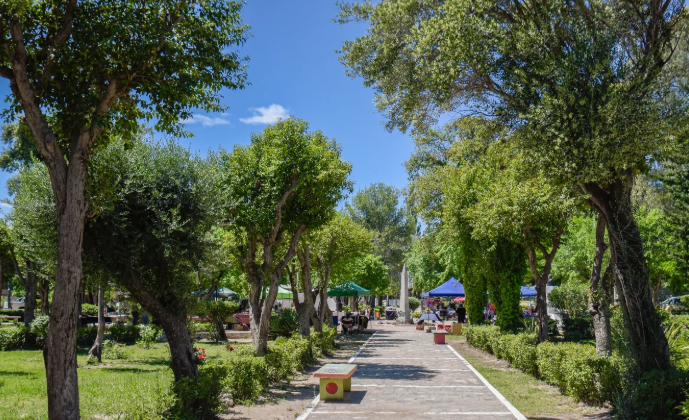
San Francisco del Monte de Oro Producers’ Fair
The municipality of San Francisco del Monte de Oro is launching a regional fair for producers, artisans and entrepreneurs to stimulate the local economy. By connecting regional creators directly with the community and visiting tourists, the event aims to foster sustainable commerce and preserve the cultural identity of the San Luis province.
For the small-scale producer in the heart of the Sierras Pampeanas, the distance between the farm and the consumer is often measured in more than just kilometers. It is measured in lost margins, intermediaries who swallow profits, and a systemic lack of visibility.
This is the fundamental problem that the San Francisco del Monte de Oro fair seeks to solve. It isn’t just a weekend market. it is a strategic intervention in a fragmented local supply chain.
The Economics of Direct Trade in San Luis
Regional fairs serve as a critical pressure valve for rural economies. In provinces like San Luis, where the geography is defined by rugged terrain and isolated pockets of agricultural productivity, the ” Feria” model bypasses the traditional wholesale bottleneck. When a producer sells an agroecological product directly to a tourist or a neighbor, they capture 100% of the value of their labor.
This shift is essential for the survival of family-run enterprises. However, the transition from a subsistence producer to a viable micro-entrepreneur is fraught with logistical hurdles. Many of these artisans possess world-class skills but lack the formal business structures required to scale.

This is where the gap between “craft” and “commerce” becomes a chasm. To bridge it, many local creators are beginning to seek professional small business consultants to help them transition from informal selling to registered, scalable operations.
The municipality’s role in organizing these events provides the physical infrastructure, but the long-term success of these entrepreneurs depends on their ability to navigate the legalities of trade. This includes everything from health certifications for food products to the registration of artisanal brands.
“The integration of regional producers into direct-to-consumer circuits is the most effective way to combat rural exodus and ensure that the economic benefits of tourism remain within the community.”
Beyond the Stall: The Macro-Economic Impact
The impact of these fairs extends far beyond the immediate sales of honey, textiles, or organic produce. They act as a catalyst for what economists call “territorial development.” By creating a centralized hub of activity, the municipality encourages secondary spending in local transport, hospitality, and services.

Argentina has a long history of promoting the “Economía Social” (Social Economy), a model that prioritizes people and the environment over the maximization of profit. The Argentine Ministry of Agriculture has frequently emphasized the importance of short-circuit markets to reduce the carbon footprint of food transport and ensure food security at the local level.
the National Agricultural Technology Institute (INTA) has long advocated for the professionalization of these rural fairs, urging producers to adopt sustainable practices that increase yield without compromising the delicate ecosystem of the mountains.
It is a delicate balance. On one hand, there is the desire to keep the “authentic” charm of the artisanal process. On the other, there is the cold reality of competition in a globalized market. Without a formal legal framework, these entrepreneurs remain vulnerable to regulatory shifts and cannot access the credit lines necessary for equipment upgrades.
we are seeing a rise in the formation of cooperatives. These collectives allow producers to share the cost of transport and marketing, but they also require sophisticated governance. Navigating the bylaws of a cooperative is a legal minefield, leading many to consult specialized legal advisors for cooperatives to ensure their collective is protected and compliant with provincial laws.
The Tourism Synergy
San Francisco del Monte de Oro is not just a residential hub; it is a destination. The intersection of tourism and local production creates a symbiotic relationship. Tourists are no longer looking for mass-produced souvenirs; they are seeking “experiential” purchases—products with a story, a face, and a geographic origin.
This demand for authenticity transforms the fair from a simple marketplace into a cultural exhibition. When a visitor buys a hand-woven textile, they are buying a piece of the region’s history. However, the ability to market this “story” effectively is a skill that many producers haven’t yet mastered.

The challenge now is digital visibility. A fair that happens once a month or once a season is a start, but the modern entrepreneur needs a 365-day presence. The leap from a physical stall to an e-commerce platform requires a level of digital literacy and branding that often exceeds the capacity of a small rural operation. Many are now turning to regional marketing specialists to translate their physical authenticity into a digital brand that can attract buyers from Buenos Aires or abroad.
This evolution is supported by the Government of San Luis, which has consistently pushed for the digitalization of the province’s tourism and production sectors to increase the competitiveness of the interior.
The Path Forward
The invitation from the municipality of San Francisco del Monte de Oro is a signal of intent. It acknowledges that the local economy cannot rely solely on external investment or large-scale agriculture. The future lies in the “micro”—the thousands of small, high-quality contributions from the region’s artisans and producers.
But a fair is only the first step. The real victory occurs when the producer no longer needs the fair to survive because they have built a sustainable, professionalized business. This requires a shift in mindset: moving from the identity of a “vendor” to that of a “business owner.”
The infrastructure for this transition exists, but it is often invisible to those who need it most. The gap between a successful fair and a thriving regional industry is filled by professional guidance, legal security, and strategic financial planning.
As San Francisco del Monte de Oro continues to champion its local talent, the community must remember that passion for the craft is the engine, but professionalization is the steering wheel. Without the latter, the engine may run hot, but it will never reach its destination. For those looking to move beyond the temporary stall and build a lasting legacy, finding verified financial advisors and business mentors is the only way to ensure that the prosperity generated at the fair lasts long after the tents are packed away.