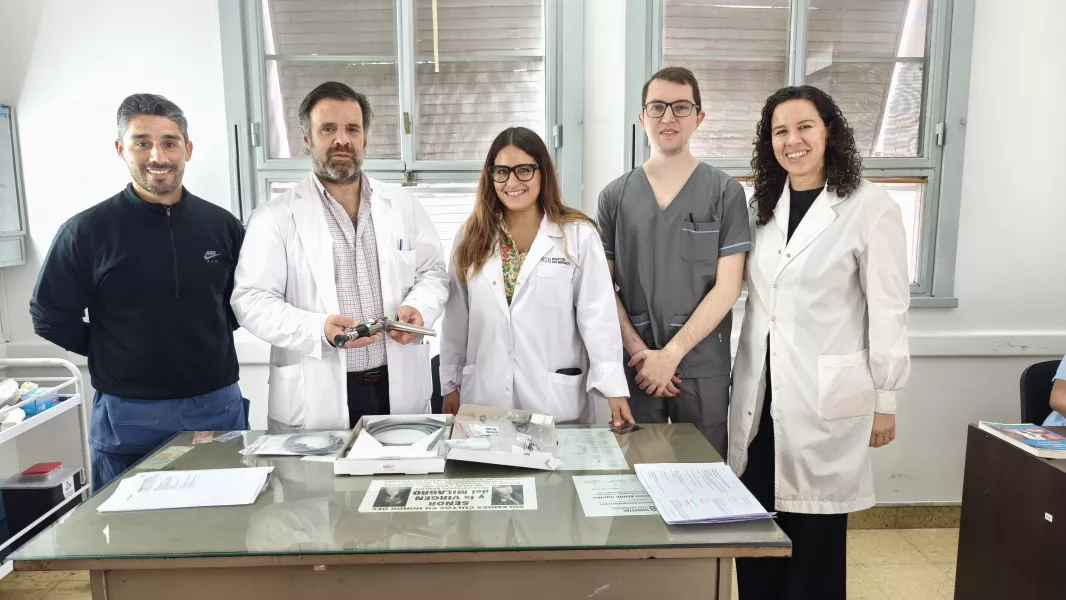
San Bernardo Hospital Acquires Advanced Video-Mediastinoscope
Hospital San Bernardo Acquires Video-Mediastinoscope for Thoracic Surgery
“Before, in determinados casos, debíamos recurrir a una videotoracoscopia, que implicaba una internación más prolongada y mayores riesgos asociados al procedimiento,” Francisco Aguilar, head of the Thoracic Surgery Service, stated regarding surgical approaches at Hospital San Bernardo.
Hospital San Bernardo has added a video-mediastinoscope to its Thoracic Surgery Service, purchased using the institution’s own funds, salta.gob.ar reported. The new equipment expands the service’s clinical capabilities by enabling minimally invasive interventions intended to increase patient safety and shorten recovery and hospital stay durations in specific cases.
Key Clinical Takeaways:
- Hospital San Bernardo added a video-mediastinoscope funded through its own resources to expand thoracic surgical capabilities.
- The high-definition camera system allows direct visualization of the mediastinum via a small neck incision, bypassing more invasive procedures for certain patients.
- Clinical applications include performing biopsies, harvesting tissue samples, and staging lung cancer to determine appropriate treatment paths.
High-Definition Visualization of the Mediastinum
The newly acquired device features a high-definition camera designed to visualize the mediastinum with precision. This anatomical compartment lies in the thorax between the lungs and contains the trachea, major blood vessels, and lymph nodes.
Utilizing the video-mediastinoscope permits surgeons to execute biopsies and additional procedures required for diagnosing and treating oncological diseases. The technology also assists clinicians in obtaining tissue samples and evaluating the extent of lung cancer, providing the clinical data necessary to formulate targeted treatment plans for individual patients.
Video-Mediastinoscope Reduces Postoperative Pain and Hospital Stays
A primary clinical advantage of the video-mediastinoscope is its ability to access the mediastinal region through a small incision in the neck. This technique avoids more invasive procedures in appropriate cases, contributing to reduced postoperative pain, fewer complications, and shortened hospital stays depending on the specific intervention and patient recovery trajectory.
Prior to this acquisition, surgical teams relied on videothoracoscopy for certain evaluations, a method associated with extended hospital admissions and elevated procedural risks. The new instrumentation allows medical staff to execute operations with greater precision, improve overall care quality, and support faster patient recovery.