
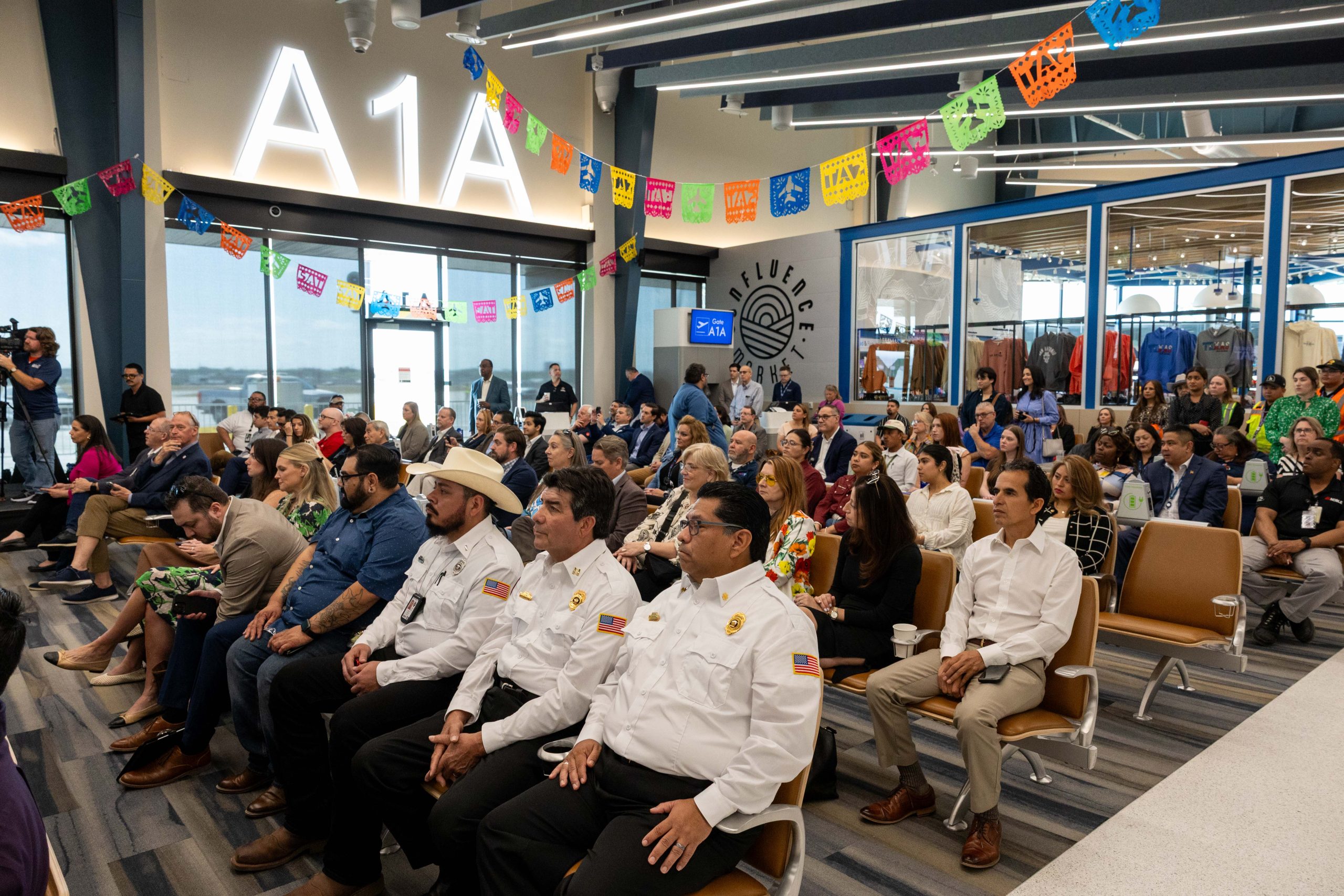
San Antonio International Airport Opens New Terminal A Ground Load Facility
San Antonio International Airport officially opened a $55 million ground load facility on March 27, 2026, adding three new gates to Terminal A to alleviate congestion and reduce carrier costs. This expansion, funded partially by FAA grants, aims to boost the city’s $7.4 billion aviation economic impact by enabling ultra-low-cost carriers to operate more efficiently while navigating ongoing legal disputes regarding gate allocation.
The tarmac is busy today. Not just with planes, but with the weight of expectation. San Antonio has long outgrown its infrastructure, and for the first time since 2017, the concrete is catching up to the ambition. City officials cut the ribbon on Friday, unveiling a new ground load facility at Terminal A. This proves a modest physical footprint—three gates, A1A, A1B, and A1C—but the strategic implications ripple far beyond the fence line.
This is not merely about adding space. It is about changing how the city connects to the world. The new structure introduces a ground load system, a method where passengers board directly from the tarmac via mobile stairs rather than enclosed jetways. While common in smaller hubs like Burbank, this is a significant shift for San Antonio. It signals a deliberate pivot toward accommodating ultra-low-cost carriers who prioritize operational speed and cost reduction over luxury amenities.
The Economics of Efficiency
Airports are economic engines, but they are also expensive machines to run. Every minute a plane sits at a gate costs money. Those costs eventually trickle down to the ticket price. By implementing ground loading, the San Antonio Airport System reduces overhead for airlines. Lower overhead means lower fares. Lower fares mean more passengers. It is a simple equation, but executing it requires precise engineering and regulatory approval.
The project cost $55 million, with $35 million offset by Federal Aviation Administration grants. This federal support underscores the national priority of modernizing mid-sized hubs to relieve pressure on major congested airports like Dallas-Fort Worth or Houston Intercontinental. The remaining capital came from city funds and airport revenue bonds, approved during a contentious budget cycle last year.
During the budget adoption hearing, San Antonio City Council Member Melissa Cabello Havrda emphasized the fiscal discipline required for such ventures.
“We are not just building gates; we are building fiscal resilience. Every dollar spent here must return value to the taxpayer through increased commerce and connectivity.”
Her statement highlights the scrutiny public infrastructure faces in a volatile economic climate.
The impact is already measurable. The airport contributes $7.4 billion annually to the local economy. Sarah Carabias Rush, President and CEO of Greater:SATX, noted that expansion is critical for corporate relocation efforts. Companies do not move to cities they cannot reach easily. Direct flights are the lifelines of modern business development.
Legal Headwinds and Strategic Planning
However, expansion rarely happens without friction. The opening coincides with ongoing legal tension between the city and Southwest Airlines. The carrier, which accounts for over one-third of the airport’s passenger traffic, previously sued for exclusive use of ten gates in the planned new terminal. A judge ruled against the airline in September 2025, though an appeal is pending.
This dispute highlights a broader issue in aviation infrastructure: the balance between legacy carriers and emerging low-cost models. Legacy carriers often demand exclusive gates to maintain schedule reliability. Low-cost carriers prefer flexible, shared spaces to minimize costs. The new ground load facility leans into the latter model, suggesting the city is diversifying its airline portfolio to reduce dependency on any single carrier.
For businesses navigating these complex contractual landscapes, the environment is fraught with risk. Developers and airline partners alike are consulting top-tier aviation law specialists to shield their assets and ensure compliance with evolving municipal codes. The legal framework surrounding airport concessions and gate leases is becoming as critical as the physical runway.
Infrastructure Beyond the Terminal
The ground load facility is just one component of a massive 2040 strategic plan. Construction continues on Terminal C, which will add 17 new gates and international inspection facilities. A $125-million parking garage has cleared design review. These projects are not isolated; they are interlocking pieces of a regional logistics puzzle.
Travelers should expect disruptions. Traffic lanes near Terminal B are partially closed to accommodate construction. The airport advises using the short-term parking garage for drop-offs. Despite the congestion, security wait times remain under 14 minutes, a testament to TSA staffing levels despite broader federal instability.
The design of the new facility also anticipates future technology. Deputy Aviation Director Tim O’Krongley noted the structure could adapt for vertical electric self-piloted aircraft. This forward-thinking approach ensures the infrastructure does not become obsolete before the paint dries. It is a flexible shell waiting for the next generation of flight.
Regional Connectivity and Service Needs
As the airport expands, the surrounding ecosystem must expand with it. Increased passenger volume strains local roads, hotels, and supply chains. The influx of travelers requires robust support systems to maintain service quality. Hotels near the airport are already adjusting rates, and ground transportation services are scaling up fleets.
For local vendors looking to secure contracts within the new terminal, the competition will be fierce. The retail concession includes local souvenirs and grab-and-head food, but future bidding rounds will require rigorous compliance documentation. Companies specializing in infrastructure development firms are already positioning themselves for the Terminal A and B renovations scheduled to begin in 2028.
the increase in cargo and passenger flow necessitates stronger logistical coordination. Regional businesses moving goods through SAT must ensure their supply chains can handle the volatility of construction zones and shifting traffic patterns. Engaging experienced regional logistics coordinators is no longer optional; it is a operational necessity to prevent bottlenecks.
The Long-Term Horizon
San Antonio is betting on growth. The return of Air Canada service to Toronto in May 2026 is just the beginning. The city aims to reach as many locations as possible, transforming from a regional stopover into a primary destination. The ground load facility is the first step in a decade-long march toward modernization.
Yet, the success of this expansion depends on more than just concrete and steel. It depends on the seamless integration of legal, logistical, and construction expertise. The airport is a microcosm of the city’s economy: complex, interconnected, and constantly evolving. As the gates open and the first passengers walk across the tarmac to board their flights, the real work begins. Maintaining this momentum requires vigilance. It requires partners who understand that infrastructure is not a one-time build, but a continuous commitment to excellence.
The runway is clear. The gates are open. Now, the city must ensure the ground support matches the altitude of its ambitions.