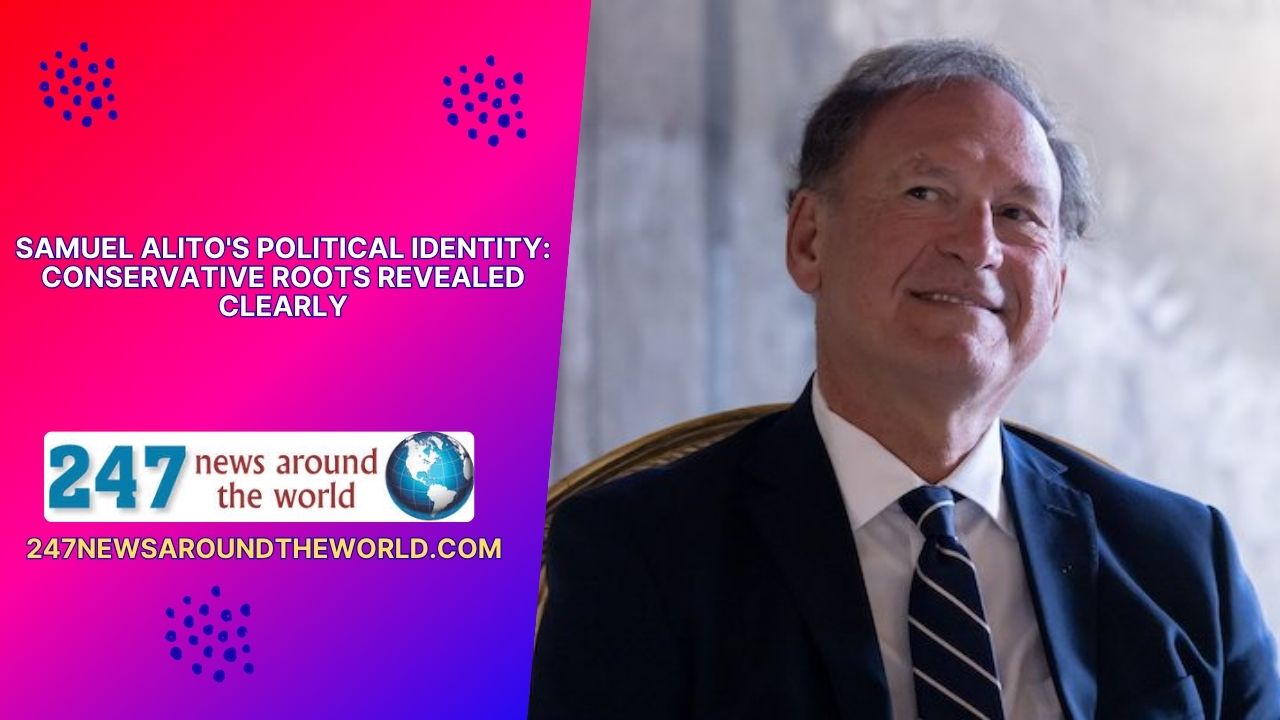
Samuel Alito’s Political Identity: Exploring His Conservative Roots
Justice Samuel Alito, 76, was hospitalized for dehydration on March 20, 2026, after falling ill during a Federalist Society dinner in Philadelphia. The incident, confirmed by the Supreme Court’s Public Information Officer, has sparked intense speculation regarding Alito’s future on the bench and the potential for new conservative appointments.
The intersection of judicial health and political power is rarely so visible. When a justice of Alito’s standing—consistently one of the most conservative voices on the U.S. Supreme Court—experiences a medical emergency, the ripples extend far beyond a hospital room in Pennsylvania. It becomes a question of ideological continuity and the strategic timing of retirement.
The event unfolded on a Friday in March. Alito had already missed the morning session where the court issued an opinion on a case argued the previous year. By the evening, while attending a dinner hosted by the Federalist Society in Philadelphia, the justice became unwell. His security detail, acting out of an abundance of caution, recommended an immediate medical evaluation before the three-hour journey back to his residence in Virginia.
He was treated for dehydration and administered fluids. By that night, he was discharged. By the following Monday, he was back on the bench for oral arguments.
Yet, the brief medical lapse has opened a wider conversation about the fragility of the court’s current composition. For those tracking the long-term trajectory of American jurisprudence, Alito’s health is a proxy for the future of the conservative majority.
The Architecture of a Conservative Legacy
Samuel Alito’s identity on the court is not accidental; it is rooted in a specific judicial philosophy. Nominated by President George W. Bush and sworn in on January 31, 2006, Alito has spent two decades reinforcing a strict constructionist approach to the law. His presence ensures a reliable vote for the most conservative interpretations of the Constitution, making him a cornerstone for the legal goals of the American right.
The timing of his hospitalization coincides with a period of intense scrutiny over the court’s direction. Given that he is viewed as a primary architect of the court’s conservative shift, any hint of instability in his tenure invites speculation. Commentators across the political spectrum are now questioning whether this health scare will accelerate a decision to step down.
A retirement would be more than a personnel change. It would provide Donald Trump another opportunity to shape the highest court in the land, potentially cementing a conservative legacy for another generation.
“On the evening of Friday, [20 March], Justice Alito felt ill during an event in Philadelphia. Out of an abundance of caution, he agreed with his security detail’s recommendation to see a physician before the three-hour drive home.”
This statement from Public Information Officer Patricia McCabe serves as the official record, but it does little to quiet the noise. The lack of an immediate explanation for his absence on the morning of March 20 reflects a historical pattern of secrecy within the Supreme Court regarding the health of its members.
We saw this in June 2020, when the court’s public information office declined to disclose that Chief Justice John Roberts had sustained a head injury after a fall at a Maryland country club. That incident only reached the public via The Washington Post. This culture of opacity often transforms medical events into political mysteries, leaving the public and legal professionals to guess at the implications.
Regional Impact and Legal Volatility
The incident took place during a day-long symposium at the University of Pennsylvania Carey Law School, titled “An Examination of the Jurisprudence of Samuel Alito.” While the symposium featured former law clerks and legal scholars and was accessible via livestream, the justice himself was not on the official daytime schedule. The transition from a scholarly examination of his life’s work to a sudden hospital visit creates a jarring narrative arc.
For legal practitioners in Philadelphia and across the Mid-Atlantic region, such volatility in the court’s membership creates a climate of uncertainty. When the ideological lean of the court is in question, the strategy for litigation changes. Law firms are increasingly relying on constitutional law experts to hedge their bets against potential shifts in the court’s composition.
The uncertainty isn’t just legal; it’s logistical. The high-profile nature of these justices requires an immense security and medical apparatus. The fact that Alito’s security detail triggered the hospital visit underscores the rigorous protocols in place to protect the court’s continuity.
Managing the health of aging high-level officials is a specialized field. Many in similar positions of power are now turning to executive health management services to ensure that sudden medical episodes do not grow public crises or political liabilities.
The Speculation Machine
While Alito has resumed his duties and participated in oral arguments, the narrative has shifted toward his future. Associates have indicated to CNN that the justice has contemplated retirement, though a final decision does not appear imminent. This “contemplation” is the fuel for current political strategizing.

The stakes are simply too high for the incident to be viewed as a mere case of dehydration. In the current political climate, a single seat on the Supreme Court can rewrite federal law on everything from environmental regulation to reproductive rights.
To understand the gravity, one must look at the verified reports from SCOTUSblog and CNN, which highlight how quickly a private health matter becomes a matter of national security and political strategy.
The balance of power is a delicate thing.
As the public waits for more clarity, judicial advocacy groups and judicial watchdogs are monitoring the court’s attendance and activity with renewed intensity. Every absence is now scrutinized; every “abundance of caution” is analyzed for deeper meaning.
Justice Alito remains a formidable presence on the bench, but the events of March 20 have reminded the world that the court’s ideological fortress is built on the health and longevity of a few individuals. Whether this was a momentary lapse or a sign of things to come remains the central question for the coming months.
The intersection of aging, health, and high-stakes governance is a precarious one. As we watch the Supreme Court navigate these human vulnerabilities, it becomes clear that the stability of our legal system often rests on the shoulders of individuals who are, subject to the same biological limits as the rest of us. For those needing to navigate the legal fallout of shifting judicial precedents or seeking verified professionals to manage complex civic transitions, the World Today News Directory remains the definitive resource for connecting with vetted experts.