
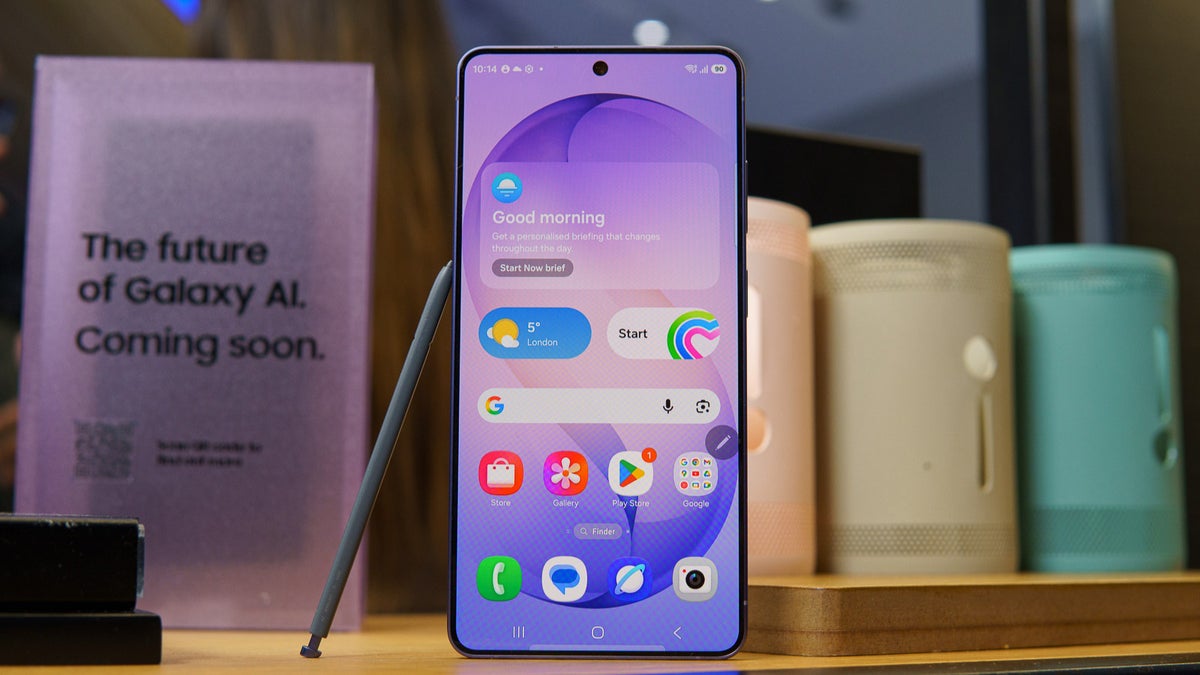
Samsung’s latest Galaxy update just broke a beloved customization trick
Samsung’s March 2026 Patch Kills Custom Fonts: A CVE Post-Mortem
Samsung’s March 2026 security update arrived silently, breaking custom font installation across One UI 8 and 8.5. This isn’t a regression; it’s a deliberate closure of CVE-2026-20989. While consumers lose personalization, enterprise security gains a critical patch against arbitrary file execution vectors hidden within typeface parsers.
The Tech TL;DR:
- Security Patch: CVE-2026-20989 closes a font installation backdoor used by third-party apps like zFont 3.
- Impact: Non-Galaxy Store fonts fail to render or trigger system errors on updated devices.
- Enterprise Risk: Unverified font files previously posed a malware delivery vector now mitigated by kernel-level restrictions.
The Vulnerability Vector: CVE-2026-20989
Technical analysis confirms the March update patches a privilege escalation vulnerability tied to the font management subsystem. Third-party applications previously exploited a permissive file integrity check, allowing unsigned typeface files to bypass the Galaxy Store’s verification sandbox. This workaround, popularized by tools like zFont 3, effectively granted apps write access to system UI directories without root privileges.
According to the official CVE vulnerability database, this class of vulnerability often permits remote code execution if a malicious font file is crafted with specific overflow triggers. Samsung’s engineering team opted for a blanket restriction rather than a nuanced permission grant. The result is a hard fail state for any font binary lacking the specific cryptographic signature associated with the Galaxy Store ecosystem.
“When you allow unsigned assets to modify system UI elements, you bypass the chain of trust. This patch aligns mobile device security with standard enterprise endpoint protection protocols.”
The blast radius extends beyond aesthetic customization. In an enterprise context, mobile device management (MDM) profiles rely on strict integrity checks. Allowing unsigned fonts creates a potential side-channel for data exfiltration or UI spoofing attacks. Organizations managing fleets of Galaxy devices must now verify that their MDM policies account for this fresh restriction to prevent user workarounds that could compromise compliance.
Enterprise Implications and Audit Requirements
For IT departments, this update shifts the burden of customization control from the user to the administrator. Previously, users could sideload fonts to bypass corporate branding policies. Now, the OS enforces the whitelist at the kernel level. However, this change necessitates a review of existing security postures. Companies relying on older patch cycles are now exposed to the unpatched variant of CVE-2026-20989.

Security teams should immediately engage cybersecurity audit services to verify patch compliance across their mobile fleet. The distinction between general IT consulting and formal assurance is critical here; this requires validated proof of remediation, not just advisory. As noted in recent risk assessment and management services guidelines, unpatched endpoints remain the primary vector for initial access breaches.
organizations with high-security clearance needs, similar to the standards required for the Associate Director of Research Security roles at major institutions, must treat font management as a supply chain risk. The ability to inject arbitrary files into the system partition is a red flag for any environment handling sensitive intellectual property.
Verification and Mitigation Commands
Developers and system administrators can verify the patch level and permission state using Android Debug Bridge (ADB). The following command checks the package permissions related to font installation, confirming whether the legacy write access has been revoked.
adb shell pm dump com.android.thememanager | grep -A 5 "android.permission.WRITE_SECURE_SETTINGS" # Expected Output on Patched Devices: Permission denied or null grantIf the output returns a grant state for third-party packages, the device remains vulnerable. In such cases, immediate isolation is required. Enterprises should not wait for user reports. Proactive deployment of cybersecurity consulting firms can help automate this verification process across thousands of endpoints, ensuring no device remains on the vulnerable build.
The Trade-Off: Security vs. Openness
Samsung’s decision mirrors the broader industry shift toward walled gardens, seen in initiatives like the Director of Security mandates at major tech firms focusing on AI and system integrity. While this reduces the attack surface, it also limits the “right to repair” and customize hardware that Android enthusiasts champion. The technical justification is sound, but the communication strategy failed. Users were not informed that a security patch would degrade functionality.
“Silent patches that break user workflows erode trust. Security teams must balance vulnerability mitigation with change management transparency.”
For the average consumer, the workaround is dead. Rooting the device remains an option, but that voids warranties and trips Knox security flags, rendering banking apps unusable. The only viable path forward is the Galaxy Store, which offers a limited, vetted selection. For enterprises, What we have is a net positive, reducing the support ticket volume related to UI glitches caused by incompatible font files.
Final Assessment
This update demonstrates the inevitable collision between user customization and system hardening. CVE-2026-20989 was a legitimate risk, and closing it was necessary. However, the execution highlights a gap in user communication. IT leaders should use this incident to review their own patch management communication strategies. Ensure your teams are not just pushing updates, but documenting the functional changes associated with security fixes.
As we move deeper into 2026, expect more OS-level restrictions on file system access. Prepare your infrastructure by engaging qualified cybersecurity auditors and penetration testers to stress-test your mobile policies against these new constraints. The era of silent sideloading is ending; the era of verified supply chains is here.
Disclaimer: The technical analyses and security protocols detailed in this article are for informational purposes only. Always consult with certified IT and cybersecurity professionals before altering enterprise networks or handling sensitive data.