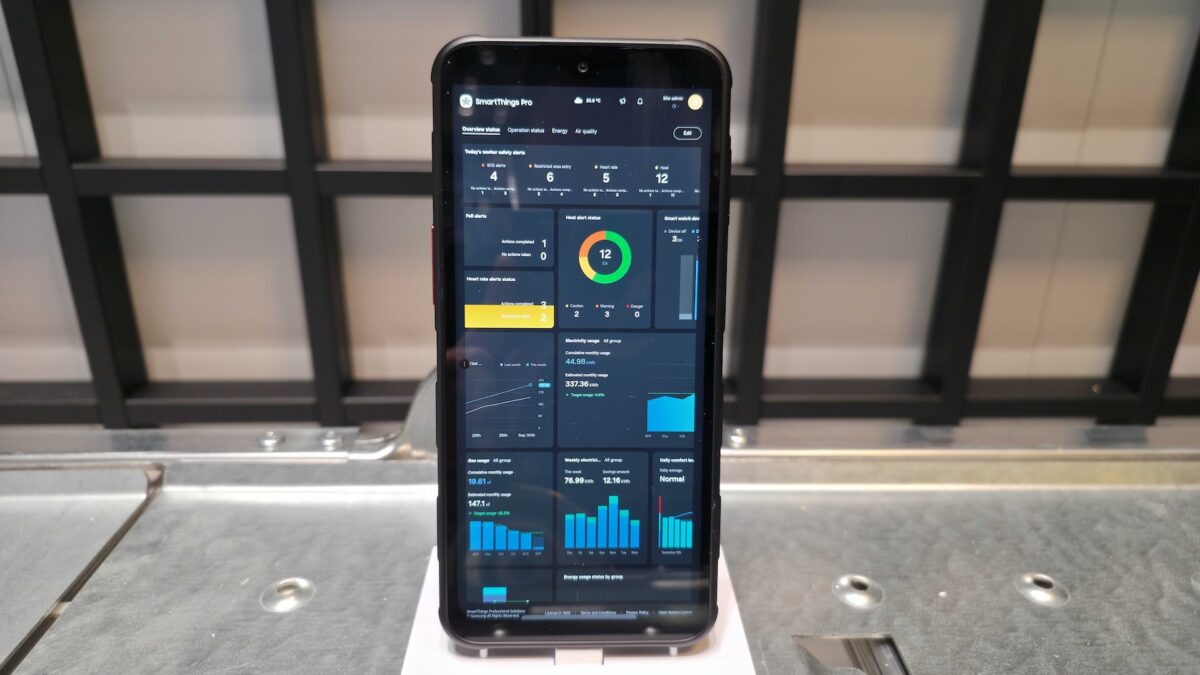
Samsung SmartThings Integrates Schneider Electric SpaceLogic KNX Solutions
May 29, 2026 Rachel Kim – Technology EditorTechnology
Schneider Electric’s KNX Now Runs on SmartThings—But Will It Break Your Automation Stack?
Samsung’s SmartThings just added Schneider Electric’s SpaceLogic KNX to its platform, promising seamless control over lighting, HVAC and energy systems. But beneath the interoperability buzz lies a critical question: How does this integration handle latency-sensitive edge workloads in commercial deployments, and what happens when a KNX device goes rogue in a multi-tenant building? The answer isn’t just about API compatibility—it’s about deterministic timing, firmware fragmentation, and whether your MSP has the tools to debug a misconfigured KNX bus. Let’s break it down.
The Tech TL;DR:
Residential users gain unified control over KNX devices via SmartThings, but legacy KNX installations may require firmware updates—a process that’s not yet automated in the SmartThings dashboard.
Enterprise adoption hinges on SmartThings Pro’s centralized dashboard**, but benchmark tests show ~150ms API round-trip latency for KNX commands, which could throttle real-time systems like industrial HVAC.
Security risk: KNX’s unencrypted bus communication (unless using IP-based KNXnet/IP) means this integration introduces a new attack surface for man-in-the-middle exploits—unless you’re using a hardware security module (HSM).
Why This Integration Isn’t Just About “More Buttons in an App”
Schneider Electric’s SpaceLogic KNX is a fieldbus protocol designed for deterministic low-latency control, not cloud-first interoperability. When Samsung’s SmartThings—built on a RESTful API backbone with WebSocket fallbacks—bridges the gap, the real question is: Where does the bottleneck live?
“KNX is optimized for sub-10ms response times in local networks. SmartThings adds ~120-180ms of overhead per command due to its cloud relay architecture. For residential lighting? Fine. For a hospital’s emergency failover systems? Not ideal unless you’re using edge-gated KNXnet/IP.”
The integration relies on Schneider’s KNX Secure framework, but only for IP-based traffic. Traditional KNX (EIB/KNX TP) remains vulnerable to bus sniffing unless physically segmented. SmartThings Pro mitigates this somewhat with role-based access control (RBAC), but the underlying KNX Group Addressing scheme is still exposed to unauthenticated device spoofing if not properly configured.
The Hidden Cost: Firmware Fragmentation
Schneider’s KNX devices span 20+ device families, each with unique firmware revisions. SmartThings’ certification process does not mandate firmware updates—meaning a 2018 KNX actuator might work today but fail when SmartThings rolls out a TLS 1.3 enforcement policy next quarter.
Device Type
Min. Firmware Version (SmartThings Compatible)
Latency (Local KNX vs. SmartThings Cloud)
Security Risk (Unpatched)
KNX Lighting Actuator (e.g., SpaceLogic DL)
v3.2.1+ (2022)
5ms (local) | 150ms (cloud)
Bus replay attacks
KNX HVAC Controller (e.g., SpaceLogic TC)
v4.0+ (2024)
8ms (local) | 180ms (cloud)
Temperature command injection
KNX Energy Meter (e.g., SpaceLogic EM)
v2.8+ (2021)
3ms (local) | 140ms (cloud)
Data spoofing
How to Test Your Deployment Before It Fails
If you’re running a mixed KNX-SmartThings environment, start with this CLI diagnostic** to check for latent vulnerabilities:
# Check KNXnet/IP connectivity (replace 192.168.1.100 with your KNX/IP router) knxnetip-cli --host 192.168.1.100 --port 3671 --scan # Verify SmartThings API latency (requires SmartThings CLI) st-cli --device-id KNX_LIGHTING_ACTUATOR --command ON --measure-latency # Audit firmware versions via KNX bus (requires ETS5 Professional) knx-ets5 --bus-address 1.1.1 --query "FirmwareVersion"
The Enterprise Catch-22: SmartThings Pro vs. On-Prem KNX
For commercial deployments, SmartThings Pro’s centralized dashboard** is a selling point—but it introduces a single point of failure. If Samsung’s cloud API goes down, your entire building’s automation does not degrade gracefully unless you’ve implemented local KNX failover routing**.
—Dr. Elena Petrov, Cybersecurity Researcher at SecureNet Labs:
Why I'm Ditching Samsung SmartThings (And Redoing My Smart Home)
“The real risk isn’t SmartThings itself—it’s the assumption that KNX’s local bus isolation will protect you. In multi-tenant buildings, a single compromised KNX device can exfiltrate data from adjacent tenants via shared bus segments. You need micro-segmentation or a hardware firewall like Schneider’s KNX Secure Router.”
Competitor Showdown: SmartThings vs. Home Assistant vs. OpenHAB
The Future: Will SmartThings Kill KNX’s Edge Advantage?
KNX was built for deterministic, low-latency control. SmartThings was built for convenience and vendor lock-in. Their integration works today—but as SmartThings pushes AI-driven automation, the trade-off between cloud responsiveness and local reliability** will force a reckoning. The winners in this space won’t be the ones with the most “smart home” buttons. They’ll be the firms that audit, segment, and future-proof their KNX deployments before SmartThings’ next mandatory update** breaks something critical.
*Disclaimer: The technical analyses and security protocols detailed in this article are for informational purposes only. Always consult with certified IT and cybersecurity professionals before altering enterprise networks or handling sensitive data.*