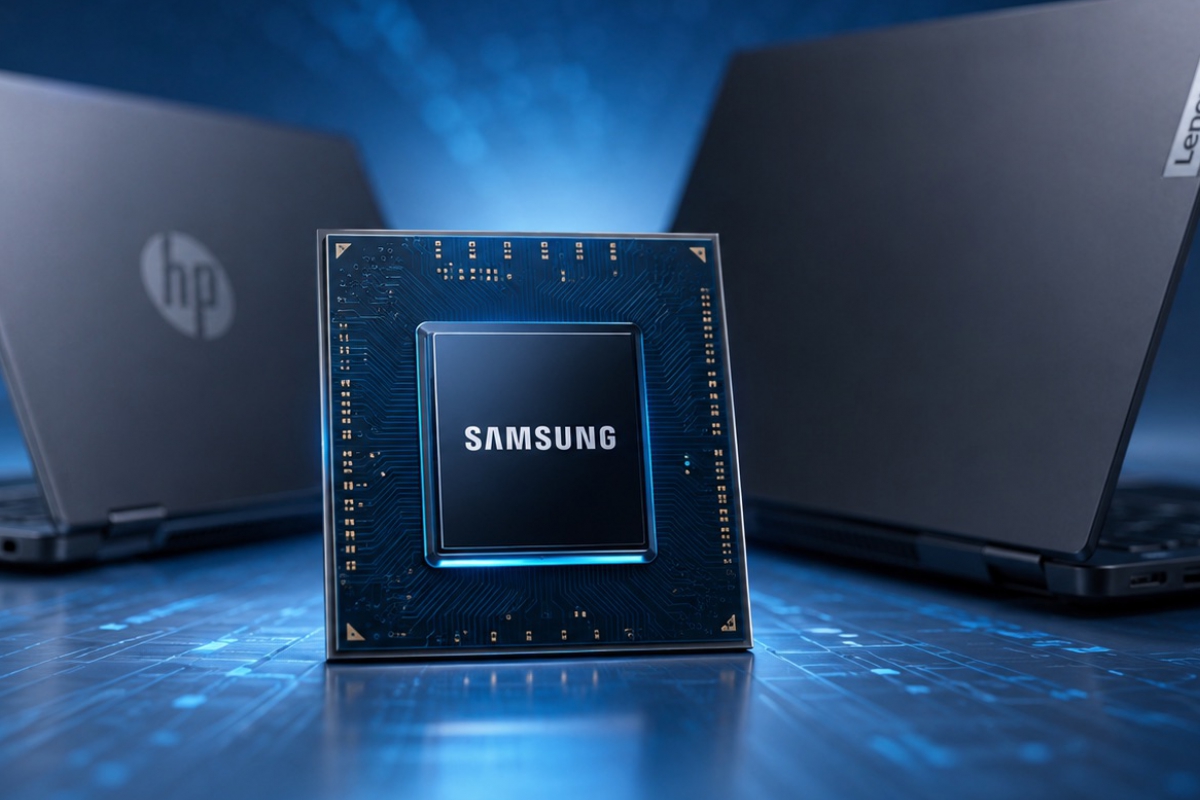
Samsung Sends First AI PC Chip Prototypes to HP and Lenovo
Samsung has delivered the first prototypes of its proprietary AI chip for PCs to HP and Lenovo, according to a report by Geeknetic. The move marks a strategic effort by the South Korean electronics giant to enter the AI processor market and reduce reliance on external chip designers for its hardware ecosystem.
Samsung AI Chip Integration with HP and Lenovo
The delivery of these prototypes allows HP and Lenovo to begin testing how Samsung’s silicon integrates with their respective laptop and desktop architectures. By providing hardware to these two major original equipment manufacturers (OEMs), Samsung is attempting to establish a footprint in the “AI PC” segment, where local processing of artificial intelligence tasks is becoming a primary selling point.
Current AI PC trends favor Neural Processing Units (NPUs) that can handle generative AI tasks without relying on the cloud. Samsung’s entry into this space positions it as a direct competitor to established chipmakers like Qualcomm, Intel, and AMD, who currently dominate the Windows-on-ARM and x86 markets.
Market Strategy and Hardware Ecosystem
Samsung’s decision to develop its own AI chips follows a broader industry shift toward vertical integration. By controlling both the memory (DRAM and NAND) and the processing logic, Samsung can theoretically optimize power efficiency and data transfer speeds between the chip and the system memory.
The partnership with HP and Lenovo is critical because Samsung does not produce a wide range of third-party laptops compared to its mobile division. To achieve the scale necessary for chip viability, Samsung requires the distribution networks and hardware footprints of the world’s largest PC vendors.
Competitive Landscape of AI Processors
The arrival of Samsung’s prototypes coincides with a period of intense competition in the AI PC sector. Qualcomm recently launched the Snapdragon X Elite, which targets the high-end thin-and-light market with a heavy emphasis on NPU performance. Simultaneously, Intel and AMD have updated their architectures to include dedicated AI acceleration in their latest processor generations.
Samsung’s approach differs by leveraging its existing dominance in memory technology. The company has already been integrating AI-capable hardware into its Galaxy smartphones and tablets; moving into the PC space represents an expansion of that logic to larger form factors.
The specific technical specifications of the prototypes, including clock speeds and TOPS (Tera Operations Per Second) performance, have not been disclosed. The next phase involves hardware validation by HP and Lenovo to determine if the chips meet the thermal and performance requirements for consumer devices.