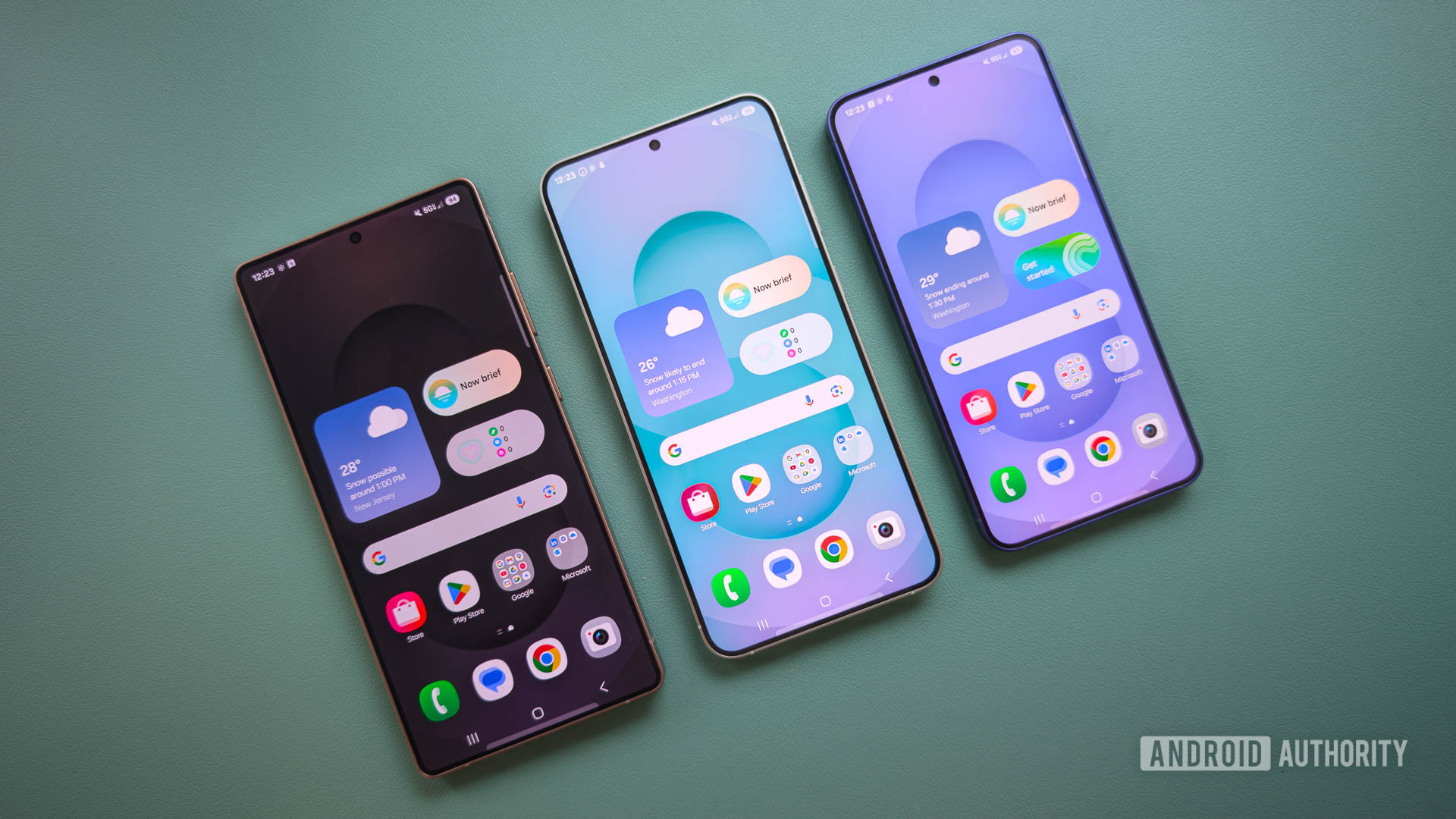
Samsung One UI 8.5: Galaxy S25 Launch Date, Beta Updates, and New Features
Samsung is playing a dangerous game of “leak and confirm” with the One UI 8.5 rollout for the Galaxy S25 series. While the PR machine focuses on camera filters, the real story is the aggressive push toward an AI-native OS architecture that aims to decouple the NPU from basic system tasks to reduce latency.
The Tech TL;DR:
- Stable Release Window: One UI 8.5 is targeting a stable production push for the S25 series, following an expanded beta phase across the Tab S11 and S24 ecosystems.
- Interoperability Pivot: The integration of “AirDrop-like” functionality suggests a shift toward standardized cross-platform file transfer protocols to reduce ecosystem friction.
- Hardware Synergy: Optimized for the latest Snapdragon 8 Gen 4 (or Exynos equivalent) with a focus on on-device LLM execution and reduced thermal throttling.
For the average user, a new UI version is just a skin change. For the CTO or the enterprise architect, One UI 8.5 represents a shift in how Samsung handles the Android HAL (Hardware Abstraction Layer). The core problem Samsung is solving isn’t “user experience”—it’s the massive compute overhead required by generative AI features. By moving toward a more stable 8.5 build, Samsung is attempting to optimize the NPU (Neural Processing Unit) utilization to prevent the device from becoming a pocket-heater during sustained AI workloads.
The deployment of these updates follows a standard CI/CD pipeline, but the “beta expansion” mentioned in recent reports indicates that Samsung is stress-testing the kernel’s stability across diverse hardware profiles. This is critical because any regression in memory management could lead to catastrophic battery drain or kernel panics in enterprise-deployed devices. Organizations managing large fleets of Galaxy devices should be coordinating with managed service providers (MSPs) to ensure that the transition to 8.5 doesn’t break legacy MDM (Mobile Device Management) policies.
The Software Stack: One UI 8.5 vs. The Competition
To understand where One UI 8.5 sits, we have to seem at the competitive landscape of AI-integrated mobile OSs. Samsung is no longer just competing with Google’s Pixel UI; they are fighting a war of attrition against Apple’s tight vertical integration.
The AI-OS Matrix: Samsung vs. Google vs. Apple
| Feature Set | One UI 8.5 (Samsung) | Pixel UI (Google) | iOS 18+ (Apple) |
|---|---|---|---|
| AI Execution | Hybrid (On-device + Cloud) | Cloud-First (Gemini) | On-device First (Apple Intelligence) |
| Interoperability | Expanding (New File Sharing) | Native Android/Chrome | Closed Ecosystem (AirDrop) |
| NPU Optimization | Aggressive (S25 Specific) | Tensor-Optimized | A-Series Neural Engine |
| Update Velocity | Rapid (Beta-to-Stable) | Immediate (Pixel First) | Synchronized Global Push |
The “AirDrop for Android” feature is a strategic admission that the fragmented nature of Android file sharing has been a bottleneck for professional adoption. By implementing a more streamlined, peer-to-peer transfer protocol, Samsung is attempting to lower the barrier for users migrating from macOS/iOS. However, from a security perspective, any new peer-to-peer protocol introduces potential vectors for unauthorized data exfiltration. This is why enterprise security teams are currently auditing these protocols via certified penetration testers to ensure that “convenience” doesn’t bypass corporate DLP (Data Loss Prevention) rules.
Architectural Deep Dive: NPU Orchestration and Latency
Looking at the published Android Open Source Project (AOSP) documentation and recent ARMv9 architecture whitepapers, the goal of One UI 8.5 is likely the optimization of the “AI-Core” service. This service acts as the middleware between the high-level AI features (like Live Translate or Note Assist) and the silicon. If the middleware is inefficient, you get “input lag” where the AI takes seconds to respond, killing the utility of the feature.
The shift toward a “stable” launch for the S25 suggests that Samsung has finally tuned the thermal envelope. In previous iterations, heavy NPU usage triggered aggressive thermal throttling, which dropped the CPU clock speed and caused the entire UI to stutter. By refining the scheduler in 8.5, Samsung can now distribute workloads more effectively across the “big.LITTLE” core configuration.
“The industry is moving away from ‘cloud-AI’ as a novelty and toward ‘edge-AI’ as a requirement. The winner won’t be the company with the best model, but the company that manages the thermal and power constraints of the NPU most efficiently.” — Marcus Thorne, Lead Systems Architect at Silicon Edge Research
For developers looking to interface with these new AI capabilities, the transition to One UI 8.5 involves updating the target SDK and ensuring that AI-driven app intents are handled asynchronously to avoid ANR (Application Not Responding) errors. Below is a conceptual example of how a developer might implement a request to a system-level AI service using a cURL-like structure for a local API endpoint during testing:
# Testing local AI-inference latency on One UI 8.5 Dev Build curl -X POST http://localhost:8080/v1/ai/inference -H "Content-Type: application/json" -d '{ "model": "samsung-edge-llm-v2", "prompt": "Analyze system logs for thermal throttling events", "max_tokens": 150, "temperature": 0.2 }' This level of on-device processing requires strict adherence to NIST cybersecurity frameworks, particularly regarding how local weights are stored and encrypted. If a device is compromised at the root level, an attacker could potentially scrape the local LLM’s cache for sensitive user data. The move to a stable 8.5 release must be accompanied by a robust security patch, likely addressing the latest CVEs related to kernel memory corruption.
The Verdict: Shipping Reality vs. Marketing Vaporware
Samsung’s rollout of One UI 8.5 is less about “magic” and more about the brutal reality of software engineering: stability. The expansion of the beta to the Tab S11 and S24 series is a classic “canary” deployment strategy. They are identifying edge-case crashes in a controlled environment before pushing the build to millions of S25 units. This is the only way to avoid the disastrous “bricked” device scenarios that plague rushed OS launches.
As we move toward a world of “AI-First” hardware, the bottleneck is no longer the software—it’s the silicon and the thermal management. One UI 8.5 is an attempt to bridge that gap. For the C-suite, the takeaway is clear: the hardware is evolving faster than the security protocols. Whether you are updating a fleet of corporate tablets or deploying a new consumer app, the volatility of these AI-integrated kernels means you necessitate a dedicated software development agency that understands the nuances of NPU optimization and Android’s evolving security model.
Disclaimer: The technical analyses and security protocols detailed in this article are for informational purposes only. Always consult with certified IT and cybersecurity professionals before altering enterprise networks or handling sensitive data.