
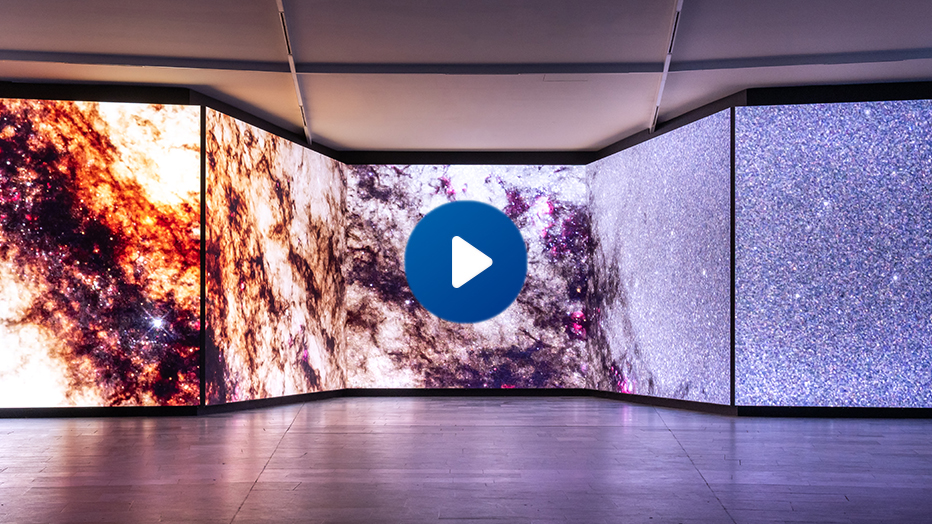
Samsung LED Signage Installed at Zeiss Grand Planetarium Berlin
Samsung has installed a massive, immersive LED wall in the lobby of the Zeiss Grand Planetarium in Berlin, Germany. This high-tech installation transforms complex space visuals into a vivid, up-close spectacle, leveraging Samsung’s advanced display technology to modernize one of Europe’s most prestigious astronomical centers and enhance visitor engagement.
The installation is more than a mere cosmetic upgrade to a lobby. It represents the public-facing culmination of a deep, strategic alliance between Samsung Electronics and the Zeiss Group. While the public sees stunning imagery of distant galaxies in Berlin, the industrial reality is a high-stakes partnership involving the very foundations of modern computing: extreme ultraviolet (EUV) lithography.
The Berlin Spectacle: Bringing the Cosmos Down to Earth
In the heart of Berlin, the Zeiss Grand Planetarium now serves as a canvas for Samsung’s latest LED signage. The goal is simple yet ambitious: to bridge the gap between the abstract nature of space and the human experience. By turning space visuals into an immersive environment, the installation allows visitors to encounter the scale of the universe before they even enter the dome.

This is a calculated move in the realm of “experiential architecture.” The integration of such massive displays into existing public infrastructure often creates significant logistical hurdles. The sheer power requirements and heat dissipation needs of large-scale LED walls can overwhelm older building systems. To navigate these challenges, municipal entities and cultural institutions are increasingly relying on industrial electrical engineers and HVAC specialists to ensure that cutting-edge hardware does not compromise the structural integrity or climate control of historic venues.
The timing of this installation coincides with a broader push by Samsung to integrate its ecosystem. As the company rolls out One UI 9 and the Galaxy S26 Ultra, the ability to synchronize mobile AI with large-scale public displays becomes a key differentiator in the “Galaxy AI” vision.
Zeiss remains the sole provider of optical systems to the world’s only extreme ultraviolet lithography equipment manufacturer, making their partnership with Samsung a cornerstone of global semiconductor production.
Beyond the Screen: The Semiconductor Power Play
To understand why a display wall in Berlin matters, one must glance back to April 2024. That month, Samsung Electronics Chairman Lee Jae-yong met with top executives from Zeiss to bolster ties that extend far beyond consumer electronics. This was not a meeting about televisions or smartphones; it was about the survival and leadership of the chip industry.
Samsung has entered into a critical supply contract with Zeiss for advanced semiconductor equipment, specifically AIMS EUV (Extreme Ultraviolet) equipment. EUV technology is the only way to etch the infinitesimally small circuits required for the next generation of AI chips. Without Zeiss’s precision optics, the roadmap for the “Mach-1” AI chip and other next-generation memory solutions would effectively stall.
This relationship creates a symbiotic dependency. Samsung provides the scale and the semiconductor fabrication expertise, while Zeiss provides the optical precision that makes that fabrication possible. The Berlin LED installation is, in many ways, a diplomatic gesture—a visible symbol of a partnership that is otherwise hidden inside the cleanrooms of fabrication plants.
Comparing the Dual Tracks of Samsung-Zeiss Synergy
The partnership operates on two distinct levels: the public-facing “experience” and the private-sector “infrastructure.” The following table breaks down the divergence in these two strategies.
| Feature | Public Synergy (Berlin Installation) | Industrial Synergy (EUV Partnership) |
|---|---|---|
| Primary Objective | Visitor engagement and brand visibility | Semiconductor leadership and AI chip production |
| Core Technology | LED Signage / Immersive Displays | AIMS EUV Optical Systems |
| Location | Zeiss Grand Planetarium, Berlin | Global Fabrication Plants (Fabs) |
| Impact | Educational and Aesthetic | Macro-economic and Technological |
The Logistical Minefield of Urban Modernization
Modernizing a site like the Zeiss Grand Planetarium is rarely a seamless process. Integrating high-luminance LED walls into a space designed for darkness and astronomical observation requires a delicate balance of light pollution management and architectural sensitivity.
When public institutions upgrade their tech stacks, they often find themselves in a regulatory grey area regarding energy consumption and public safety codes. This is where the “problem/solution” dynamic of urban development kicks in. Organizations are now frequently consulting digital signage consultants and commercial interior designers to ensure that the technology enhances the user experience without violating local municipal laws or disrupting the facility’s primary purpose.
For those managing these transitions, the complexity of the installation—from the wiring of the LED panels to the software integration of the visuals—demands a level of precision that mirrors the optical work Zeiss does for Samsung’s chips. A single failure in the power grid or a misalignment in the panel mounting can result in costly downtime for a high-traffic tourist destination.
A Future Etched in Light and Glass
The intersection of Samsung’s display prowess and Zeiss’s optical mastery is a preview of where the tech industry is heading. We are moving toward a world where the boundary between the digital and the physical is blurred—whether that is through a massive wall in a Berlin lobby or a chip designed with EUV lithography to power an AI agent.
As Samsung continues to push its Galaxy AI ecosystem and Zeiss continues to refine the precision optics that enable it, the partnership will likely expand into more public-private collaborations. The Berlin project is a successful proof-of-concept: a demonstration that high-end industrial partnerships can produce tangible, awe-inspiring results for the general public.
The real challenge now lies in scalability. As more cities look to modernize their cultural landmarks, the demand for vetted AV systems integrators and specialized technology consultants will only grow. The Berlin planetarium has set a high bar; the question is which other global institutions will follow suit to bring the digital frontier into the physical world.
Whether This proves the precision of a semiconductor or the glow of an LED wall, the fusion of German engineering and Korean innovation is redefining the limits of visibility. For those navigating the complexities of these massive technological shifts, finding verified professionals through the World Today News Directory remains the most reliable way to ensure that the vision of the future is executed without failure.