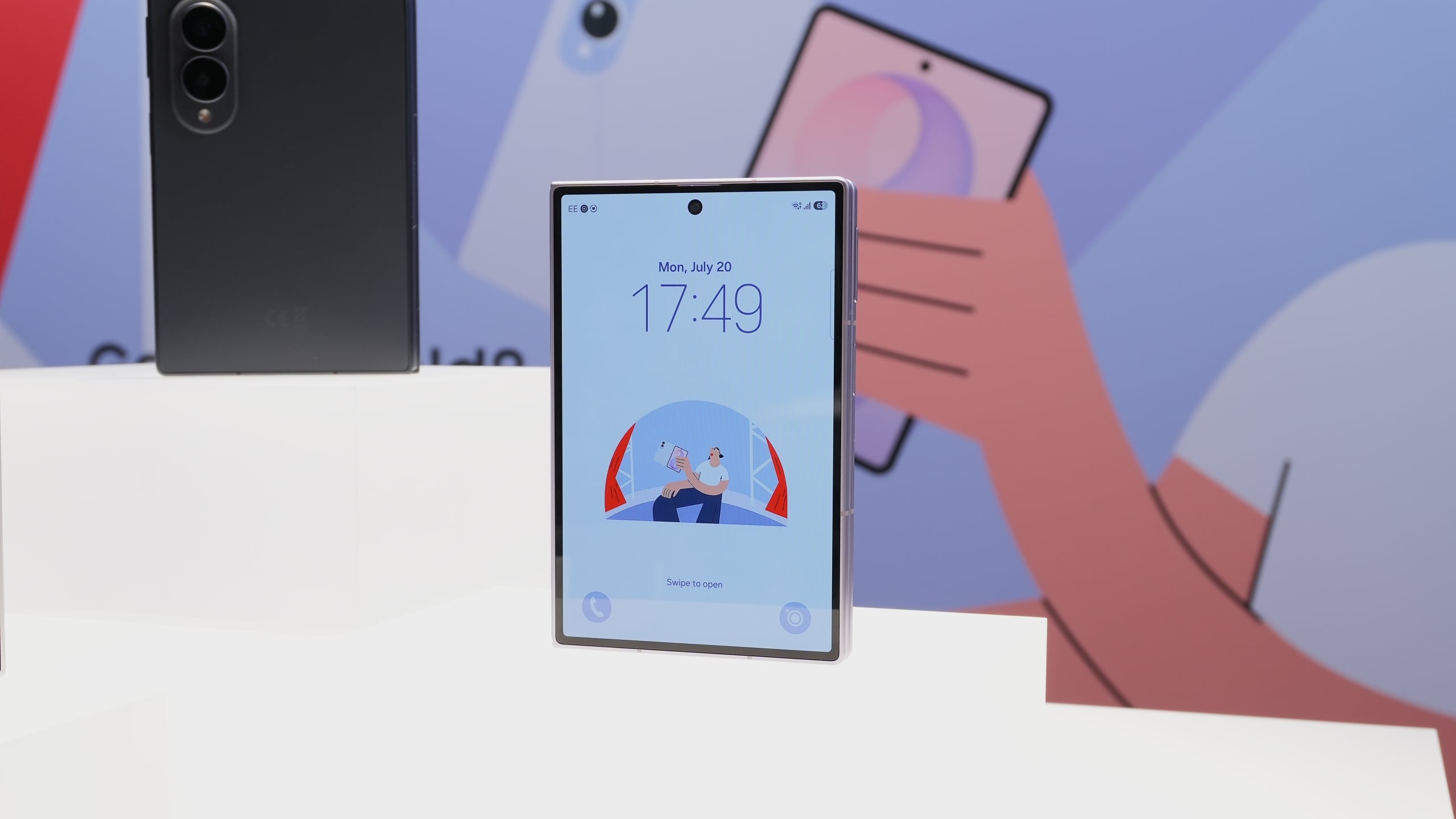
Samsung Galaxy Z Fold 8 Redefines the Foldable Experience with Seamless Tablet Mode
The Samsung Galaxy Z Fold 8 eliminates the historical usability bottleneck of requiring a physical 90-degree device rotation to achieve a proper horizontal tablet layout, according to hands-on hardware analysis published by SamMobile journalist Abhijeet Mishra in July 2026. Rather than forcing users to twist a tall, narrow chassis into a landscape orientation, the deployment of an unconventional passport-style cover screen yields an immediate 4:3 aspect ratio upon unfolding. While consumer retail pricing starting at €2,000 puts the device under strict economic scrutiny, the industrial engineering overhaul solves a persistent human-interface friction point that has defined foldable hardware architectures since their inception.
The Tech TL;DR:
- Hardware Architecture: The Galaxy Z Fold 8 introduces a passport-style cover screen that unfolds directly into a 4:3 horizontal tablet aspect ratio, removing the traditional need to rotate the chassis 90 degrees.
- Form Factor Evolution: Unlike previous iterations and the contemporaneous Galaxy Z Fold 8 Ultra, the base model aligns its internal dimensions natively with horizontal media consumption and split-screen multitasking.
- Deployment Economics: European retail pricing clears the €2,000 threshold, anchoring the hardware release in a high-end bracket ahead of regional pre-order windows closing on August 7, 2026.
Resolving the Aspect Ratio Bottleneck in Foldable Form Factors
Ever since commercial foldable displays entered the consumer pipeline, hardware engineers have struggled against a fundamental geometric compromise. Previous generations of Samsung foldables—and even the larger Galaxy Z Fold 8 Ultra variant analyzed in technical previews by SamMobile—unfold into an interior workspace that remains vertically biased, rendering a display taller than it is wide. Consuming horizontal video streams or standard web layouts on those legacy devices meant executing a manual 90-degree rotation every single time a tablet footprint was desired.
That physical gesture took less than a second, but it introduced micro-friction into the user experience loop. Product design frequently focuses on massive computational or thermal breakthroughs, yet everyday utility often depends on removing minor, repetitive frictions that users simply learn to work around. By adjusting the cover display’s geometry into a passport-style footprint, the Galaxy Z Fold 8 allows the inner panel to open directly into a 4:3 landscape grid. Unfolding the device is now functionally sufficient to transform the pocket-sized phone into an authentic tablet.
Software Multitasking and One UI 9 Performance Metrics
Running on Samsung’s One UI 9 framework, the Galaxy Z Fold 8 leverages its native 4:3 inner canvas to improve split-screen window management. When developers build applications for traditional foldable aspect ratios, they frequently encounter awkward scaling errors because the unfolded canvas mimics two narrow portrait phone screens glued together. The true 4:3 ratio on the Fold 8 offers developers a standardized workspace that reduces the need for aggressive responsive-design refactoring.
Below is a standard ADB command used by engineers to force device density and inspect layout bounds on One UI 9 foldable viewports:
# Connect to Galaxy Z Fold 8 via ADB and log screen metrics for One UI 9
adb devices
adb shell wm size
adb shell wm density 420
adb logcat -s WindowManager:I
Economic Realities and Regional Pre-Order Timelines
Despite the architectural elegance of the hardware redesign, real-world adoption remains gated by financial friction. According to market observations from SamMobile, the device commands a starting price of €2,000 across European distribution channels. For individual consumers and technology enthusiasts balancing competing financial priorities, that price point represents a significant capital outlay.
The Editorial Kicker: The Path Toward Frictionless Hardware
The Galaxy Z Fold 8 proves that the most impactful hardware evolutions are not always raw compute upgrades or massive battery capacity expansions, but rather the quiet elimination of mechanical annoyances. By matching the unfolded state directly to a native 4:3 tablet layout, Samsung has bypassed the rotation tax that hindered previous generations. While consumer adoption will ultimately be dictated by macroeconomic realities and high retail price points, the structural blueprint is set.