
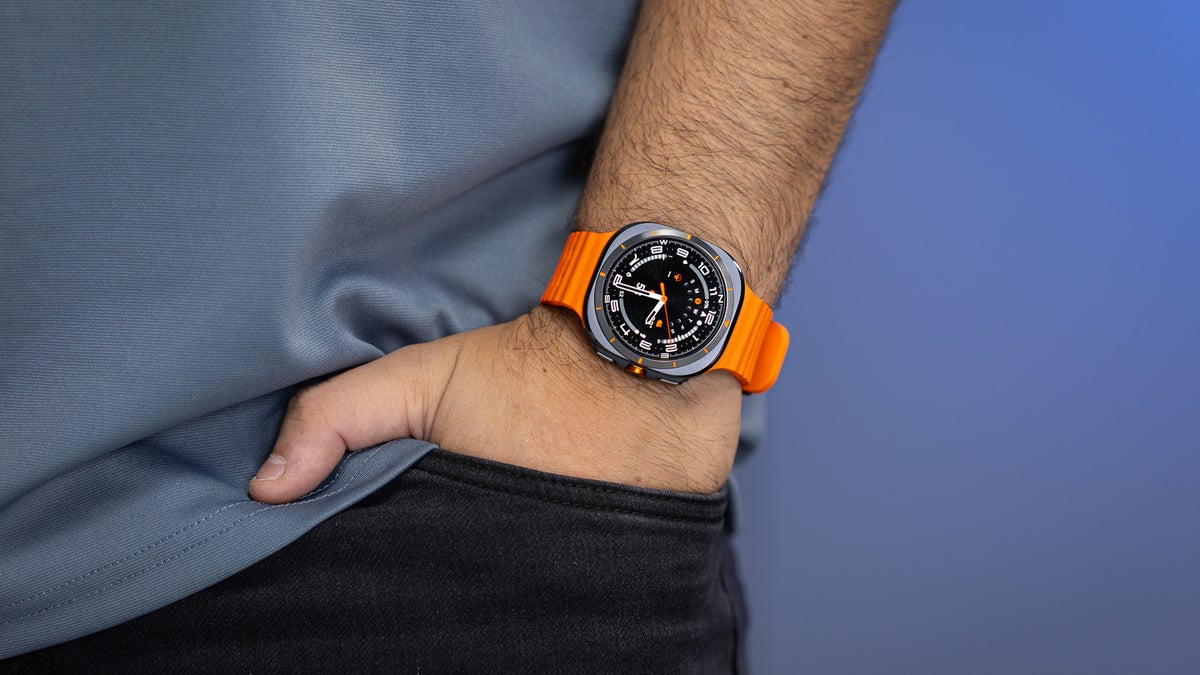
Samsung Galaxy Watch Ultra 2: Two Different Models Expected
Samsung is playing the SKU-proliferation game again. Rumors suggest the Galaxy Watch Ultra 2 won’t be a monolithic release but a tiered rollout. For the average user, it’s a choice of bezel; for the power user, it’s a question of whether the NPU can actually handle on-device LLM processing without turning the wrist into a space heater.
The Tech TL;DR:
- Tiered Hardware: Potential split between a “Standard Ultra” and a “Pro/Plus” variant, likely differentiated by sensor arrays and battery density.
- Compute Shift: Expected transition to a 3nm SoC, aiming to reduce thermal throttling during continuous GPS and biometric polling.
- Ecosystem Lock-in: Deeper integration of Wear OS 5/6 with proprietary Samsung Health APIs, increasing the barrier for cross-platform migration.
The core tension here isn’t about aesthetics; it’s about the power-to-performance ratio in a constrained form factor. We’ve seen the first-gen Ultra push the boundaries of battery life, but the bottleneck remains the SoC’s efficiency during peak workloads. If Samsung splits the line, they are likely experimenting with different binning of their Exynos chips or varying the capacity of the NPU (Neural Processing Unit) to handle the “AI” features that are currently just cloud-wrappers. From a developer’s perspective, the real question is whether the Wear OS 5 environment can maintain low latency while executing complex health telemetry on-device.
The Silicon Divide: 3nm Architecture vs. Thermal Throttling
To understand why two models might exist, we have to glance at the thermal envelope. High-accuracy biometric monitoring and dual-band GPS are power-hungry. When you add on-device AI for sleep apnea detection or real-time metabolic tracking, you hit a thermal wall. According to Ars Technica’s analysis of wearable SoC trends, the shift to 3nm processes is mandatory to prevent the “hot wrist” syndrome that plagued early high-performance wearables.

If Samsung introduces a “Pro” model, expect a higher-binned SoC with a dedicated AI accelerator. This would allow for local execution of small language models (SLMs) for voice interaction, reducing the round-trip time to Samsung’s servers and mitigating the latency issues inherent in current voice-assistant implementations. For enterprises deploying these as health-monitoring tools for field workers, the reliability of local processing is a non-negotiable requirement.
| Spec Component | Predicted Ultra 2 (Standard) | Predicted Ultra 2 (Pro/Plus) | Technical Impact |
|---|---|---|---|
| SoC Process | 3nm (Standard Bin) | 3nm (High-Efficiency Bin) | Lower TDP, reduced throttling |
| NPU Capability | Hybrid (Cloud-Heavy) | On-Device (SLM Optimized) | Lower latency, offline AI |
| Battery Chemistry | Standard Li-Po | High-Density Silicon-Anode | Increased mAh/mm³ ratio |
| Sensor Array | Standard BioActive | Enhanced ECG + Blood Pressure | Higher fidelity telemetry |
This hardware divergence creates a fragmented support landscape. For IT managers overseeing corporate wellness programs, this means varying levels of data precision across a fleet. Organizations are already leveraging managed IT service providers to standardize hardware deployments and ensure that biometric data streams are consistent across the workforce.
The Implementation Mandate: Interfacing with Wear OS Health APIs
For those building custom health dashboards or integrating Samsung’s telemetry into enterprise ERPs, the focus shifts to the API. The transition to newer Wear OS versions requires a more rigorous approach to permission handling and background data synchronization. To test the connectivity and data throughput of a wearable device via ADB (Android Debug Bridge), developers often utilize the following shell commands to monitor battery drain and CPU spikes during sensor polling:
# Check current battery stats and power consumption of the health service adb shell dumpsys batterystats | grep "com.samsung.android.health" # Monitor real-time CPU usage to detect thermal throttling during GPS lock adb shell top -m 10 -s cpu # Push a test APK to verify NPU acceleration on the new SoC adb install -r wearable_ai_test_v2.apkThe complexity of these deployments often leads to security gaps. As wearables collect more sensitive biometric data, the “attack surface” expands. We are seeing a surge in the need for cybersecurity auditors and penetration testers to ensure that the end-to-end encryption (E2EE) from the watch to the smartphone and subsequently to the cloud, isn’t compromised by legacy API vulnerabilities.
“The industry is moving toward ‘Edge Health.’ The goal is to move the inference engine from the cloud to the wrist. If Samsung succeeds with a tiered Ultra 2, they aren’t just selling a watch; they are selling a distributed compute node for personal health.” — Marcus Thorne, Lead Systems Architect at NexaWear Research
The Software Stack: Wear OS vs. The Proprietary Layer
Samsung continues to wrap Google’s Wear OS in its own One UI skin. While this provides a polished UX, it introduces a layer of abstraction that can either optimize or hinder performance. The “Pro” model may feature a more aggressive implementation of containerization for third-party apps, ensuring that a buggy fitness app doesn’t crash the entire system—a critical requirement for devices marketed as “Ultra” or “Rugged.”
When comparing the Ultra 2 to its primary competitor, the Apple Watch Ultra 2, the battle is fought on the grounds of sensor integration. Apple’s vertical integration of the S-series chips provides an efficiency edge, but Samsung’s openness to the Android ecosystem allows for more flexible API integrations. However, this openness is a double-edged sword, necessitating strict SOC 2 compliance for the cloud backends that store this sensitive data.
The hardware is only as great as the firmware. Following the latest zero-day patch cycles, we’ve seen that wearable vulnerabilities often stem from the Bluetooth stack. As Samsung scales enterprise adoption, the integration of continuous integration (CI) pipelines for firmware updates will be the only way to maintain security without bricking devices in the field.
the “Two-Model” strategy is a hedge. Samsung is betting that a segment of the market will pay a premium for local AI compute and superior battery density. For the rest, the standard Ultra 2 will be a refined iteration of a proven formula. As the line between medical devices and consumer electronics blurs, the need for professional consumer electronics repair and calibration services will only grow, as these complex sensor arrays defy simple DIY fixes.
Disclaimer: The technical analyses and security protocols detailed in this article are for informational purposes only. Always consult with certified IT and cybersecurity professionals before altering enterprise networks or handling sensitive data.