
Samsung Expands One UI 8.5 Beta Program and Brings S26 AI Features to Older Galaxy Devices
Samsung is currently executing a fragmented deployment of One UI 8.5, treating its software stack more like a tiered subscription than a unified OS update. Even as the Galaxy S26 series shipped with the stable build in early March, the rest of the ecosystem is trapped in a protracted beta cycle based on Android 16 QPR2, creating a stark divide between current-gen hardware and the legacy fleet.
The Tech TL. DR:
- Beta Expansion: One UI 8.5 beta now extends to Galaxy S23 series, Z Fold5, Z Flip5, S23 FE, and the A36 5G.
- S25 Stable Timeline: Stable rollout for the S25 series is leaked for April 30 in Korea, with international availability starting May 4.
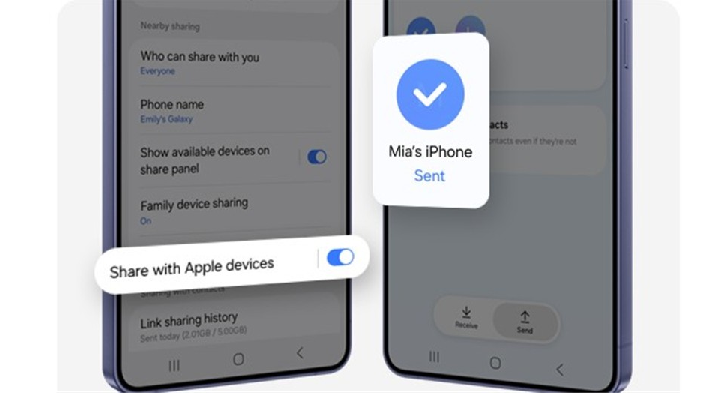
- Key Feature: Integration of AirDrop support via Quick Share is now active for select high-end devices (S26, S25, S24, and Z series Fold/Flip 6 and 7).
The current deployment strategy reveals a calculated move toward software exclusivity. By keeping One UI 8.5 stable exclusive to the S26 for two months, Samsung is attempting to create a synthetic value proposition for its newest hardware. For enterprise IT managers, this staggered release is a nightmare for fleet uniformity. When a significant portion of the mobile workforce is on a beta build while the executive tier is on a stable release, the resulting variance in API behavior and security patching creates unnecessary overhead. Organizations managing these deployments often rely on managed IT services to synchronize versioning and mitigate the risks associated with beta instability in production environments.
The Deployment Matrix: Beta vs. Stable
The rollout is not a linear progression but a phased expansion. The March 2026 push initially targeted the S24 series, Z Fold6, Z Flip6, and the FE variants of the S24 and S25, along with the Tab S11 series. The April 9 expansion further widens the net to include the S23 family and the A-series for the first time via the Galaxy A36 5G.
| Device Tier | Current Status (as of April 10, 2026) | Key Feature Availability | Expected Stable Date |
|---|---|---|---|
| Galaxy S26 Series | Stable | Full One UI 8.5 / AirDrop | Released March 2026 |
| Galaxy S25 Series | Beta (8 builds completed) | AirDrop / Call Screening (Upcoming) | April 30 (KR) / May 4 (Intl) |
| Galaxy S24 / Z6 Series | Beta | AirDrop Support | TBD |
| Galaxy S23 / Z5 / A36 | Beta (Newly Added) | Basic One UI 8.5 Features | TBD |
Architectural Shift: Android 16 QPR2 and Interoperability
The technical core of this update is the shift to Android 16 QPR2. The most significant architectural addition is the implementation of AirDrop support through Quick Share. This represents a pivot toward cross-platform interoperability, reducing the friction of file transfers between Galaxy devices and Apple’s ecosystem. However, the rollout of this specific feature is strictly gated by hardware capabilities, currently limited to the S26, S25, S24, and the Fold/Flip 6 and 7 series.
From a systems perspective, the transition from beta to stable for the S25 is lagging. With eight beta builds already pushed, the “stability” of the build is likely high, yet the delay suggests a marketing-driven hold rather than a technical bottleneck. For developers testing apps against this environment, verifying the build ID is critical to ensure compatibility with the QPR2 changes.
# Check current build version via ADB to verify One UI 8.5 Beta status adb shell getprop ro.build.display.id # Check for pending system updates via package manager adb shell dumpsys package dexoptThe Risk of Beta Proliferation
Expanding the beta program to the A36 5G and S23 series increases the surface area for potential regressions. Beta software, by definition, lacks the rigorous validation of a stable release, often introducing memory leaks or instability in the NPU (Neural Processing Unit) during AI-driven tasks. When these devices are used in corporate settings, a single unstable build can lead to widespread productivity loss.

This is where the “blast radius” of a software update becomes a liability. If a beta build triggers a bootloop or compromises biometric authentication, the recovery process requires physical access to the device. Corporations are increasingly deploying cybersecurity auditors and penetration testers to evaluate how these beta-driven changes affect the device’s secure enclave and overall SOC 2 compliance posture before allowing them on the corporate network.
One UI 8.5 vs. The Competition
While Samsung focuses on “usability enhancements” and call screening, the broader Android ecosystem is moving toward deeper integration of LLMs at the kernel level. Samsung’s approach with One UI 8.5 is additive—layering features like AirDrop support onto an existing framework—whereas competitors are focusing on reducing latency in on-device AI processing. The delay in the S25 stable release further weakens Samsung’s position, as rivals are already shipping stable Android 16 builds.
For users experiencing hardware failures during the beta transition, the risk of “bricking” a device is non-zero. In such cases, seeking certified hardware technicians is the only viable path to recovery, as flashing factory images can void warranties if not handled through official channels.
The trajectory of One UI 8.5 suggests that Samsung is prioritizing the “exclusive” feel of its flagship hardware over the stability of its broader ecosystem. By treating software as a tiered reward, they risk alienating the power users and CTOs who value predictability and rapid deployment over marketing-led exclusivity. The industry is watching to see if the May 4 international rollout for the S25 holds, or if further “usability enhancements” will push the date back again.
Disclaimer: The technical analyses and security protocols detailed in this article are for informational purposes only. Always consult with certified IT and cybersecurity professionals before altering enterprise networks or handling sensitive data.