
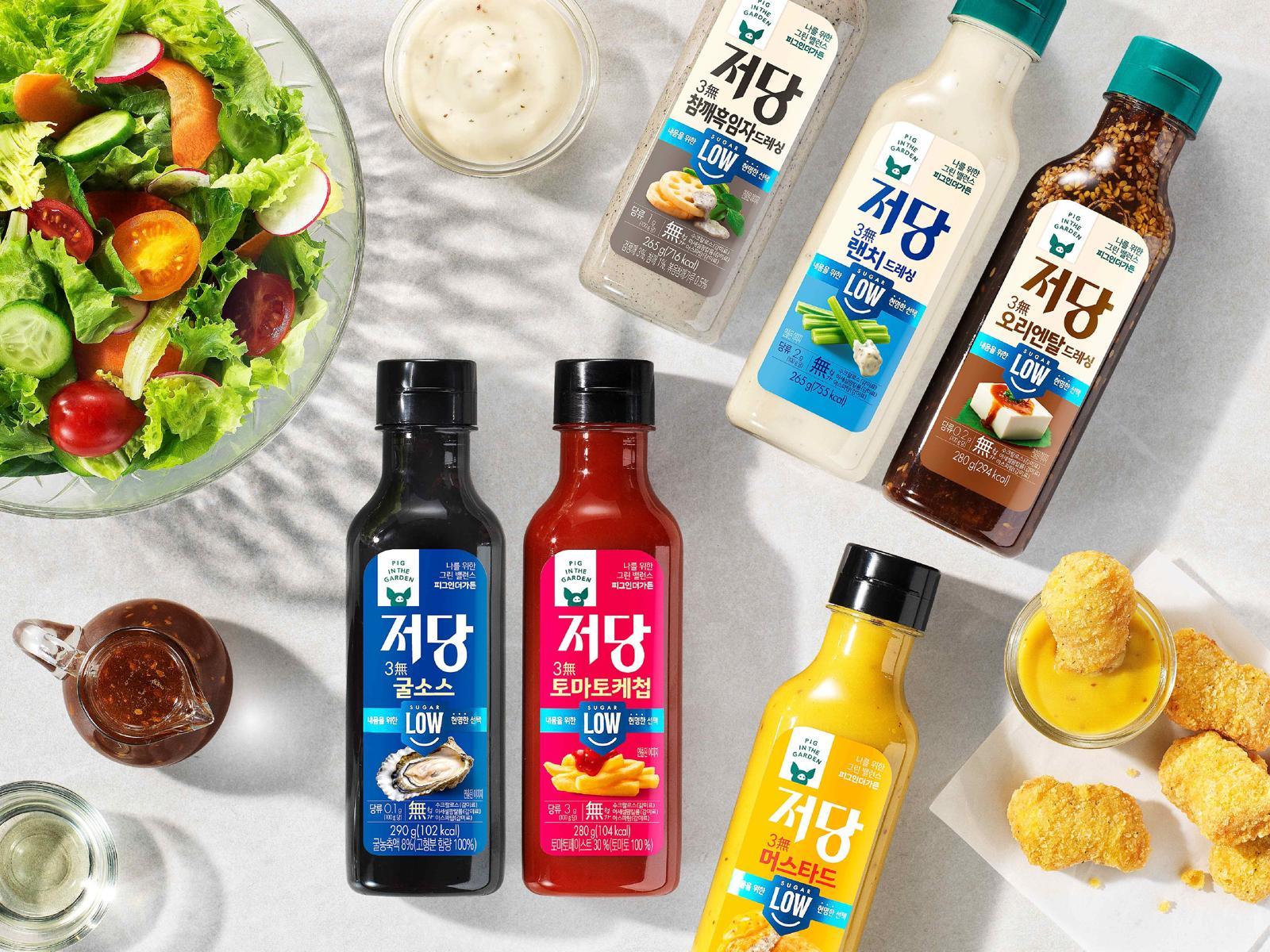
Samlip Launches 12 Low-Sugar Sauces & Dressings for Health-Conscious Consumers
Samlip Food Co. Has aggressively expanded its portfolio with twelve new low-sugar sauces and dressings, replacing artificial sweeteners with allulose and stevia to capture the surging “Modi-sumer” demographic. This strategic pivot addresses the fiscal tension between rising health-conscious consumer demand and the operational costs of clean-label reformulation in a domestic market now valued at approximately 3 trillion KRW.
The math is simple but unforgiving. In the consumer packaged goods (CPG) sector, margin compression is the silent killer. As regulatory bodies tighten labeling laws and consumers scrutinize ingredient lists with forensic precision, legacy brands face a binary choice: innovate or erode. Samlip’s latest move isn’t just about flavor profiles; It’s a defensive maneuver against market share loss to agile, niche competitors who have already cornered the “clean label” segment. By swapping sucralose and aspartame for allulose and stevia, they are betting that the premium pricing power of “natural” ingredients will offset the higher cost of goods sold (COGS).
This launch coincides with a broader structural shift in the Asian food supply chain. The domestic sauce market has more than doubled in value since 2019, jumping from 1.37 trillion KRW to nearly 3 trillion KRW in 2024. Yet, volume growth alone does not guarantee profitability. The real story lies in the “Modi-sumer”—a portmanteau of modify and consumer. These are not passive eaters; they are active participants in their food preparation, treating off-the-shelf sauces as base components for customized culinary creations. For a conglomerate like Samlip, this behavior demands a supply chain capable of rapid SKU proliferation without sacrificing economies of scale.
Consider the ingredient sourcing implications. Allulose and stevia are not commodities in the same vein as high-fructose corn syrup. Their supply chains are fragmented and often subject to volatile agricultural yields. To secure consistent quality at scale, major manufacturers are increasingly turning to specialized global ingredient sourcing firms that can guarantee purity and volume. Without these strategic B2B partnerships, a reformulation effort of this magnitude risks supply bottlenecks that could stall production lines within weeks of launch.
“The shift away from artificial sweeteners is no longer a niche preference; it is a baseline requirement for shelf stability in the premium sector. We are seeing CPG giants restructure their R&D budgets to prioritize natural sweetener stability over traditional flavor masking.”
Industry observers note that the transition is fraught with technical challenges. Natural sweeteners often lack the thermal stability or mouthfeel of their synthetic counterparts. “When you remove the artificial backbone, you expose the volatility of the natural base,” says Dr. Elena Ross, a senior analyst at Euromonitor International specializing in Asian food markets. “Brands that fail to invest in advanced food science consultation during this transition often face product recalls or consumer rejection due to texture degradation.”
Samlip’s twelve-product rollout covers the essential spectrum of kitchen utility. On the savory side, they have introduced low-sugar variants of tomato ketchup, mustard, and oyster sauce, alongside more complex profiles like teriyaki, sweet chili with jalapeño, and a charcoal-infused spicy sauce. The dressing line mirrors this diversity, featuring oriental, balsamic, ranch, garlic pepper, kiwi puree, and a black sesame blend. The strategic breadth here is notable; they are not just targeting the salad eater, but the home cook looking to reduce sugar intake in stir-fries and marinades.
However, scaling this innovation requires more than just a new recipe. It demands a robust logistical framework. As companies diversify their SKUs to cater to hyper-specific dietary needs, inventory management becomes a nightmare of complexity. This represents where the value of specialized supply chain logistics providers becomes critical. Efficient cold-chain management and just-in-time delivery systems are essential to prevent spoilage of natural ingredients and ensure that these fresh-tasting products reach retail shelves with optimal shelf life.
The Macro Shift: Three Structural Changes
The implications of Samlip’s move extend beyond a single product launch. We are witnessing a macro-level restructuring of the food and beverage industry. Here is how this trend alters the competitive landscape for the upcoming fiscal quarters:
- R&D Capital Allocation: Budgets are shifting from marketing spend to formulation science. Companies are pouring capital into finding natural alternatives that mimic the viscosity and sweetness of sugar without the caloric load. This creates a lucrative market for biotech research firms specializing in enzyme technology and fermentation.
- Regulatory Compliance Costs: As “low sugar” claims face stricter scrutiny from bodies like the MFDS (Ministry of Food and Drug Safety) in Korea and the FDA globally, legal overhead is increasing. Firms must navigate a minefield of labeling laws to avoid litigation, driving demand for specialized regulatory counsel.
- Consumer Data Integration: The “Modi-sumer” generates data. Every customization and recipe share is a data point. Agile companies are leveraging this feedback loop to adjust production runs in real-time, moving away from annual planning cycles to quarterly or even monthly agility.
The financial takeaway for investors is clear: the era of “sugar as a cheap filler” is ending. The cost of sweetness is rising, and only those manufacturers with deep pockets and sophisticated B2B networks can absorb the shock. Samlip’s aggressive expansion signals confidence, but the true test will be in the Q3 and Q4 earnings reports. Can they maintain EBITDA margins while sourcing premium ingredients? Can they convince the price-sensitive mass market to pay a premium for “clean” labels?
For the broader market, this is a signal to audit supply chains. If your portfolio companies are still relying on legacy sweetener contracts or outdated formulation partners, the risk of obsolescence is high. The window to pivot is narrowing. Smart capital is already moving toward firms that offer complete-to-end solutions—from food science consulting to sustainable packaging—ensuring that the next generation of products is not just healthy, but financially viable.
The bottom line is that health trends are no longer just a marketing hook; they are a balance sheet imperative. As the World Today News Directory tracks these shifts, we see a clear divergence between market leaders who treat health as an engineering problem and laggards who treat it as a PR stunt. The former will secure the shelf space; the latter will be liquidated.