
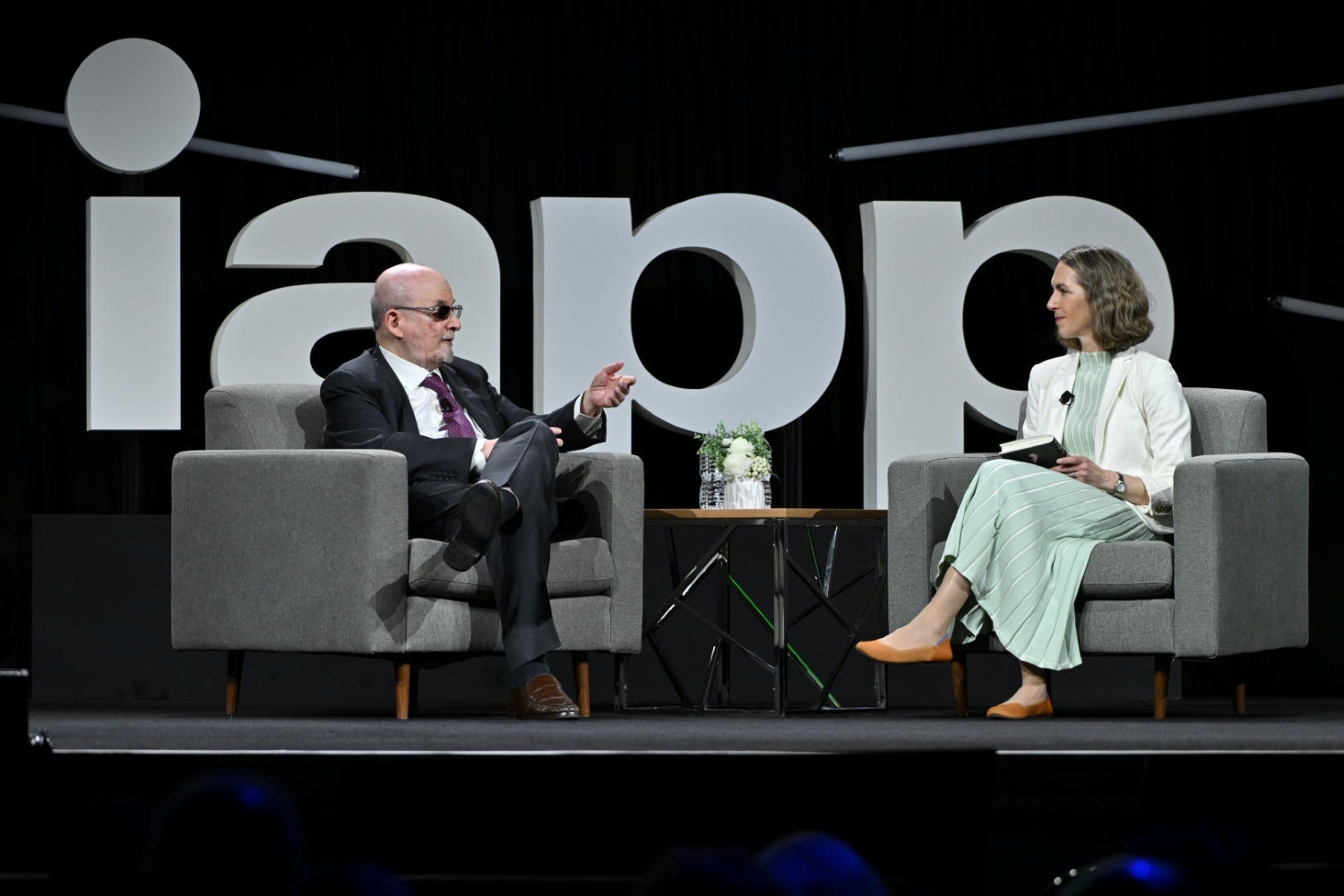
Salman Rushdie on Attack, Privacy & AI: A Harrowing Account
Rushdie’s Post-Attack Reflections Illuminate the Eroding Boundaries of Privacy
World-renowned author Salman Rushdie, speaking at the IAPP Global Summit 2026 in Washington, D.C., detailed the harrowing experience of the 2022 stabbing attempt on his life, revealing a profound shift in his understanding of privacy – a concept he argues is increasingly compromised in both the physical and digital realms. His account, interwoven with observations on socioeconomic disparities in India and the potential dangers of artificial intelligence, underscores a growing cultural anxiety surrounding personal autonomy. The event highlighted the critical demand for robust security consulting services for high-profile individuals and events.

The Immediate Surrender to Collective Care
Rushdie recounted the immediate aftermath of the attack at the Chautauqua Institution, describing the surreal experience of having his clothing cut away by the two doctors in the audience who rushed to his aid. He noted the initial, almost comical, lament over the damage to his suit, quickly superseded by the stark realization that survival necessitated a complete “surrender” to the intervention of others. “One of the things about serious injury is that in order to survive it, you have to surrender anything like an idea of privacy because people dive in (to help), and you have to let them,” he stated. This involuntary relinquishing of control, he explained, was a jarring experience, particularly for someone accustomed to a degree of personal space, even under the long shadow of the 1989 fatwa issued by Ayatollah Khomeini. The incident underscores the vulnerability inherent in public life and the reliance on immediate, often improvised, medical assistance.
Echoes of Past Restrictions: Security and the Loss of Freedom
Rushdie drew a parallel between the forced exposure of his injuries and the restrictions imposed by his 13 years of 24/7 security detail following the fatwa. He explained that the most challenging aspect of being protected wasn’t the fear of death, but the constant intrusion into his private life. “Everybody says the same thing,” Rushdie observed, “That the most difficult thing about it is not (the possibility of) death, it’s the intrusion into your private life of people who are there to look after you.” This sentiment resonates with the broader debate surrounding surveillance and the trade-offs between security and freedom. The logistical complexities of maintaining such a high level of protection require specialized executive protection services, capable of navigating both physical and digital threats.
Digital Erosion and the Call for Regulation
The conversation then shifted to the digital realm, where Rushdie expressed growing concern over the impact of social media on privacy, particularly for children. He indicated a shift in his perspective, stating he was “coming to the view” that legislative bans on children’s access to social media platforms were “worth pursuing.” Although acknowledging the arguments surrounding freedom of expression, he emphasized the importance of protecting children’s development. This debate mirrors the ongoing discussions in Australia, which recently initiated a movement to ban children from accessing social media. The legal ramifications of such bans are significant, requiring expert guidance from intellectual property lawyers specializing in digital rights and regulations.
AI and the Threat to Human Thought
Rushdie’s concerns extended to the rapidly evolving landscape of artificial intelligence. He warned that AI “technology doesn’t just help us think, it tells us how to think,” posing a potential threat to independent thought and critical reasoning. In a world witnessing a rise in authoritarianism, he fears that AI could be weaponized to manipulate and control populations, ultimately eroding humanity itself. This perspective aligns with growing anxieties within the tech community regarding the ethical implications of AI development and the need for responsible innovation. The potential for misuse necessitates proactive legal frameworks and ethical guidelines, areas where specialized legal counsel is crucial.
Privacy as a Privilege: Socioeconomic Disparities in India
Rushdie broadened the discussion to encompass global disparities in privacy, drawing on his personal connection to India. He highlighted the stark reality that access to even basic privacy – such as a private bathroom – is often contingent on socioeconomic status. He described the widespread lack of sanitation facilities in many parts of India, forcing a significant portion of the population to “perform their natural functions outdoors,” a situation particularly precarious for women. “Many live in very small accommodations with many people sharing a room,” he explained. “That sense of being by yourself somewhere, or even having secrets about your life, which other people don’t know — there’s no such thing. There is no sense of yourself as an individual.” This observation underscores the fundamental link between privacy and human dignity, and the systemic inequalities that prevent millions from enjoying this basic right.
“Knife”: A Literary Reckoning with Trauma and Surveillance
Rushdie’s latest novel, “Knife: Meditations After an Attempted Murder,” serves as a powerful exploration of his experience, grappling with the physical and emotional trauma of the attack, as well as the enduring impact of the fatwa and the constant surveillance that has defined much of his life. The book, released in April 2024, has garnered critical acclaim for its unflinching honesty and its profound reflections on the nature of identity, freedom, and the power of storytelling. According to Sean Gallup of Getty Images, who photographed Rushdie promoting the German-language edition of the book, the author’s resilience is palpable. The book’s success demonstrates the enduring power of literary narratives to confront difficult truths and foster empathy.
“The most difficult thing about [security detail] is not (the possibility of) death, it’s the intrusion into your private life of people who are there to look after you.” – Salman Rushdie
The Future of Privacy in a Hyper-Connected World
Rushdie’s reflections at the IAPP Global Summit serve as a timely reminder of the fragility of privacy in an increasingly interconnected world. From the immediate aftermath of a violent attack to the subtle erosion of personal data in the digital age, the boundaries of privacy are constantly being challenged. As technology continues to advance and geopolitical tensions escalate, safeguarding individual autonomy will require a concerted effort from policymakers, technologists, and individuals alike. The demand for specialized legal counsel and robust security measures will only continue to grow, creating opportunities for firms specializing in data protection, risk management, and crisis communication. The event itself highlights the need for meticulous event management and security planning for high-profile gatherings.
*Disclaimer: The views and cultural analyses presented in this article are for informational and entertainment purposes only. Information regarding legal disputes or financial data is based on available public records.*