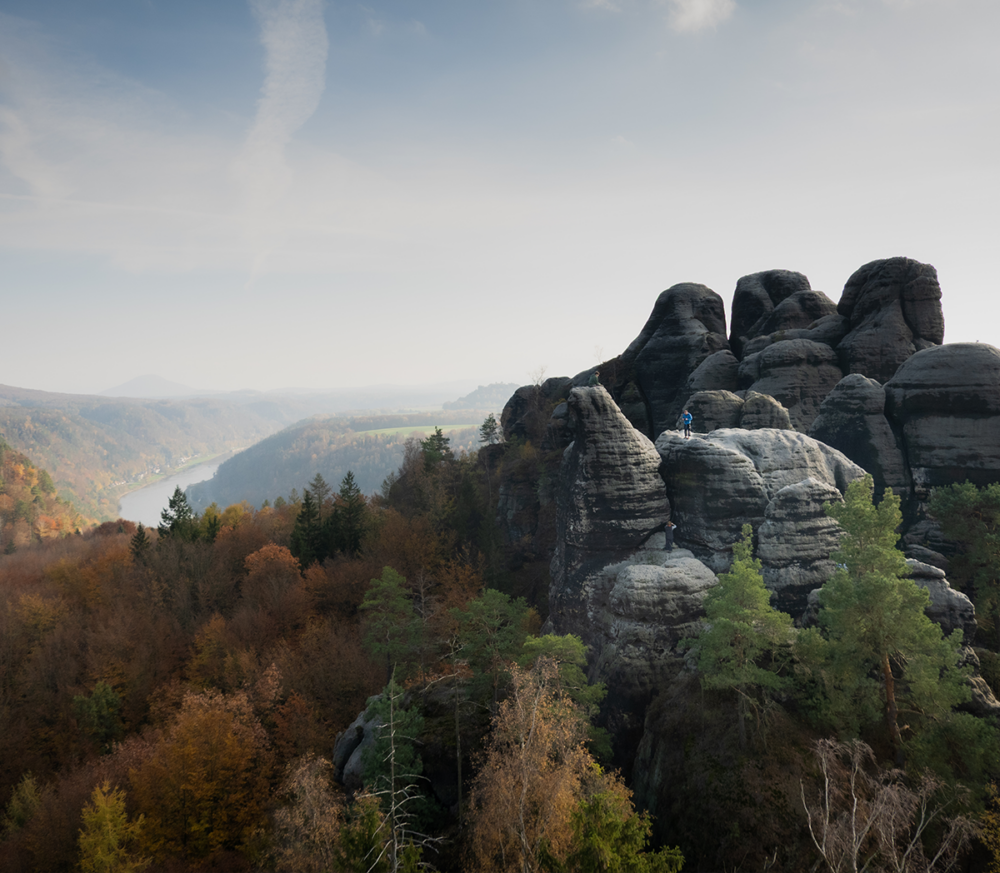
Sächsischer Bergsteigerbund Controls Ring Installation in Elbe Sandstone Mountains
A solitary 60-meter sandstone tower near Rathen marked the beginning of a strict free-climbing tradition in 1874 when Otto Ufer and Herman Johannes Frick ascended the Mönch via the Southeast Route, Lacrux reported.
That first ascent without artificial aids established the Elbe Sandstone Mountains as the cradle of free climbing, backed by more than 150 years of rigorous climbing ethics. To protect the fragile rock, climbers face a total ban on chalk and mobile metallic protection units like friends and nut wedges. Instead, they rely on slings, knots, and UFOs placed in natural structures.
Many routes also feature fixed security points known as rings, which serve a function similar to expansion bolts on hazardous passages. However, the installation of these metal anchors is tightly controlled by the Sächsischer Bergsteigerbund through its specialized subcommittee, the AG nR, which has operated since 1997 to preserve the original character of routes.
Since 2014, the AG nR has handled approximately 406 applications for additional or relocated rings, with annual figures ranging from 10 requests in 2020 up to 43 requests in 2019. Out of those submissions, roughly 174 applications were accepted for implementation or relocation, while 125 were rejected, and 107 awaited decisions at the time of reporting.
Submitting an application requires photographs of the climbing route and the proposed ring placement. Following approval, at least three members of the committee inspect the route and discuss it during committee sessions, where only members who have actually climbed the route and the original first-ascent climbers hold voting rights.
Proposed modifications must satisfy at least one of six specific criteria established by the Sächsischer Bergsteigerbund. Regulations state that climbing remains inherently dangerous, meaning extra rings are restricted to sections that prove unpredictably difficult, crumbly, and unprotectable, while any possibility of retreat counts against an installation.
An example of this strict review involved a request for an additional ring on the Pillar Route at the Abandoned Wall, where climbers argued a traverse on the right plate might prove unexpectedly difficult and that a plate sling might fail to hold a fall. The committee rejected the change after concluding that a lower traverse offered better rock quality and a reliable natural protection point.
“When you are standing on the pillar, you can calmly see that the structures below are better,” an AG nR committee member told Lacrux Klettermagazin, adding that they had previously fallen into the existing plate sling and confirmed its reliability.
After initial setup, creators have up to four weeks to install retrofitted rings before outside applicants can petition the committee for changes.
The position or absence of a ring remains an integral component of each route’s history, difficulty, and identity in the Elbe Sandstone Mountains. A registered professional mountain guide or certified regional alpine instructor can assist climbers looking to understand these complex local regulations and master traditional knot-based safety techniques.