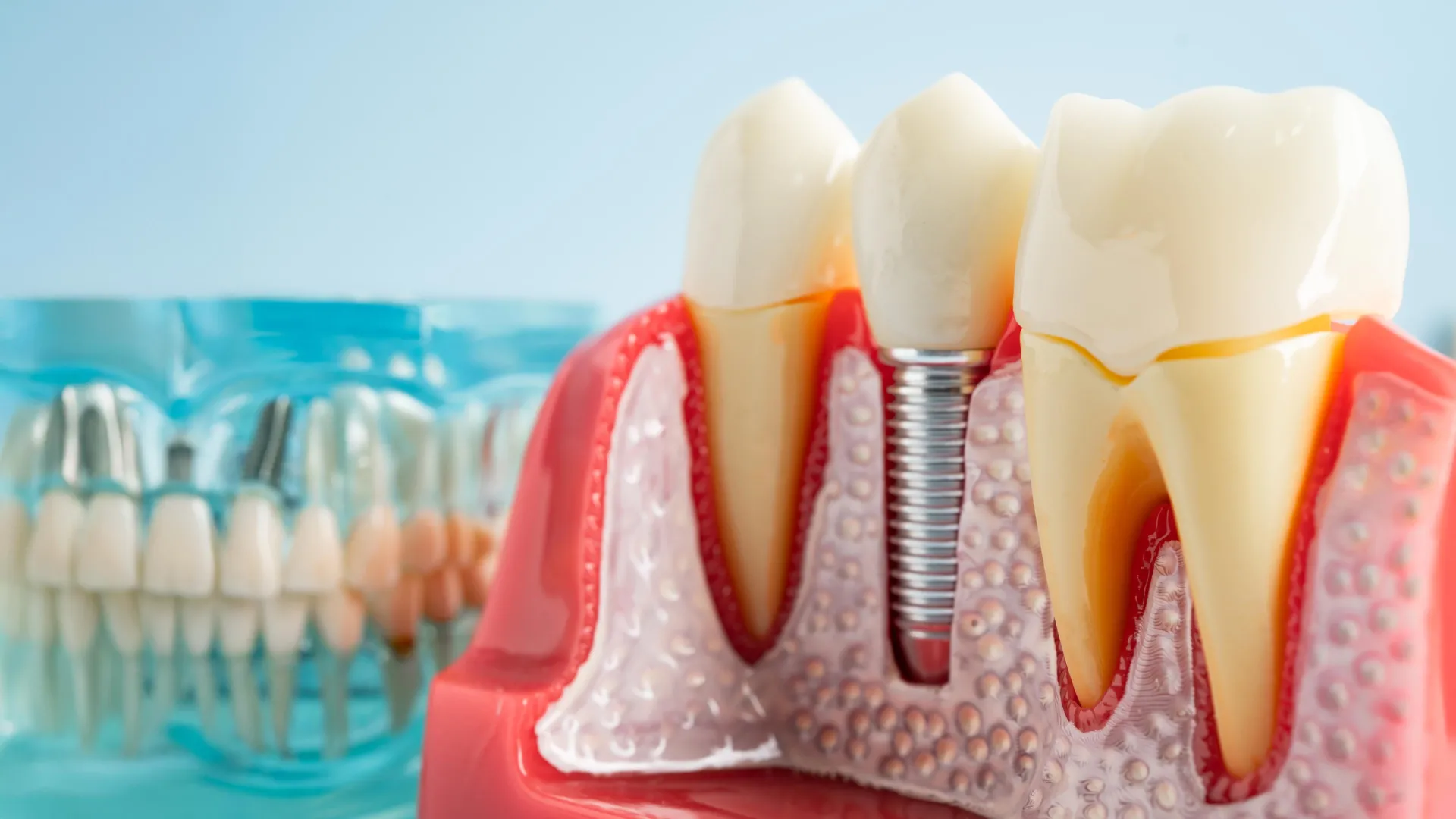
Rutgers Scientists Discover Why Dental Implant Infections Resist Drugs
Scientists at the Rutgers School of Dental Medicine discovered that bacteria can corrode dental implants, releasing microscopic titanium particles that hijack human immune cells and cause severe jawbone destruction. Published in PNAS Nexus, the study explains why conventional antibiotic treatments frequently fail to control peri-implantitis, a serious condition affecting up to 20 percent of dental implant patients and costing healthcare systems over $1 billion annually.
Key Clinical Takeaways:
- Dental implant corrosion releases microscopic titanium particles that bind bacterial toxins and disrupt macrophage function.
- Disabling the TRPC1 calcium channel in genetically engineered mice prevented the excessive inflammation and bone loss typical of peri-implantitis.
- Nonabrasive professional cleaning methods are critical to prevent metal scalers from scratching implant surfaces and accelerating tissue damage.
Dental Implant Infections Resist Standard Antibiotic Treatments
For tens of millions of people worldwide, dental implants offer a permanent solution to missing teeth. Yet an estimated 10% to 20% of these patients eventually develop peri-implantitis, an infection that damages the surrounding jawbone. While peri-implantitis shares initial bacterial origins with periodontitis around natural teeth, the two conditions diverge sharply in treatment efficacy. Standard antibiotics and routine professional cleanings resolve infections around natural teeth, but identical medications succeed in fewer than half of dental implant cases. Researchers identified the implant material itself as a primary contributor to this therapeutic failure. Accumulating bacteria form acidic biofilms that slowly erode titanium surfaces, releasing billions of microscopic metal particles smaller than a red blood cell.
Titanium Fragments Trigger Prolonged Inflammation in White Blood Cells
Once released into gum tissues, these microscopic titanium fragments attract a bacterial toxin known as lipopolysaccharide. Macrophages, the white blood cells tasked with engulfing pathogens, attempt to ingest the coated particles. Because titanium cannot be digested, the cells become trapped in a prolonged state of excessive inflammation. Georgios Kotsakis, senior author of the study and assistant dean for clinical research at Rutgers School of Dental Medicine, described the mechanism: For the first time, we show why all the antibiotic treatments that work around teeth do not work around implants.
The trapped macrophages secrete interleukin-1 beta, a protein also implicated in rheumatoid arthritis and Alzheimer’s disease. Consequently, the bone supporting the implant breaks down while the compromised macrophages ingest fewer than half as many bacteria as healthy immune cells.
TRPC1 Calcium Channel Discovery Suggests New Treatment Paths
Funding from the National Institutes of Health enabled the Rutgers team to trace this inflammatory reaction to TRPC1, a specific calcium channel within macrophage cell membranes. Experiments utilizing genetically engineered mice lacking the TRPC1 channel demonstrated a dramatic reduction in disease severity. When exposed to titanium particles and bacteria, these modified mice developed smaller abscesses, produced fewer inflammatory signaling molecules, and effectively cleared bacterial infections. Kotsakis noted: These particles are little magnets that attract the bacterial toxin, and they hijack the immune system, preventing it from clearing bacteria. You have a perfect storm that defies antibiotics.
Researchers are currently evaluating candidate drugs targeting this same molecular pathway in human cells.
Nonabrasive Cleaning Methods Protect Titanium Implant Surfaces
Until approximately a decade ago, dental professionals routinely cleaned implants with the same metal scalers used on natural teeth. Subsequent research demonstrated that these abrasive instruments scratch and damage titanium surfaces, dislodging additional metal particles and accelerating tissue deterioration. Contemporary clinical standards now rely on nonabrasive cleaning methods to protect implant surfaces. Patients managing dental implants should consult qualified dental professionals regarding appropriate maintenance instruments and nonabrasive prophylactic care to minimize surface wear.
Disclaimer: The information provided in this article is for educational and scientific communication purposes only and does not constitute medical advice. Always consult with a qualified healthcare provider regarding any medical condition, diagnosis, or treatment plan.