Russian Drone Violates Polish Airspace; NATO Pledges Defense After Missile Crashes
- Russian drone crossed into Poland near Dorohusk early Tuesday; air raid sirens activated in several cities.
- Polish military held fire, citing collateral risk; the drone turned back east after several minutes.
- Incident follows Friday’s crash of three Russian Kh-101 cruise missiles in southeastern Poland.
- NATO General Mark Rutte pledged alliance defense of “every inch” of Polish territory during a Warsaw visit Saturday.
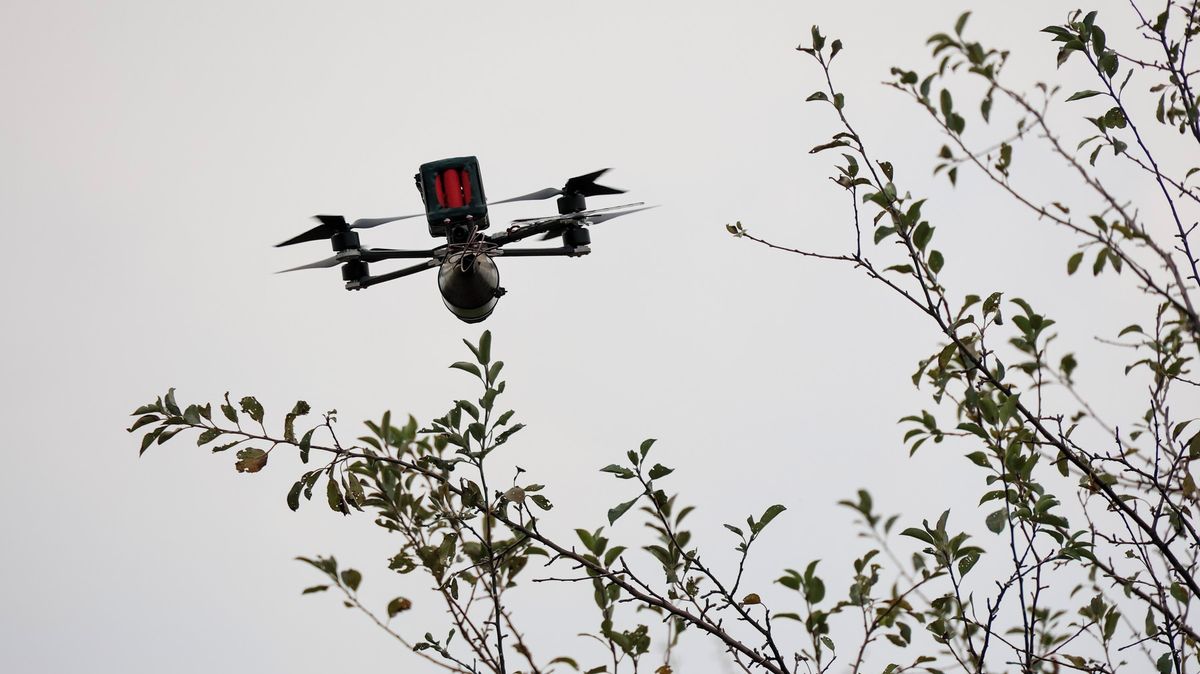
The unmanned aircraft, described by Polish media as a reconnaissance drone equipped with cameras, crossed the border at Dorohusk in Lublin province during a Russian attack on western Ukraine, České noviny reported, citing Reuters.
Polish forces had authorization to shoot it down but held fire after the drone changed course and headed back east. “The decision not to shoot down the drone was justified by the Polish armed forces with regard to the possible endangerment of civilians and the possible consequences of a shoot-down,” the outlet said.
Sirens wailed in a number of Polish cities while the drone remained in the country’s airspace for several minutes, according to Novinky. The operational command confirmed forces had the intruder under constant surveillance and were prepared to respond to any further threats. The incursion occurred early Tuesday, Novinky reported, citing The Kyiv Post.
Missile crashes Friday prompt NATO response
The overnight incursion came days after three objects crashed in southeastern Poland on Friday. Authorities initially described two missiles and a jet-powered drone but later confirmed all three were Russian Kh-101 cruise missiles. The impacts occurred near the villages of Nowy Lipowiec, Mołodycz and Rudnik nad Sanem, 50 to 70 kilometers from Nowa Dęba, where roughly 2,800 troops from 10 nations were conducting Coalition of the Willing exercises supported by several thousand Polish personnel, Britské listy reported.
Donald Tusk called the missiles Russian and labeled the event a deliberate provocation. “The date is not accidental — today coalition exercises are taking place in the area where our aviation operated,” Władysław Kosiniak-Kamysz said, according to E15.cz.
“This incident is clearly dangerous — it is a consequence of Russia’s ongoing war against Ukraine,” Rutte wrote on X, adding that he would travel to Poland over the weekend in response. Rutte wrote on X that he had spoken with Tusk about “serious violations” of Polish airspace.
Alliance pledges stronger air defense
NATO General Mark Rutte visited Warsaw on Saturday and told the NATO Parliamentary Assembly on Monday: “It is clear that this is a dangerous incident. It came from Russia.” He pledged the alliance would defend “every inch” of Polish territory. Johann Wadephul echoed the commitment, saying Germany would “resolutely defend every centimeter of NATO territory” and assuring Poland of full solidarity, Aktuálně.cz reported. The North Atlantic Council meets in Brussels on Monday to discuss the airspace violations. Poland has asked NATO’s Supreme Allied Commander Europe to revise the ongoing Eastern Sentry operation launched last September to improve detection, tracking and response to airborne threats along the eastern flank. Defense Minister Kosiniak-Kamysz said additional early-warning assets — including AWACS or Swedish Saab 340 AEW aircraft — and tethered aerostat balloons would be deployed for permanent monitoring, iROZHLAS reported.
Retired Lieutenant General Pavel Macko told iROZHLAS that a Swedish pilot flying a Gripen under NATO command had received clearance to engage the Friday missiles but held fire. “It was about collateral damage protection; there was no doubt it was a hostile object,” Macko said. “The pilot still has to be certain he will hit only that object and that no collateral losses will occur.”
Macko added that any shoot-down over Ukraine would require Kyiv’s consent and carries the risk of debris falling on Ukrainian cities, while direct NATO-Russia contact could be construed as alliance entry into the conflict.
“As soon as you operate in Ukrainian airspace and do not have a UN Security Council mandate for it, the other side can designate you as a direct participant in the conflict,” Lieutenant General Pavel Macko said. Tusk indicated that in the event of such incidents NATO “should immediately strengthen air defense” in countries on the alliance’s eastern flank.
The Polish Armed Forces operational command confirmed its forces had the intruder under constant surveillance early Tuesday and were prepared to respond, yet held fire after the drone turned back east, citing the possible endangerment of civilians and consequences of a shoot-down over populated areas.
This restraint reflects Poland’s national security strategy, which prioritizes the defence and protection of all citizens and the inviolability of borders while minimizing collateral risk, a calculus that aligns with NATO’s emphasis on proportionate response but applies a stricter domestic safety threshold before kinetic action.