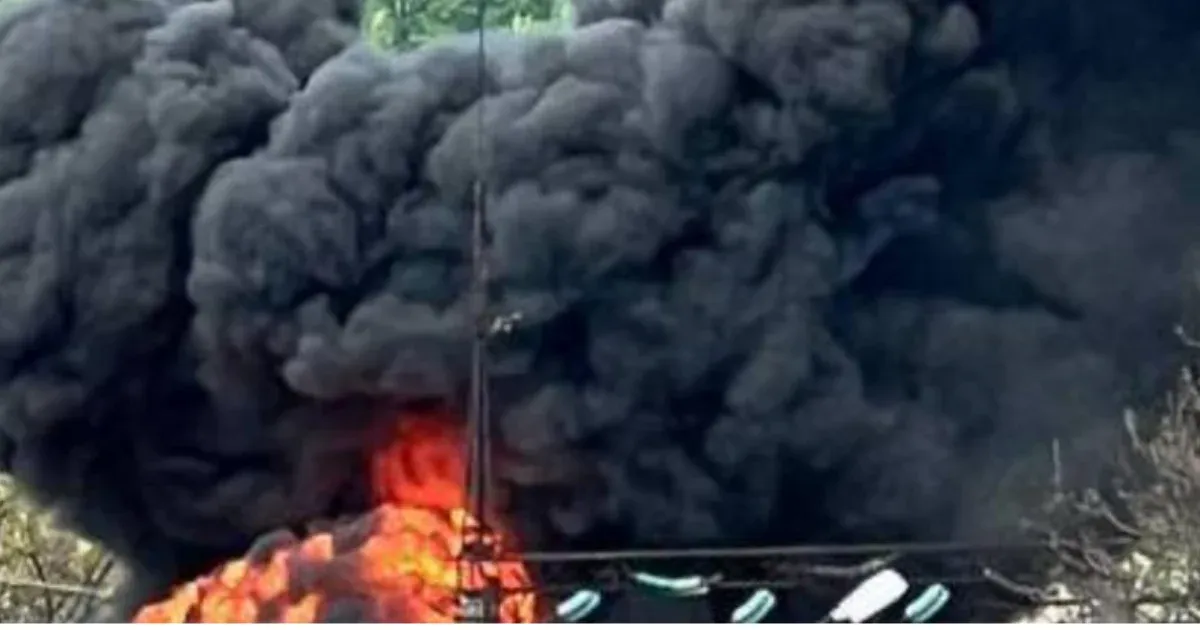
Russian Drone Attacks Hit Zakarpattia Region
Russian drone strikes have intensified in Ukraine’s Zakarpattia region following the expiration of a Moscow-requested ceasefire. Marking a significant escalation in reach, these attacks targeted critical areas including Mukachevo and Solyva, signaling a strategic shift in Russian aerial operations toward the nation’s westernmost borders to exert psychological and logistical pressure.
The geography of this escalation is not accidental. Zakarpattia is the gateway to the West, bordering three NATO and EU members: Poland, Slovakia, and Hungary. By pushing drone incursions deeper into this region than ever before, the Kremlin is no longer merely targeting military assets; it is testing the nerves of the European Union’s eastern flank. Here’s a calculated move to demonstrate that no corner of Ukrainian territory is beyond the reach of Russian precision munitions, effectively erasing the concept of a “safe rear” for Ukrainian administration and international aid hubs.
For the global business community, this is a signal of heightened volatility. The instability of transit corridors in Western Ukraine necessitates the immediate expertise of international logistics firms capable of dynamic rerouting and the implementation of redundant supply chains to avoid the bottlenecks created by air raid alerts and infrastructure damage.
The Strategic Geography of the Western Push
The recent strikes near Solyva and the drone activity over Okermező represent a breach of the perceived security perimeter of Western Ukraine. Historically, Zakarpattia served as a sanctuary for displaced persons and a primary artery for the flow of humanitarian and military hardware. The shift in targeting suggests a Russian effort to disrupt these lifelines.
When drones reach the far west, the operational risk profile for every multinational entity operating in the region changes instantly. We are seeing a transition from localized conflict to a systemic threat to regional stability. Firms are rapidly onboarding geopolitical risk consultants to map out continuity plans and evaluate the viability of their regional assets.
“The expansion of strike capabilities into the far western oblasts is a clear signaling mechanism. It is designed to convince the West that the cost of supporting Ukraine’s logistical hubs is rising, while simultaneously pressuring bordering EU states to reconsider their proximity to the active combat zone.”
This strategic expansion is further complicated by the timing. The attacks coincided precisely with the end of a ceasefire requested by Moscow. This suggests the ceasefire was not a diplomatic overture, but a tactical pause used to recalibrate drone trajectories and synchronize a new wave of strikes.
The “Turning Point” Thesis: Moscow’s Tactical Reaction
There is a growing consensus among geopolitical observers that the nature of the conflict has shifted. Analysis suggests that the war has reached a pivotal turning point where Ukraine may have seized the operational initiative, coinciding with the failure of Moscow’s most recent offensive. The drone strikes in Zakarpattia are not a sign of Russian strength, but a reactive measure.
When a conventional offensive fails to achieve its primary objectives, the aggressor often pivots to asymmetric warfare to maintain a narrative of dominance. By hitting high-visibility targets in the west, Moscow attempts to offset losses on the front lines with psychological victories in the rear. This “strategic compensation” is a classic hallmark of a military that has lost its primary momentum.
- Logistical Attrition: Targeting the westernmost regions aims to slow the velocity of Western supplies entering the theater.
- NATO Pressure: By operating near the borders of Hungary and Slovakia, Russia forces NATO members to increase their own air defense readiness, straining resources.
- Psychological Warfare: The use of drones in previously untouched areas creates a sense of omnipresent threat, aimed at eroding civilian and administrative morale.
To navigate this environment, the corporate sector is increasingly relying on specialized political risk insurers to cover assets that were previously considered “low-risk” due to their distance from the primary front lines.
Macro-Economic Ripples and Global Supply Chains
The economic implications of these strikes extend far beyond the borders of Zakarpattia. The region is a critical node for the export of Ukrainian agricultural products and the import of industrial machinery. Any perceived instability in this corridor triggers a ripple effect across European commodity markets, often reflected in the volatility of grain and seed pricing tracked by Bloomberg.
the threat to infrastructure in the west complicates Foreign Direct Investment (FDI). Investors who viewed Western Ukraine as a stable base for post-war reconstruction are now recalculating their risk premiums. The uncertainty surrounding the “turning point” of the war—whether Ukraine can maintain its initiative or if Russia will continue to expand its strike radius—creates a vacuum of predictability that only high-level geopolitical intelligence can fill.
For a deeper understanding of how these shifts align with broader transatlantic security goals, the analysis provided by Foreign Affairs suggests that the resilience of these western hubs is now a primary metric for the success of the overall defense strategy.
The New Reality of the Eastern Flank
The reality is that the “front line” is now a flexible concept. In the era of long-range UAVs, the distance from the trenches is no longer a guarantee of safety. The strikes in Mukachevo and surrounding districts prove that the theater of operations is as wide as the nation itself. This forces a total rethink of regional security architecture, not just for Ukraine, but for the entire European bloc.

As we track these developments via Reuters and other global monitors, it becomes clear that the ceasefire was a prelude to a more aggressive, wide-reaching strategy. The “turning point” mentioned by analysts is a double-edged sword: while it may signal the failure of a Russian ground offensive, it also heralds a more dangerous phase of aerial attrition.
The global chessboard is shifting toward a state of permanent, low-intensity volatility. For the B2B sector, the lesson is clear: geographic distance is no longer a hedge against geopolitical risk. The ability to pivot logistics, secure assets through specialized insurance, and access real-time intelligence is the only way to survive this era of asymmetric conflict. To find the international legal, financial, and risk-management partners capable of navigating this new landscape, the World Today News Directory remains the definitive resource for global corporate resilience.