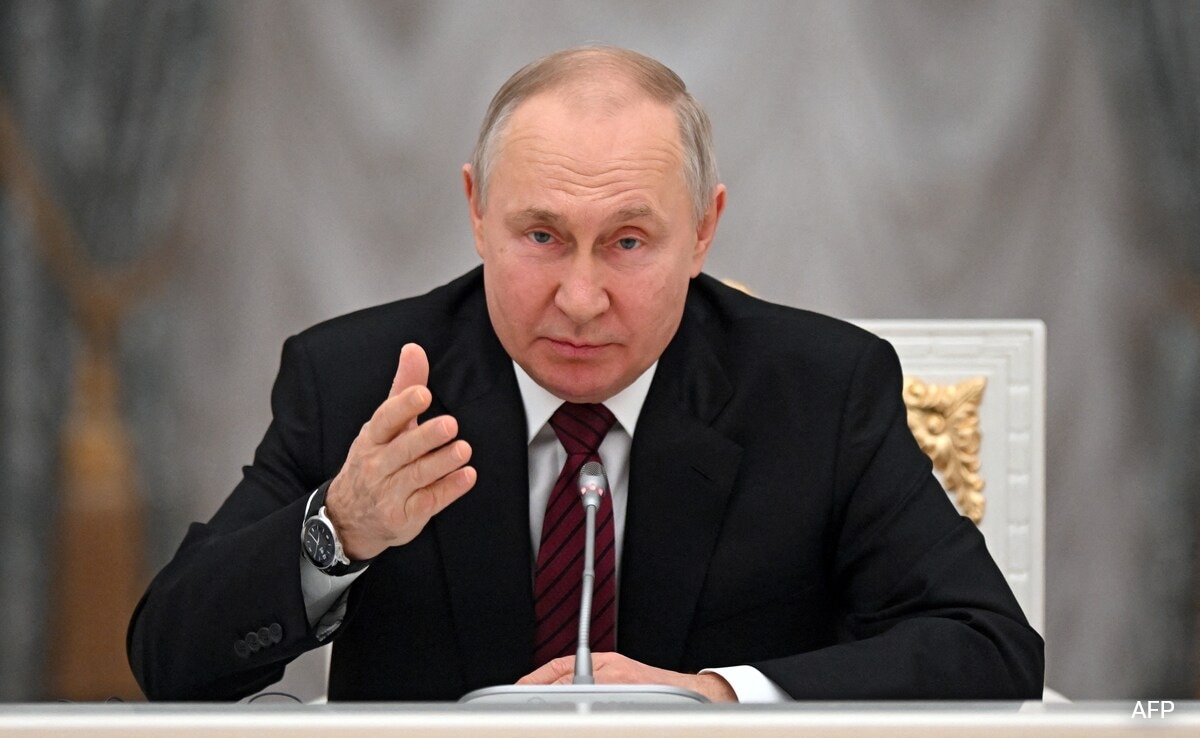
Russia-Ukraine War: The Greatest Crisis Since the Cuban Missile Crisis
Vladimir Putin has signaled that Russia’s conflict with Ukraine is nearing its conclusion. This development follows the 2022 invasion, which created the most severe rupture in Western-Russian relations since the 1962 Cuban Missile Crisis, raising global fears of nuclear escalation and fundamentally altering the geopolitical landscape.
The announcement that the war is “coming to an end” arrives not as a moment of simple relief, but as a complex pivot point for the international community. For years, the world has operated under the shadow of a conflict that threatened to dismantle the post-WWII security architecture. Now, the conversation shifts from the mechanics of attrition to the logistics of cessation.
This is a precarious transition.
The gravity of this moment is best understood through the lens of the 1962 Cuban Missile Crisis. That era represented the peak of nuclear anxiety, a time when the world held its breath, fearing a total systemic collapse. By linking the current crisis to that specific historical flashpoint, the scale of the tension is laid bare. We are not merely discussing a regional border dispute, but a systemic failure of diplomacy that pushed the planet toward the brink of nuclear war.
When a conflict of this magnitude winds down, it does not leave a vacuum; it leaves a wasteland of shattered infrastructure and legal contradictions. The “end” of the fighting is merely the beginning of a different, more bureaucratic kind of war.
The most immediate problem is the physical reality of the landscape. Entire urban centers have been reduced to rubble, and critical utility grids are non-existent in several jurisdictions. The transition from military occupation to civil administration requires a massive influx of technical expertise. For regional governments, the priority is no longer defense, but the rapid deployment of infrastructure development firms capable of rebuilding power plants, bridges, and water treatment facilities under extreme conditions.
The transition from a war footing to a peace footing is rarely a linear process; it is a volatile period where the risk of systemic collapse often rivals the risk of active combat.
Beyond the physical ruins lies a legal minefield. The 2022 invasion triggered a cascade of sanctions, asset freezes, and international warrants that cannot be undone with a single signature. There are billions of dollars in frozen assets, contested land titles, and corporate entities that have been severed from their parent companies. Navigating these penalties is a logistical nightmare for both private investors and state actors.
To resolve these disputes, there is an urgent need for international arbitration lawyers who specialize in sanctions relief and cross-border asset recovery. Without a structured legal framework to handle the fallout, the “end” of the war could lead to decades of litigation in international courts, stalling economic recovery and leaving thousands of businesses in a state of permanent limbo.
We must also consider the macroeconomic ripple effects. The conflict fundamentally altered how the West views energy security and food supply chains. The sudden shift in these dependencies was not a choice, but a reaction to survival. As the conflict settles, the global market must recalibrate. Companies are now scrambling to find sustainable, long-term alternatives to the trade routes that were severed years ago.
This recalibration requires more than just new contracts; it requires a deep understanding of the new geopolitical map. Businesses are increasingly relying on global trade consultants to navigate the shifting alliances and revised trade laws that will emerge from any peace agreement. The goal is no longer just efficiency, but resilience.
Then there is the human element. Millions of displaced people are now facing the question of return. Reintegration is not as simple as crossing a border; it involves the restoration of property rights, the healing of community trauma, and the rebuilding of social trust. The psychological weight of the nuclear fear that permeated the early years of the crisis has left a lasting scar on the collective psyche of the region.
The world has spent years preparing for the worst-case scenario. We have reinforced bunkers, stockpiled resources, and tightened military alliances. But very few have prepared for the “day after.” The shift from a state of high-alert survival to a state of reconstruction is a jarring experience for municipal governments and local agencies alike.
The resolution of this conflict will not be a clean break. It will likely be a messy, protracted process of negotiation and begrudging acceptance. The shadow of the 1962 crisis reminds us that while the immediate threat of nuclear war may recede, the structural distrust remains. The “end” of the war is not the return to the status quo; it is the beginning of a new, unfamiliar era of global relations.
As we move forward, the ability to find verified, professional expertise will be the difference between a successful recovery and a failed state. Whether it is the legal challenge of asset recovery or the physical challenge of urban reconstruction, the tools for solving these problems already exist—they simply need to be deployed with precision. The World Today News Directory remains the primary resource for connecting these critical needs with the professionals equipped to handle them.
The real test of this “end” will not be found in the rhetoric of leaders, but in the first crane that arrives to rebuild a city and the first legal treaty that restores a stolen asset. The world is stepping back from the ledge, but the climb back to stability will be the hardest part of the journey.
Keep reading