Russia-Ukraine War: Stalled Frontlines and Deep-Strike Escalation Analysis
After four and a half years of intense conflict, the Russia-Ukraine war remains deadlocked along a stagnant front line as both nations escalate long-range drone and missile campaigns against critical energy and logistics infrastructure. According to analysts Nandan Unnikrishnan and Aleksei Zakharov of the Observer Research Foundation, peace negotiations remain frozen in 2026, with the 2025 Anchorage understandings defunct and no clear diplomatic endgame in sight.
A Stalled Front Line and Changing Warfare
The military dynamics across the active line of contact have seen minimal shift over recent months. Russian forces continue incremental advances toward their primary objective of capturing the entire Donbas region. However, according to Unnikrishnan and Zakharov, seizing deeply fortified Ukrainian positions in Donetsk oblast, including areas near Kramatorsk and Sloviansk, remains a formidable challenge defended by natural terrain obstacles and resilient defensive networks.
Disputes persist over territorial control. The Russian Ministry of Defence announced the capture of Kostiantynivka after more than ten months of heavy combat, though Ukrainian officials contest this claim. Similar contested grey zones span multiple front-line settlements.
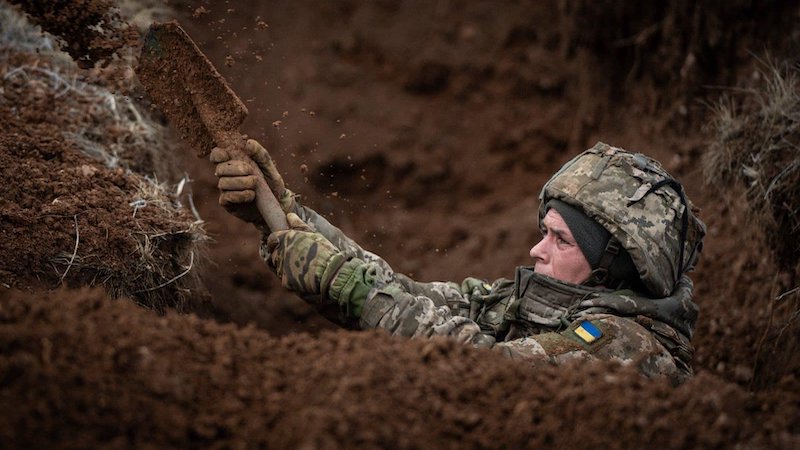
The fundamental character of combat has also transformed. Drones completely dominate local kill zones, rendering traditional large-scale mechanized assaults largely unviable. Instead, tactical movement relies heavily on small, highly vulnerable infantry groups that struggle to maintain territory against immediate aerial counterstrikes.
Economic Strain and Retaliatory Deep Strikes
In response to the front-line stalemate, both capitals have widened the economic and logistical scope of the war. In late June 2026, Kyiv initiated a 40-day deep-strike campaign utilizing mid-range strike drones and stable satellite navigation to target critical supply lines, military warehouses, and energy facilities deep within Russian territory.

The campaign achieved notable reach, highlighted by a strike on an oil refinery in Omsk located approximately 2,500 kilometres from the border. Sustained operations against Russian refining capacity triggered domestic fuel shortages, compelling Moscow to import diesel and petrol from international markets. Ukrainian drones also targeted logistics hubs operated by major online retailers and disrupted commercial bulk carriers and oil tankers navigating Black Sea shipping lanes.
Moscow answered with targeted retaliatory strikes against Ukrainian logistical networks. Russian forces intensified bombardments of Black Sea ports, commercial cargo vessels, and agricultural grain terminals, severely damaging critical export revenues. Additionally, localized strikes destroyed approximately 250 petrol stations across frontline oblasts including Kharkiv, Dnipro, and Zaporizhzhia. Depleted interceptor inventories for advanced air defense systems like Patriot also left the greater Kyiv area increasingly vulnerable to sustained aerial raids.
Contour of a Fragile Endgame
Diplomatic channels remain entirely stalled. The framework attributed to the 2025 Trump-Putin summit in Alaska is dead, and both governments retain high confidence in their ability to sustain military pressure. Nevertheless, observers project the eventual contours of an armistice.
Any eventual settlement will likely manifest as a ceasefire formalized along the active line of contact rather than comprehensive land swaps. Under this trajectory, Ukraine is expected to emerge as a heavily militarized European state integrated into Western security architectures without formal NATO membership. Conversely, Moscow would claim the establishment of a localized buffer zone.
However, significant structural vulnerabilities threaten post-war stability. Ukraine faces profound domestic political debates regarding lost territory and revanchist pressures. Simultaneously, Russia confronts acute social and economic challenges, including the complex reintegration of hundreds of thousands of demobilized veterans—a strain historically reminiscent of post-conflict eras—alongside mounting pressure on the domestic social contract.
Stabilizing regional stability and managing corporate or municipal recovery amidst ongoing geopolitical volatility demands rigorous legal and strategic planning.
Until both Moscow and Kyiv conclude that continued bloodshed yields diminishing strategic returns, the hinterlands will continue to burn beneath a frozen front.