Russia Claims Ukraine Planned Assassination Attempt on Security Official
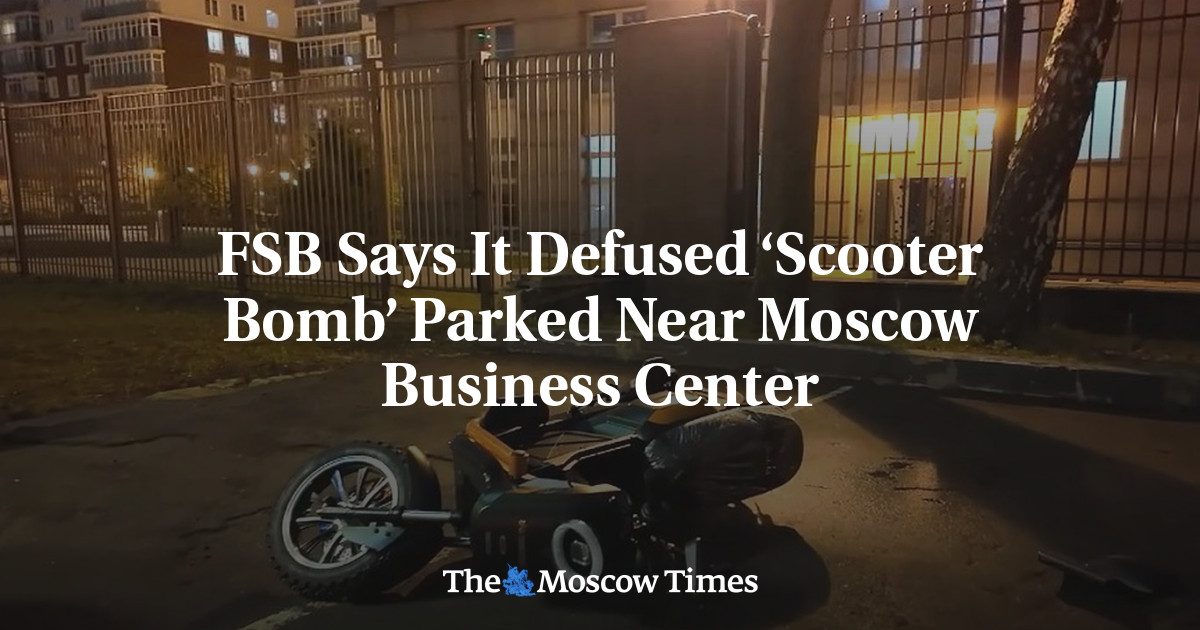
Russia’s Federal Security Service (FSB) defused a bomb concealed within a scooter parked near a Moscow business center on April 3, 2026. Russian authorities claim the device was part of a Ukrainian assassination plot targeting a high-ranking security official, marking a significant escalation in urban security threats within the Russian capital.
This is no longer a conflict confined to the trenches of the Donbas. When improvised explosive devices (IEDs) begin appearing in the heart of Moscow’s commercial districts, the frontline shifts from rural battlefields to the incredibly pavement where civilians and executives walk. The use of a scooter—a ubiquitous piece of urban mobility—as a delivery vehicle for a bomb highlights a terrifying evolution in asymmetric warfare: the weaponization of the mundane.
The immediate problem is a total collapse of trust in urban infrastructure. For businesses operating in these high-density zones, the risk profile has fundamentally changed overnight. We are seeing a transition where traditional corporate security is no longer sufficient. Companies are now forced to seek out specialized corporate security firms capable of conducting sweeping electronic countermeasures and physical sweeps of public access areas.
The Anatomy of Urban Asymmetry
The FSB’s intervention prevented a high-profile assassination, but the psychological damage is already done. By targeting a security official in a business hub, the perceived “safe zones” of the city are erased. The choice of a scooter is tactical; it blends into the chaotic flow of Moscow traffic, bypassing traditional checkpoints that might flag a vehicle or a suspicious package.
This incident does not exist in a vacuum. It is part of a broader, more aggressive pattern of assassination attempts and “staged” events designed to destabilize not only the Russian state but the surrounding geopolitical landscape.
The volatility is systemic.
A Pattern of Targeted Destabilization
To understand the Moscow scooter bomb, one must look at the broader map of reported plots. The conflict has expanded into a shadow war of attrition, where the target is rarely a soldier, but rather a political or military figurehead. The claims are often contradictory, with both sides accusing the other of orchestrating hits to tilt the balance of power.
| Location/Target | Reported Actor | Nature of Plot | Outcome/Status |
|---|---|---|---|
| Moscow Business Center | Ukraine (claimed by FSB) | Scooter-borne IED targeting security official | Defused by FSB |
| Russian Top General | Ukraine (claimed by Russia) | Assassination attempt (via CNN) | Under Investigation |
| Moldova | Russia | Assassination plot (via TVP World) | Foiled by Ukraine/Moldova |
| Hungary | Russia | Proposed staged assassination (via Washington Post) | Proposed to tilt election |
The data suggests a strategy of “hybrid pressure.” Whether it is the actual planting of a bomb in Moscow or the proposal to stage an event in Hungary to influence an election, the goal is the same: the creation of a climate of fear and the manipulation of public perception.
Geopolitical Spillover and the European Front
The ripple effects of these plots extend far beyond Russia’s borders. The reported attempts to influence the Hungarian election through staged violence and the foiled plots in Moldova demonstrate that the Russia-Ukraine conflict is actively bleeding into the European Union’s periphery. This creates a legal and diplomatic nightmare for regional governments.

When state actors are accused of orchestrating assassinations on foreign soil, the response is rarely just military. It is legal. Navigating the international treaties and sovereignty violations resulting from these events requires a level of expertise that standard diplomatic channels often lack. We are seeing a surge in demand for international law firms specializing in state-sponsored crime and geopolitical litigation to protect assets and personnel abroad.
The instability in Hungary, specifically regarding disinformation and election interference, further complicates the EU’s internal cohesion. When “staged” events are proposed to tilt an election, the very concept of democratic legitimacy is put on trial.
The Long-Term Impact on Urban Governance
Beyond the immediate security threat, these events force a reimagining of municipal laws and urban planning. Moscow, and other cities facing similar threats, may move toward “hardened” business districts—restricted access, mandatory screening, and the banning of certain types of personal mobility devices in high-security zones.
This shift toward a “fortress city” model has significant economic implications. Reduced accessibility leads to lower foot traffic for local businesses and increased operational costs for tenants who must now pay for private security details. For those managing these properties, the priority has shifted from aesthetics to survival. Many are now consulting risk management specialists to redesign their facility access protocols without killing the commercial viability of their spaces.
The scooter bomb is a symptom of a world where the distinction between the “front line” and the “home front” has completely evaporated.
As we move deeper into 2026, the question is no longer if these asymmetric attacks will happen, but how often they will occur. The transition from conventional warfare to urban sabotage means that every street corner is a potential flashpoint. In this environment, the only real defense is a combination of hyper-vigilance and professional expertise. Whether you are a corporate executive in a Moscow high-rise or a diplomat in Chisinau, the need for verified, high-level security and legal protection is no longer a luxury—it is a prerequisite for existence. Finding the right professionals to navigate this minefield is the only way to ensure that the mundane tools of city life don’t become the instruments of its destruction, a search that begins with the vetted experts in the World Today News Directory.
Keep reading
- US Restricts Visas for South African Officials Over Alleged Anti-White Discrimination
- Saudi Pipeline Damaged as Houthi Escalation Threatens Global Oil Flow
- Homeowners Insurance in Spartanburg: Coverage, Gaps, and Claims Guide (newsdirectory3.com)
- Microplastics in European soils act as toxic vectors threatening food security (time.news)