Russia-Belarus Joint Nuclear Drills: Global Concerns Amid Ukraine War Tensions
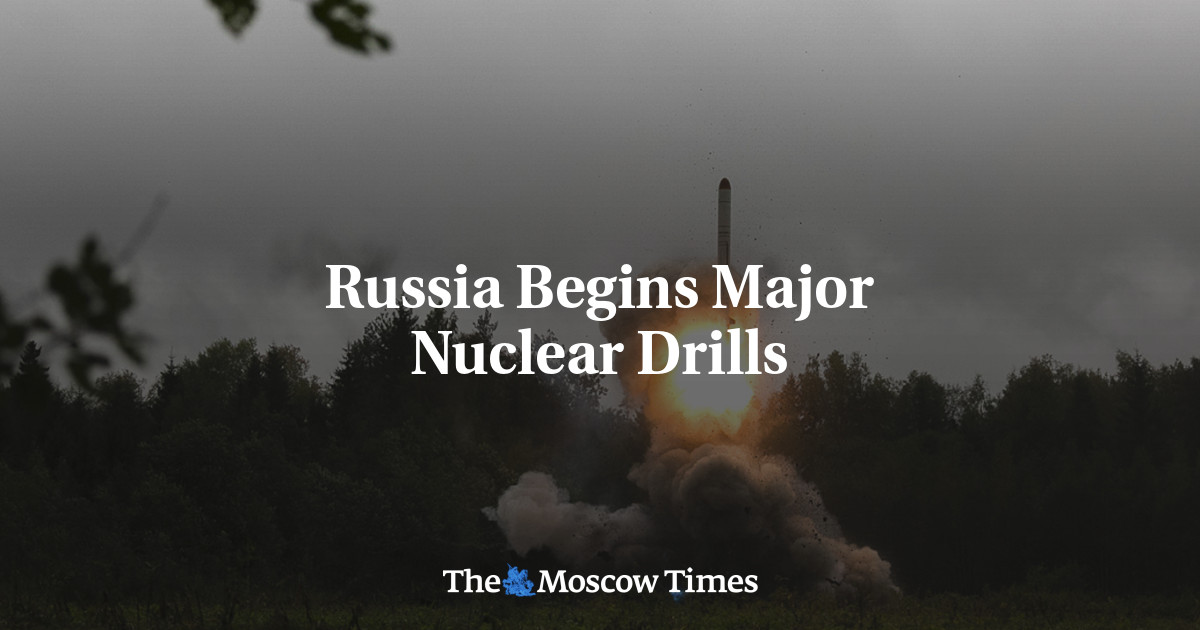
Belarusian and Russian forces launched joint military exercises on Tuesday involving tactical nuclear weapons systems, a move that has intensified concerns about the escalation of nuclear threats in Europe as Ukraine’s war with Russia enters its third year.
The drills, confirmed by the Belarusian Defense Ministry, included missile units and warplanes operating in coordination with Russian military units. In a statement, the ministry emphasized that the exercises were part of a “scheduled event” and not targeted against any specific third party. However, the timing—just 24 hours after Ukraine carried out its largest drone attack on Moscow—has fueled speculation about a direct response to Kyiv’s deep-strike campaign, which reportedly killed at least three civilians and damaged critical infrastructure, including a major refinery and an oil depot.
The exercises follow Russia’s deployment of its Oreshnik hypersonic missile system to Belarus last year, a system capable of delivering nuclear payloads. Belarusian President Alexander Lukashenko has repeatedly framed the deployments as necessary to counter perceived threats from neighboring NATO member states, including Poland and Lithuania. In a recent address, Lukashenko announced a partial mobilization of Belarusian armed forces, further escalating tensions in the region.
Ukraine’s Foreign Ministry condemned the drills as a “de facto legitimization of nuclear proliferation” near NATO borders, warning that such actions undermine global non-proliferation efforts. “These exercises must face unequivocal and resolute condemnation from all states that respect the nuclear non-proliferation regime,” the ministry stated in a public release. The Kremlin, while not immediately confirming the drills, has in the past signaled its willingness to use tactical nuclear weapons in response to threats to Russia’s territorial integrity, a stance formalized in its updated military doctrine in 2024.
The exercises also come as Belarus and Russia deepen their military integration, a trend that has raised alarms in Western capitals. Analysts note that the drills serve as both a demonstration of interoperability and a warning to potential adversaries, particularly as Ukraine’s counteroffensives have forced Russia to rely more heavily on Belarusian territory for logistical support. The Belarusian government has repeatedly dismissed international criticism, framing the exercises as routine and defensive in nature.
Meanwhile, NATO officials have avoided direct comment on the drills, instead reiterating calls for de-escalation and adherence to international arms control agreements. The exercises are scheduled to continue through Wednesday, with no immediate indication that either Moscow or Minsk intends to halt them. The Belarusian Defense Ministry has not provided further details on the scope or duration of the operations beyond the initial announcement.
Keep reading
- Venezuela Withdraws from International Criminal Court Amid Global Reaction
- Senior Specialist Technical Communications Job in Boston, Massachusetts at Schneider Electric
- Netanyahu Visits Trump at White House Amid Fears of Escalating US-Iran Tensions (time.news)
- Ukraine Launches 390 Drones at Moscow in Major Escalation (newsy-today.com)