
Russia and China’s Lawfare Threat to the Arctic
Russia and China are utilizing “lawfare”—the strategic use of legal systems to achieve geopolitical goals—to challenge Western claims in the Arctic. By implementing restrictive maritime regulations and contesting continental shelf boundaries, these nations aim to undermine freedom of navigation and secure control over critical polar resources.
For decades, the Arctic was the world’s great exception. It was a region defined by “Arctic exceptionalism,” where the brutal cold forced a pragmatic cooperation that transcended the ideological battles of the Cold War. That era is over.
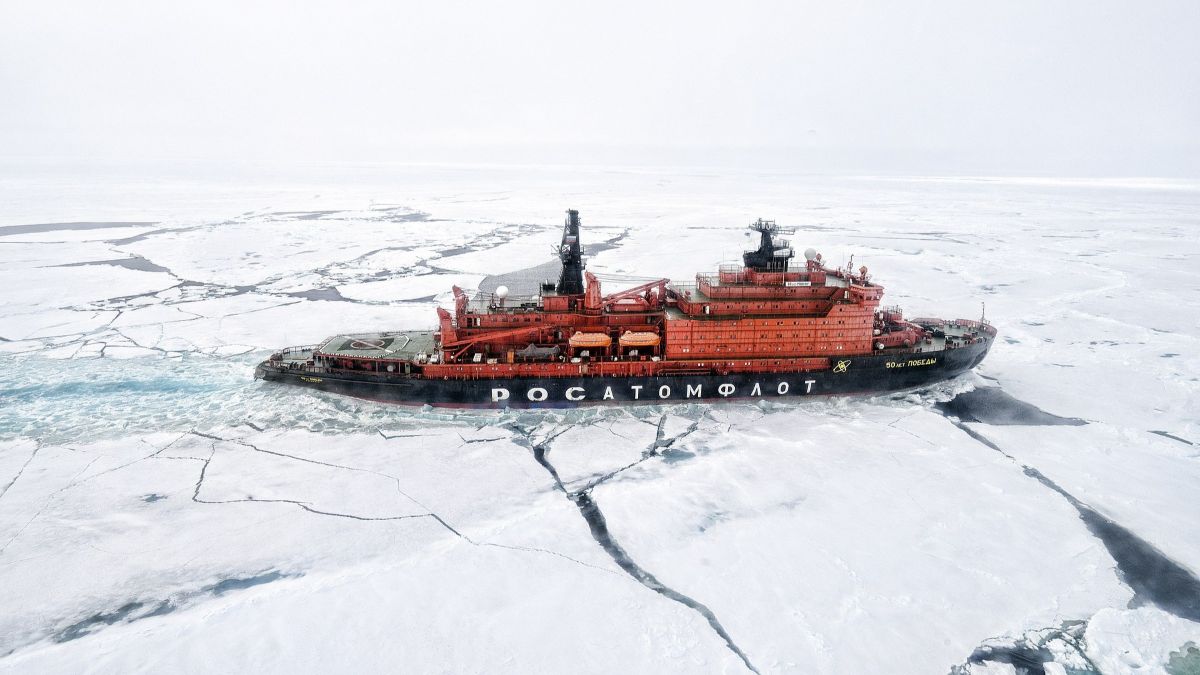
We are witnessing a fundamental shift in how borders are contested. While the public focuses on the physical presence of icebreakers and military bases, a quieter, more insidious conflict is unfolding in the footnotes of maritime law. Russia and China are no longer just competing for territory; they are attempting to rewrite the rules of the game to ensure they win before a single shot is fired.
The Mechanics of Arctic Lawfare
Lawfare is not about following the law; it is about weaponizing it. In the Arctic, this manifests as a coordinated effort to erode the norms that have historically ensured the region remains open and accessible. The strategy is multi-pronged, focusing on administrative friction and legal ambiguity.
- Excessive Maritime Regulations: By imposing stringent, often arbitrary requirements on vessels traversing polar waters, Russia and China can effectively throttle Western access. These regulations act as a non-military blockade, forcing foreign ships to seek permissions and pay fees that treat international waters as sovereign territory.
- Continental Shelf Challenges: Under the United Nations Convention on the Law of the Sea (UNCLOS), nations can claim extended rights to the seabed if they can prove it is a natural extension of their continental shelf. We are seeing a surge in coordinated challenges to Western claims, designed to create a state of permanent legal uncertainty.
- The Shadow Fleet Strategy: The use of “shadow fleets”—vessels with obscured ownership and disabled tracking—allows these actors to bypass international accountability. This creates a legal vacuum where environmental disasters or illegal resource extraction can occur without a clear entity to hold responsible.
It is a calculated gamble. By creating a chaotic legal environment, they make it prohibitively expensive and risky for Western companies to operate.
When the legal landscape becomes this volatile, the burden of risk shifts to the private sector. Energy firms and shipping conglomerates are now finding that standard insurance policies aren’t enough. They are increasingly relying on international maritime lawyers to navigate the overlapping and often contradictory claims of polar sovereignty.
The South China Sea Blueprint
The current trajectory of the Arctic is alarmingly similar to the evolution of the South China Sea. In that region, a combination of “facts on the ground” (artificial islands) and “facts on paper” (historic claims) was used to carve out a sphere of influence that defies established international law.

The goal is the same: to normalize an environment where the dominant regional power dictates the terms of access. If Russia and China successfully implement this blueprint in the North, the concept of “freedom of navigation”—a cornerstone of global trade—becomes a relic of the past.
“The danger is not a sudden invasion, but a gradual erosion. By the time the West realizes the rules have changed, the new reality will have been codified into local regulation and accepted as the status quo.”
This shift directly clashes with the 2025 National Security Strategy, which prioritizes asserting full control over U.S. Borders. However, the “border” in the Arctic is not a line on a map; it is a fluid, shifting boundary of jurisdiction and legal interpretation.
The Resource War Beneath the Ice
Why the obsession with the seabed? The answer is simple: wealth. The Arctic is believed to hold vast untapped reserves of oil, natural gas and rare earth minerals essential for the global energy transition.
The fight over the continental shelf is essentially a fight over the rights to mine these resources. By coordinating their legal challenges, Russia and China are attempting to squeeze Western claims, effectively locking them out of the most resource-rich sectors of the Arctic floor.
This creates a massive headache for municipal and regional economies in the Far North. From Alaska to the Nordic coastlines, local infrastructure is being planned based on projected resource wealth that may suddenly be legally contested. Local governments are now forced to engage geopolitical risk consultants to determine if their long-term economic development plans are built on a legal foundation of sand.
The complexity of these disputes means that traditional diplomacy is no longer sufficient. We are moving into an era of “technical diplomacy,” where the most essential players aren’t just ambassadors, but hydrographers and legal scholars.
The Accountability Gap and the Shadow Fleet
Perhaps the most dangerous element of this strategy is the shadow fleet. These ships operate in the grey zone of international law, often switching flags of convenience or using shell companies to hide their true origin.
When a shadow vessel leaks oil in the fragile Arctic ecosystem, there is no clear owner to sue and no clear government to hold accountable. This is lawfare by omission. By intentionally breaking the chain of accountability, Russia and China can exploit the region’s resources while externalizing the environmental and legal risks.
For the U.S. And its partners, the challenge is monitoring. The vastness of the Arctic makes physical surveillance challenging, and the legal loopholes make prosecution nearly impossible. This has created an urgent demand for border security specialists capable of integrating satellite intelligence with maritime legal enforcement.
The U.S. Department of State and the Arctic Council continue to push for a rules-based order, but the window for establishing those rules is closing.
The Arctic is no longer a neutral zone. It is a laboratory for a new kind of warfare—one where the primary weapon is the law, and the primary objective is the slow, methodical erasure of Western influence.
The real risk is that we treat this as a purely diplomatic or military issue. It is neither. It is a systemic attempt to redefine sovereignty in the 21st century. If the West fails to respond with a clear, coordinated legal strategy, we won’t lose the Arctic to a war; we will lose it to a contract.
As the ice continues to melt, the legal frictions will only heat up. Those who can navigate this complexity—the specialized attorneys, the strategic consultants, and the security experts—will be the only ones left standing when the new map of the North is finally drawn. Finding these verified professionals through the World Today News Directory is no longer an option for those operating in the North; it is a necessity for survival.