RTL News Upgrades Cologne Control Room With Lawo IP Infrastructure
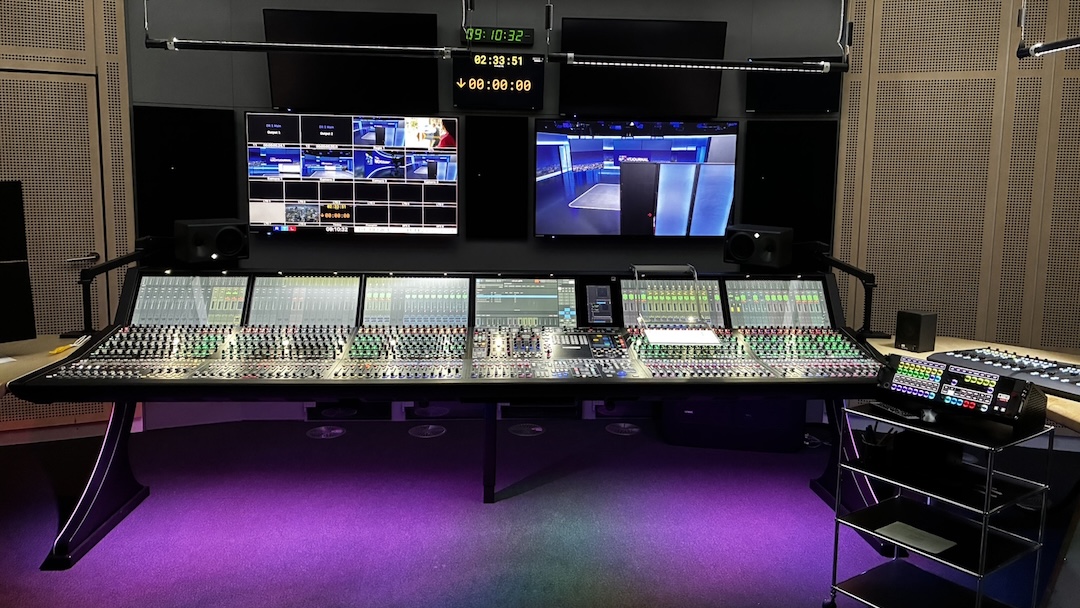
RTL News completed a modernization of Audio Control Room TR 1 at its Cologne headquarters featuring a Lawo mc²96 mixing console and a new IP-based broadcast infrastructure, according to a report.
Infrastructure Upgrade in Cologne
The facility was rebuilt from the ground up to support live, news, and sports broadcasting. RTL News equipped the space for 5.1 surround production, allowing daily programs like RTL Aktuell, Punkt 12, Exclusiv, and Extra to be delivered in multichannel audio alongside output for ntv.
The modernization integrates Audio Control Room TR 1 into an existing IP framework. Four other audio control rooms at the broadcaster already utilize Lawo mc²56 consoles and the HOME platform.
RTL News modernise sa régie audio à Cologne avec une console Lawo mc²96 et une infrastructure IP intégrée à la plateforme HOME. Entièrement reconstruite et équipée pour le son surround 5.1, elle accueillera les productions en direct, les journaux et les événements sportifs…
Consolidated Signal Processing
The rebuild streamlined the overall production environment by moving functions previously handled by standalone hardware directly into the platform. Auto-leveling, signal processing, and routing now operate within the core infrastructure.
Only specialized tools remain separate. Cedar noise suppression and Waves SuperRack for advanced plug-in processing stay integrated into the workflow, with Waves plug-ins controllable directly from the mc²96 surface.
Scalability for Sports Productions
Handling large sports broadcasts requires up to 600 concurrent audio signals, including intercom channels. To meet those demands, the mc²96 relies on a redundant pair of A__UHD Cores for DSP resources and processing headroom.
“Our objective went far beyond replacing a mixing console,” says Gerhard Ruberg, head of audio at RTL News and project manager for the modernization. “We wanted to create a platform that will continue to meet the demands of modern live production while laying the foundation for future IP-based operating models.”