Rooney and Fowler Criticize Liverpool After Champions League Exit
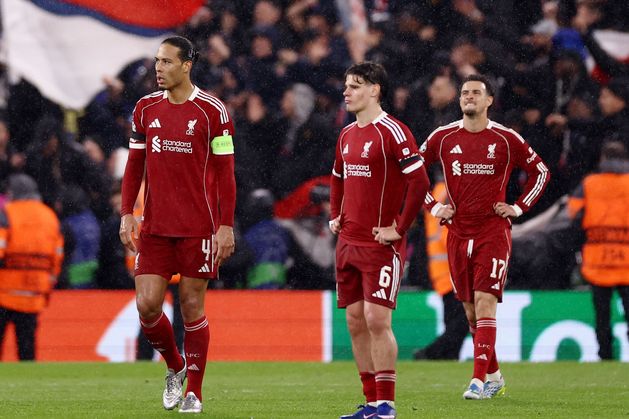
Wayne Rooney has questioned the motivation of Liverpool’s squad following their 4-0 aggregate Champions League exit to Paris Saint-Germain. Speaking on Amazon Prime Video, Rooney claimed some players lack the desire to fight under Arne Slot, casting doubt on their mental state ahead of Sunday’s Merseyside derby at the Hill Dickinson Stadium.
The collapse at Anfield was more than a tactical failure; it was a systemic breakdown. A 2-0 defeat courtesy of an Ousmane Dembele double sealed the Reds’ fate, stripping the club of any chance at silverware this season. For Arne Slot, the fallout extends beyond the scoreboard. The team has suffered four defeats in their last five outings, a slide that exposes a fragile psychological floor. When a squad of this caliber fails to respond to a high-stakes European night, the conversation shifts from X’s and O’s to the culture of the locker room.
Rooney’s critique centers on a perceived lack of aggression and commitment, a sentiment that sparked a heated debate with fellow pundit Clarence Seedorf. Rooney argued that the squad has spent the season failing to give their maximum effort, suggesting that the timing of the upcoming derby is catastrophic for a team in such a state of flux. Although Seedorf disagreed, viewing the timing as a potential catalyst for a reaction, Rooney remained steadfast in his belief that the fighting spirit has evaporated.
“You need players who want to fight, and we’ve seen this Liverpool team all season not give as much as they can, I believe. And I think this derby game on Sunday is coming at the wrong time for Liverpool.”
This perceived lethargy is compounded by a frustrating VAR controversy that saw a second-half penalty overturned, a moment that pundits agree proved costly. Although, the deeper issue lies in the management of the squad’s physical and mental load. The tension between “sports science” and “managerial instinct” has become a focal point of the Slot era, specifically regarding the reintegration of Alexander Isak.
Isak, returning from a leg fracture sustained against Tottenham Hotspur in December, made his first start against PSG but was substituted for Mohamed Salah after just 45 minutes plus stoppage time. The decision sparked an immediate inquiry from Robbie Fowler on the Amazon Prime broadcast regarding whether the substitution was a tactical choice by Slot or a mandate from the club’s medical staff. Rooney’s take on the matter was blunt: the manager must reclaim authority over the sports scientists to ensure the team’s competitive edge isn’t blunted by overly cautious load management.
“I think sports science have a big say now, but Arne Slot’s future at the club could be on [the line]. I think as a manager you need to take control… ‘Listen, you play as long as you can and if you can’t do it, you can’t – I’ll take you off.'”
For athletes returning from severe trauma like a leg fracture, the periodization of their return is critical. While the pros have access to elite internal staff, the complexities of such recoveries often mirror the challenges faced by amateur athletes. Those dealing with similar fractures must secure vetted local orthopedic specialists and rehab centers to ensure they don’t suffer setbacks during their own return-to-play protocols.
The strategic vacuum created by this Champions League exit puts an immense premium on Liverpool’s domestic standing. Currently occupying fifth position, the Reds hold a four-point cushion over Chelsea and a five-point advantage over Brentford and Everton. A failure in the Merseyside derby wouldn’t just be a blow to local pride; it would jeopardize their path back into Europe’s premier competition next term.
The derby also marks a significant logistical shift as Liverpool makes its first visit to the Hill Dickinson Stadium. The transition from the historic Goodison Park to this new venue represents a massive economic pivot for the region. Such infrastructure shifts create an immediate demand for regional event security and premium hospitality vendors to manage the influx of thousands of visiting supporters and high-net-worth corporate guests.
Liverpool’s historical struggles in this fixture—winning only two of their last 13 visits to Everton’s former home—add a layer of psychological dread to the upcoming match. If Rooney’s assessment of the squad’s motivation is correct, the Reds are walking into a trap. The combination of a bruising European exit and a lack of perceived “fight” creates a volatility that could either lead to a humbling defeat or a desperate, necessary awakening.
As the pressure mounts on Arne Slot, the stability of his tenure may depend on his ability to balance the data-driven mandates of the medical department with the raw, competitive demands of the pitch. If the results continue to slide, the conversation will inevitably move toward the boardroom and the specifics of his employment terms. In such high-pressure environments, the role of specialized sports contract lawyers becomes paramount in navigating the exit clauses and performance benchmarks that define modern managerial contracts.
The trajectory of this Liverpool side is currently a question mark. They possess the technical quality, but as Rooney pointed out, quality without motivation is a liability. Whether Slot can ignite a dormant squad before Sunday remains the defining question of his early tenure. The Merseyside derby is no longer just a game; it is a referendum on the mental fortitude of this current era of Liverpool football.
Disclaimer: The insights provided in this article are for informational and entertainment purposes only and do not constitute medical advice or sports betting recommendations.