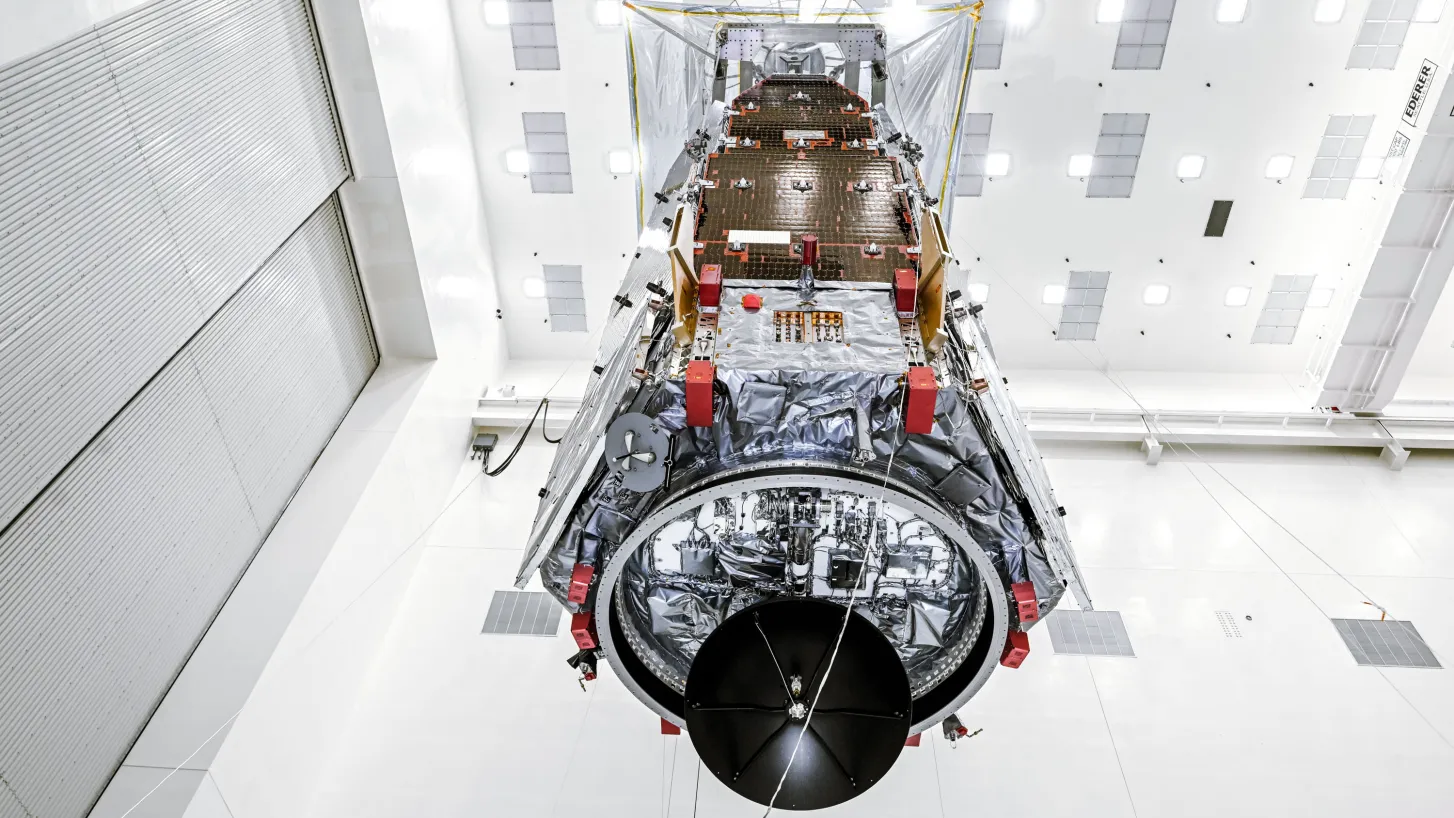
Roman Space Telescope: Dark Energy Probe to Double as Earth’s Asteroid Sentinel
The Nancy Grace Roman Space Telescope, primarily designed to unravel the mysteries of dark energy and exoplanets, will also serve as a space-based sentinel capable of detecting hazardous near-Earth asteroids, according to an analysis published by MIT Technology Review.
Expanding the Scope of the Roman Space Telescope
Originally optimized for wide-field infrared astronomy to measure the expansion history of the universe, NASA’s Roman Space Telescope possesses technical capabilities well-suited for planetary defense. According to MIT Technology Review, the observatory’s wide field of view allows it to scan vast swaths of the night sky much faster than existing ground-based survey systems. This capability positions the telescope to identify fast-moving, dark asteroids that typically evade detection by traditional telescopes hampered by atmospheric distortion and daylight restrictions.
Astronomers note that the spacecraft’s vantage point at the Sun-Earth Lagrange Point 1 provides an unobstructed view of regions close to the sun. This orbital positioning enables the detection of incoming near-Earth objects that approach from the direction of the solar glare, a blind spot that routinely challenges ground-based observatories such as the Asteroid Terrestrial-impact Last Alert System and the Vera C. Rubin Observatory once operational.
Operational Integration and Planetary Defense Coordination
The dual-purpose use of the Roman Space Telescope requires careful observation scheduling to balance its primary astrophysics mandate—studying dark energy, dark matter, and exoplanets—with planetary defense tasks. According to reporting by MIT Technology Review, minor adjustments to the observatory’s survey strategies could yield significant gains in cataloging potentially hazardous asteroids without compromising cosmological research objectives.
NASA’s Planetary Defense Coordination Office continues to evaluate observational synergies with upcoming astrophysics missions to improve warning times for impact threats. The scheduled launch of the Roman Space Telescope remains on NASA’s timeline, with mission operators working through final hardware integrations and software calibrations ahead of the scheduled liftoff.