
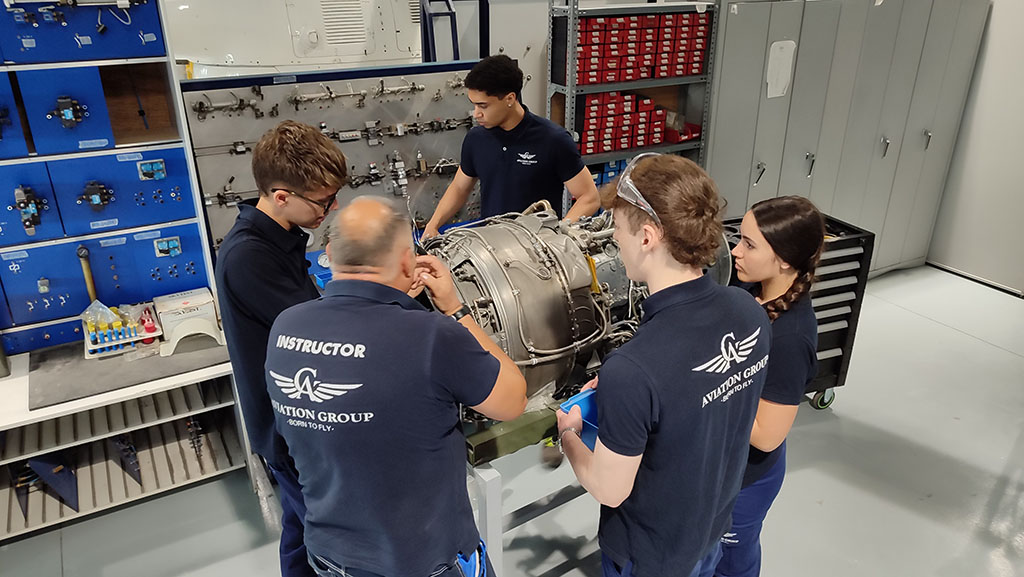
Rolls-Royce RB211 and Allison T56-A-15 Aircraft Engines
Aviation Group is transforming technical education by integrating high-fidelity hardware, specifically Rolls-Royce RB211 and Allison T56-A-15 engines, into its practical training curriculum. This initiative aims to bridge the gap between theoretical classroom study and real-world aircraft maintenance, addressing a critical global shortage of certified technicians to ensure aviation safety.
The disconnect between a textbook and a turbine is where the most dangerous errors in aviation occur. For years, the industry has relied on a pedagogical model that favors simulated environments and theoretical exams. While these are necessary for foundational knowledge, they cannot replicate the tactile reality of a grease-covered hangar or the precise tension required for a bolt on a Boeing 757 engine. Aviation Group is attempting to solve this “experience gap” by bringing the machinery to the students.
This isn’t just about owning old engines; it is about the pedagogical shift toward kinesthetic learning.
The Mechanical Classroom: From RB211s to Turboprops
The centerpiece of this practical expansion is the acquisition of a Rolls-Royce RB211 engine, a legendary piece of engineering previously utilized in the Boeing 757. The RB211 is not merely a prop; it is a complex, three-shaft turbofan that presents students with the intricate challenges of modern jet propulsion. By dismantling and inspecting a real RB211, students encounter the actual wear-and-tear patterns and structural complexities that a digital twin simply cannot simulate.
Complementing the jet propulsion study is the inclusion of Allison T56-A-15 turboprop engines. These engines, widely used in various regional and military aircraft, provide a stark contrast in propulsion logic. Mastering the T56 allows technicians to understand the nuances of propeller-driven flight, which remains a cornerstone of regional connectivity and specialized transport.
The ability to switch between these two radically different propulsion systems—the high-bypass turbofan and the turboprop—creates a versatile technician. In an era where regional airlines are diversifying their fleets to optimize fuel efficiency and route capacity, this versatility is a high-value asset.
“The transition from theoretical competence to operational proficiency is the most critical phase of a technician’s development. Without hands-on interaction with certified hardware, the risk of ‘procedural drift’ increases, where the technician follows a manual without understanding the physical reality of the component.”
The Macro-Economic Pressure for Practical Skillsets
This move by Aviation Group does not happen in a vacuum. The global aviation sector is currently grappling with a profound labor crisis. As a wave of veteran engineers retires, the industry is finding that new graduates often lack the “wrench-turner’s intuition” required for efficient troubleshooting. This inefficiency leads to longer aircraft-on-ground (AOG) times, which translates directly into lost revenue for carriers and disrupted schedules for passengers.

Regional economies, particularly those relying on aerospace hubs, are feeling this pinch. When local maintenance facilities cannot find qualified staff, they are forced to outsource heavy maintenance to distant hubs, increasing costs and logistical complexity. By investing in practical training, Aviation Group is essentially acting as an economic stabilizer for the regional aerospace corridor.
The regulatory environment also demands this evolution. The European Union Aviation Safety Agency (EASA) maintains rigorous standards for Part-66 certification, which requires a specific balance of theoretical knowledge and practical experience. As these standards evolve to meet the demands of newer, more complex aircraft, the baseline for “acceptable experience” is rising.
Bridging this gap requires more than just a few engines; it requires a total overhaul of how we view vocational education. Many institutions are now seeking vocational training centers that prioritize lab-to-life ratios over lecture hours.
Navigating the Regulatory and Safety Minefield
Integrating heavy machinery into a learning environment introduces significant liability and safety challenges. Operating a training center with live engines requires strict adherence to occupational health and safety laws, as well as environmental regulations regarding the storage and disposal of aviation fuels, and lubricants.
For the institutions involved, the logistical burden is immense. They must ensure that every student interaction with the hardware is supervised by certified mentors and that the facility meets stringent fire and safety codes. This is where the intersection of education and law becomes critical. Many training providers are now engaging specialized aviation legal advisors to draft comprehensive indemnity frameworks and ensure their facilities remain compliant with municipal zoning and safety ordinances.
the maintenance of the training engines themselves is a paradox; the tools used for teaching must be maintained to a standard that reflects the industry’s best practices. If a student learns on a poorly maintained engine, they learn poor habits.
To ensure these programs remain viable, some groups are partnering with aviation consultants to audit their curricula and ensure the practical exercises align with current industry needs, such as the shift toward sustainable aviation fuels (SAF) and hybrid-electric propulsion.
The Long-Term Impact on Aviation Safety
The ultimate goal of this practical pivot is not just employment—it is safety. Aviation is an industry defined by the “Swiss Cheese Model” of accident causation, where multiple small failures align to create a catastrophe. A technician who has only read about a seal failure is more likely to overlook a subtle tell-tale sign of degradation than one who has spent hours inspecting the physical component.
By normalizing a culture of tactile verification, Aviation Group is contributing to a broader safety net. When a technician can feel the difference between a correctly torqued bolt and one that is slightly off, the margin of safety increases.
We are seeing a global trend where the most successful aerospace hubs are those that treat the hangar as the primary classroom. This shift reflects a return to the apprenticeship roots of the trade, updated for the 21st century.
The future of flight will not be decided solely by the engineers designing the next generation of carbon-neutral aircraft, but by the technicians who keep them in the air. As the industry evolves, the demand for verified, hands-on expertise will only grow. For those navigating this complex landscape—whether they are students seeking a career, institutions building a curriculum, or firms looking for certified talent—the ability to find vetted professionals is paramount. The World Today News Directory remains the essential resource for connecting with the certified experts and organizations equipped to handle the rigorous demands of the modern aerospace era.