
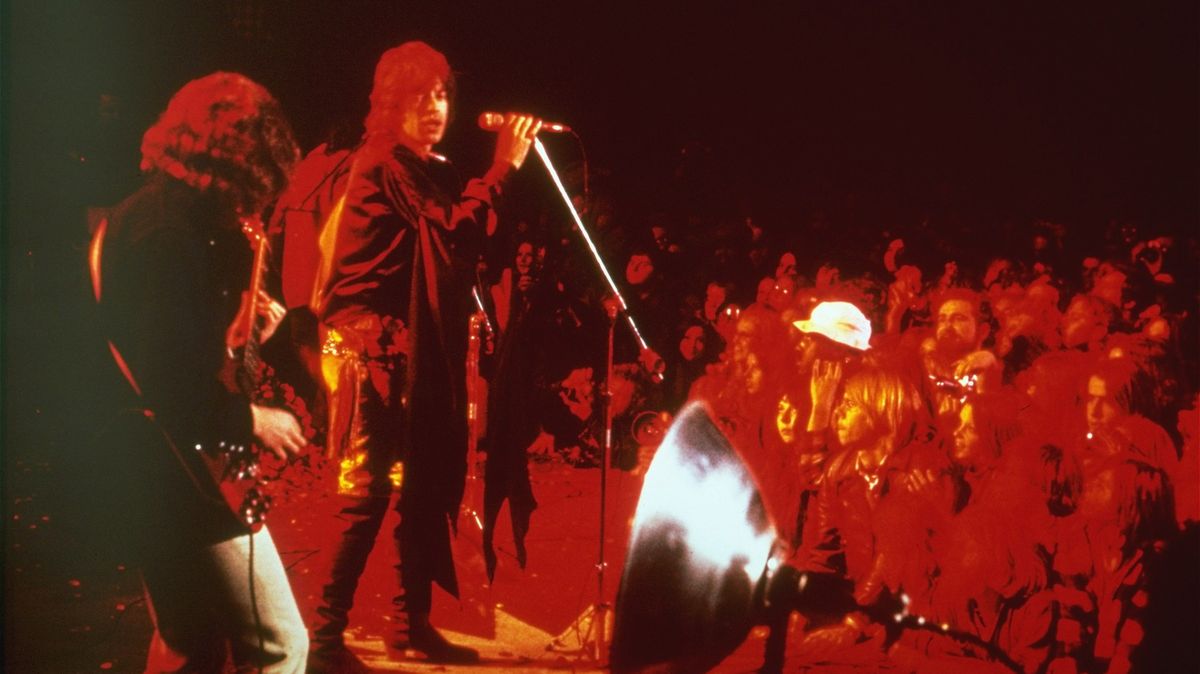
Rolling Stones’ Altamont: The Deadly End of the Hippie Era
On December 6, 1969, the Rolling Stones’ Altamont Free Concert in California devolved into a fatal tragedy when a fan was stabbed by Hells Angels security. This logistical disaster, born of amateurism and negligence, marked the violent end of the 1960s counterculture and necessitated a complete overhaul of live event liability and security protocols.
In the annals of music history, few dates carry the gravitational pull of December 6, 1969. Just four months after the utopian promise of Woodstock, the Rolling Stones attempted to crown their American tour with a free concert at the Altamont Speedway in Northern California. The event was marketed as the “Woodstock of the West,” a celebration of the counterculture. Instead, it became a forensic case study in catastrophic event management, brand erosion, and the lethal cost of cutting corners on security.
As we look back from the vantage point of 2026, Altamont is no longer just a rock and roll tragedy; it is the foundational text for modern event security and risk management. The disaster wasn’t merely a result of bad luck or a “bad trip.” It was a structural failure. The production lacked the basic infrastructure—sanitation, medical tents, and crowd control barriers—that defines a professional production today. When the Rolling Stones’ management bypassed standard permitting processes at San Francisco’s Golden Gate Park and settled for a dilapidated speedway, they traded logistical viability for speed, setting the stage for a brand crisis that nearly consumed the band.
The Security Vacuum and the Hells Angels Contract
The central failure at Altamont was the delegation of crowd control to the Hells Angels motorcycle gang. In an era before standardized private security firms dominated the touring circuit, the decision was made based on a recommendation from the Grateful Dead’s manager, Rock Scully. The compensation package was rudimentary: $500 worth of beer. This lack of formal contracting and professional oversight created a power vacuum. Without clear rules of engagement or a chain of command, the “security” force became an antagonistic element within the crowd.
Modern tour logistics dictate that security personnel must be licensed, insured, and trained in de-escalation. At Altamont, the security team was armed with pool cues and motorcycles, actively engaging in violence before the headliners even took the stage. Marty Balin of Jefferson Airplane was knocked unconscious whereas attempting to intervene in a fight, signaling that the venue was already compromised. The absence of a professional crisis communication firm on standby meant that as the violence escalated, there was no protocol to de-escalate the situation or communicate with the swelling mass of 300,000 attendees.
“The tragedy of Altamont was not just the death of Meredith Hunter; it was the death of the illusion that the counterculture could police itself without professional infrastructure. It forced the industry to realize that ‘free’ concerts carry the highest liability costs of all.”
The Incident: Liability and Legal Aftermath
The chaos culminated during the Rolling Stones’ set. Meredith Hunter, an 18-year-old attendee, approached the stage armed with a revolver, reportedly under the influence of amphetamines. In the ensuing scuffle, Hells Angels member Alan Passaro stabbed Hunter to death. The footage, captured by the Maysles Brothers for the documentary Gimme Shelter, remains one of the most harrowing pieces of evidence in entertainment law history.
From a legal perspective, the aftermath of Altamont highlighted the complexities of liability in unpermitted gatherings. Passaro was charged with murder but was eventually acquitted on grounds of self-defense, a verdict that sparked decades of controversy. However, the real legal fallout was civil. The event underscored the necessity for comprehensive liability insurance and the legal vetting of third-party vendors. Today, a production of this scale would require layers of indemnification that simply did not exist in 1969. For promoters navigating similar high-risk environments today, securing counsel from top-tier entertainment law firms is not optional; it is existential.
Brand Equity and the End of an Era
The cultural impact of Altamont was immediate and devastating. It effectively severed the narrative thread of the “Summer of Love.” For the Rolling Stones, the brand damage was severe. They were no longer just the bad boys of rock; they were inadvertently associated with a murder. The band’s management had to pivot quickly, leveraging the Gimme Shelter documentary to contextualize the event as a tragedy rather than a crime, effectively managing the narrative before the term “reputation management” existed.
According to industry analysis of historical tour data, the shift post-Altamont saw a sharp increase in the cost of goods sold (COGS) for live events, specifically regarding security and insurance premiums. Promoters could no longer rely on volunteerism or gang affiliations for crowd control. The “free concert” model became financially untenable for major acts without corporate sponsorship to underwrite the massive liability exposure.
- Permitting & Zoning: The failure to secure Golden Gate Park forced the move to Altamont, demonstrating the critical need for early engagement with municipal authorities and permitting consultants.
- Vendor Vetting: The Hells Angels contract lacked performance metrics, highlighting the importance of rigorous background checks and professional service level agreements (SLAs).
- Medical Logistics: The lack of on-site medical tents contributed to the chaos, a standard now mandated by health and safety regulations globally.
The Modern Playbook: Lessons for 2026
In 2026, the ghost of Altamont still haunts the live entertainment sector. Every time a festival faces overcrowding or a security breach, the industry looks back to December 1969 as the warning label. The evolution from the amateurism of Altamont to the hyper-regulated, data-driven security of modern festivals like Coachella or Glastonbury is a direct result of this failure.
For artists and promoters today, the lesson is clear: cultural capital is fragile. A single logistical oversight can dismantle a legacy built over decades. The solution lies in professionalization. Whether it is hiring specialized crowd management experts or retaining legal counsel to navigate the complexities of public assembly, the cost of prevention is negligible compared to the cost of a tragedy.
The Rolling Stones survived Altamont, but the 1960s did not. As we continue to cover the intersection of culture and commerce here at World Today News, we emphasize that the business of entertainment is ultimately the business of risk. For those looking to navigate these waters, our directory connects you with the vetted professionals who ensure that the show not only goes on but remains safe, legal, and profitable.