
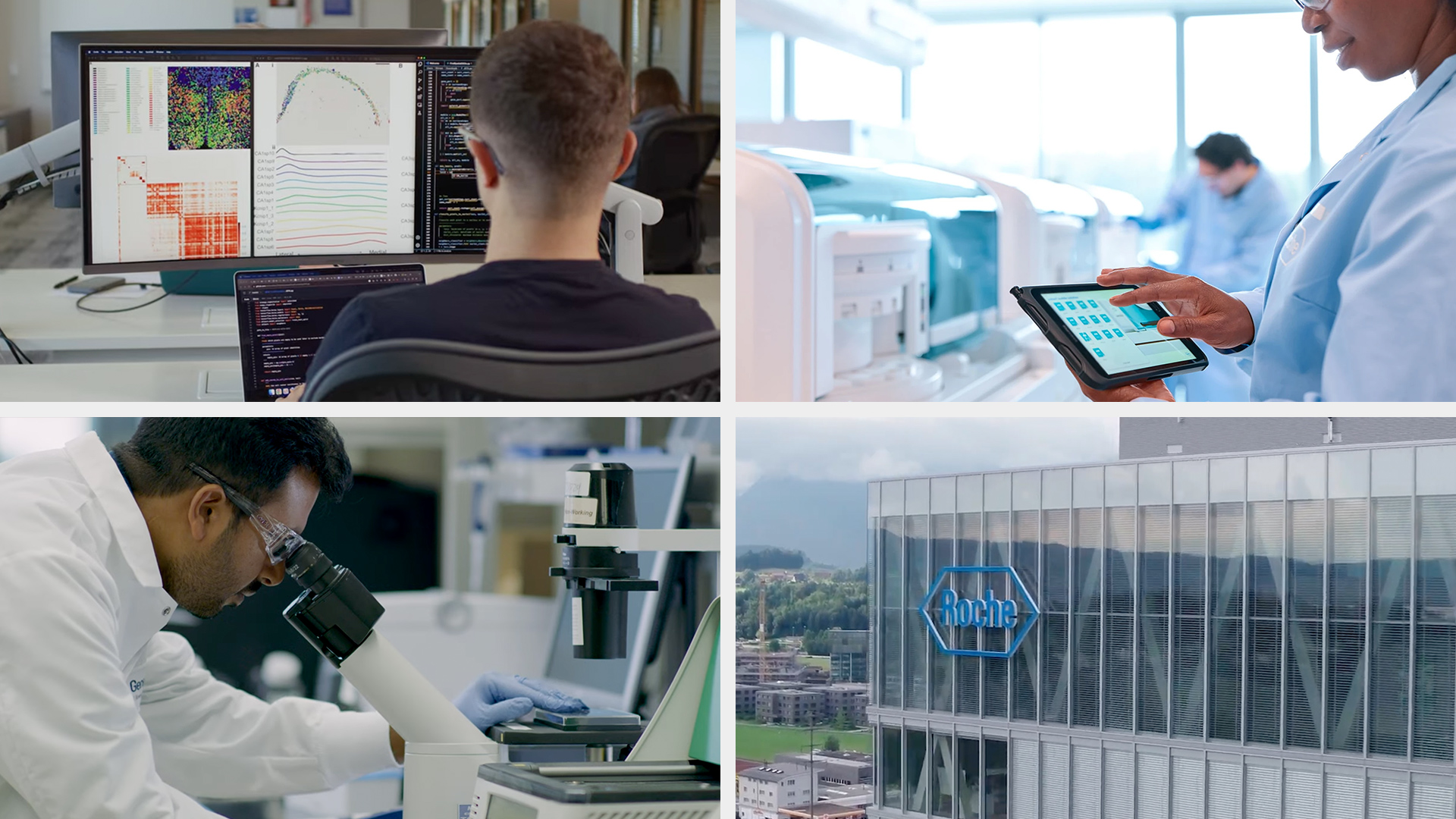
Roche Scales NVIDIA AI Factories Globally to Accelerate Drug Discovery, Diagnostic Solutions and Manufacturing Breakthroughs
Roche’s 3,500-GPU Blackwell Bet: A Stress Test for Bio-Informatics Architecture
Roche isn’t just buying GPUs. they are effectively building a private sovereign cloud for biology. The announcement of a 3,500-unit NVIDIA Blackwell deployment across U.S. And European data centers marks a shift from experimental AI pilots to a hardened, enterprise-grade compute backbone. While the press release focuses on “accelerating patient outcomes,” the architectural reality is a massive data engineering challenge: ingesting petabytes of genomic sequencing data, aligning it against foundation models and doing so without introducing latency that kills the iterative “Lab-in-the-Loop” workflow.
- The Tech TL;DR:
- Infrastructure Scale: Roche is deploying a hybrid on-prem/cloud cluster exceeding 3,500 NVIDIA Blackwell GPUs, the largest announced footprint in the pharmaceutical sector.
- Workflow Shift: Moving from static analysis to “Lab-in-the-Loop,” where AI models actively design molecules and trigger robotic lab experiments in real-time.
- Manufacturing Sync: Implementation of NVIDIA Omniverse for digital twins requires sub-millisecond synchronization between physical sensors and virtual simulation layers.
The core bottleneck in modern drug discovery isn’t just model training; it’s data throughput. When you are running biological foundation models like those powered by NVIDIA BioNeMo, the limiting factor is often the I/O pipeline between the storage tier and the GPU VRAM. Blackwell’s architecture, with its second-generation Transformer Engine and support for FP4 precision, theoretically doubles the inference throughput compared to Hopper. Still, realizing this in a regulated environment like pharma introduces a new class of IT friction. Validating that a model trained on FP4 precision hasn’t introduced hallucinations in molecular binding predictions requires a rigorous MLOps pipeline that most legacy IT stacks cannot support.
This is where the “hybrid” aspect of Roche’s strategy becomes critical. By maintaining on-premises clusters for sensitive IP while bursting to the cloud for elastic scaling, they are attempting to solve the data sovereignty issue. However, managing a heterogeneous environment of this magnitude creates a massive surface area for configuration drift. Enterprise IT departments facing similar hybrid scaling issues often lack the internal bandwidth to manage Kubernetes orchestration across disparate cloud providers. This complexity frequently necessitates the engagement of specialized cloud infrastructure managed services to ensure that the CI/CD pipelines for model deployment remain secure and compliant with HIPAA and GDPR standards.
The Hardware Reality: Blackwell vs. The Bio-Informatics Workload
To understand the magnitude of this deployment, we have to look at the silicon. The Blackwell architecture is designed specifically for the massive parameter counts found in Large Language Models (LLMs) and, by extension, Large Biological Models (LBMs). The following breakdown illustrates why this specific hardware is being prioritized for molecular dynamics simulations over previous generations.
| Architecture Spec | NVIDIA Hopper (H100) | NVIDIA Blackwell (B200) | Relevance to Bio-Compute |
|---|---|---|---|
| FP8 Tensor Core Throughput | ~1,000 TFLOPS | ~20,000 TFLOPS (Aggregate) | Accelerates molecular docking simulations by orders of magnitude. |
| Memory Bandwidth | 3.35 TB/s (HBM3) | 8 TB/s (HBM3e) | Critical for loading massive protein folding datasets without stalling compute. |
| Interconnect | NVLink 4.0 (900 GB/s) | NVLink 5.0 (1.8 TB/s) | Enables training of foundation models across thousands of GPUs as a single logical unit. |
The jump in memory bandwidth is particularly relevant for Genentech’s “Lab-in-the-Loop” strategy. In this workflow, AI doesn’t just predict; it directs. When an AI agent proposes a new degrader molecule for oncology, that data must instantly trigger automated liquid handlers in the physical lab. If the inference latency spikes due to memory bottlenecks, the entire iterative loop slows down. According to recent IEEE analysis on AI-driven lab automation, reducing the feedback loop time from days to hours is the primary driver for ROI in computational biology.
Operationalizing the “Digital Twin”
Beyond discovery, Roche is leveraging NVIDIA Omniverse to create digital twins of their manufacturing facilities, specifically the new GLP-1 plant in North Carolina. This is not merely 3D visualization; We see a physics-based simulation environment. The challenge here is synchronization. A digital twin is only as good as its telemetry. If the sensor data from the physical bioreactors lags behind the Omniverse simulation, the “twin” becomes a historical record rather than a predictive tool.

Implementing this requires a robust edge computing strategy. Data must be pre-processed at the edge before being sent to the central Blackwell cluster for heavy lifting. Organizations struggling to integrate legacy SCADA systems with modern AI telemetry often turn to IoT and edge computing integrators to bridge the protocol gap between industrial hardware and cloud-native AI stacks.
Implementation: Interacting with BioNeMo
For developers looking to understand how these foundation models are accessed programmatically, the interaction typically happens via REST APIs or specialized SDKs. Below is a conceptual example of how a researcher might query a protein structure model hosted on such an infrastructure. Note the emphasis on authentication and payload structure, which are critical in a regulated environment.
import requests import json # Conceptual API interaction with a BioNeMo-style endpoint # In a production Roche environment, this would be wrapped in strict RBAC controls API_ENDPOINT = "https://api.bionemo.nvidia.com/v1/inference/protein-folding" AUTH_TOKEN = "Bearer " payload = { "sequence": "MVLSPADKTNVKAAWGKVGAHAGEYGAEALERMFLSFPTTKTYFPHFDLSH", "model_id": "esmfold-v1", "config": { "num_recycles": 3, "return_confidence": True } } headers = { "Authorization": AUTH_TOKEN, "Content-Type": "application/json" } response = requests.post(API_ENDPOINT, json=payload, headers=headers) if response.status_code == 200: structure_data = response.json() print(f"PDB Structure Generated: {structure_data['pdb_id']}") else: print(f"Inference Failed: {response.status_code} - {response.text}") Security in this context is paramount. As Roche integrates AI into regulatory documentation and quality assurance, the risk of prompt injection or data leakage becomes a compliance nightmare. The use of NVIDIA NeMo Guardrails is a smart architectural choice, acting as a middleware layer to sanitize inputs and outputs. However, no software guardrail replaces the need for human oversight. This is why we are seeing a surge in demand for cybersecurity auditors and compliance specialists who understand both AI model behavior and FDA 21 CFR Part 11 requirements.
The Verdict: From Pilot to Production
Roche’s deployment is a signal that the “AI Pilot” phase of the pharmaceutical industry is over. We are now in the era of AI-native operations. The sheer volume of compute—3,500 Blackwell GPUs—suggests that Roche views AI not as a tool for specific tasks, but as the operating system for the company itself. For the rest of the industry, the challenge will be keeping up not just with the models, but with the infrastructure required to run them reliably.
As these systems scale, the maintenance burden will shift from software updates to hardware lifecycle management. Keeping a cluster of this size running at optimal thermal and power efficiency requires specialized data center hardware maintenance partners who can handle the specific cooling and power density requirements of next-gen GPU racks.
Disclaimer: The technical analyses and security protocols detailed in this article are for informational purposes only. Always consult with certified IT and cybersecurity professionals before altering enterprise networks or handling sensitive data.