Robotic WorX: Empowering Students Through Robotics Industry Partnerships
At Millersville University’s Applied Engineering, Safety & Technology (AEST) department, a new wave of robotics innovation is taking shape—powered by a $75k grant from the Lancaster STEM Alliance and a partnership with Precision Cobotics. The Robotics WorX program, launched in 2023, has evolved into a critical pipeline for training students in real-world automation challenges, recently expanding its reach through a commercial sponsorship with Advanced Atomization Technologies.
The Tech TL;DR:
- Interns gain hands-on experience with state-of-the-art robotics tools, bridging academic theory and industrial application.
- The program’s reliance on public-private partnerships highlights a scalable model for workforce development in automation.
- Advanced Atomization Technologies’ sponsorship signals growing commercial interest in STEM-driven innovation ecosystems.
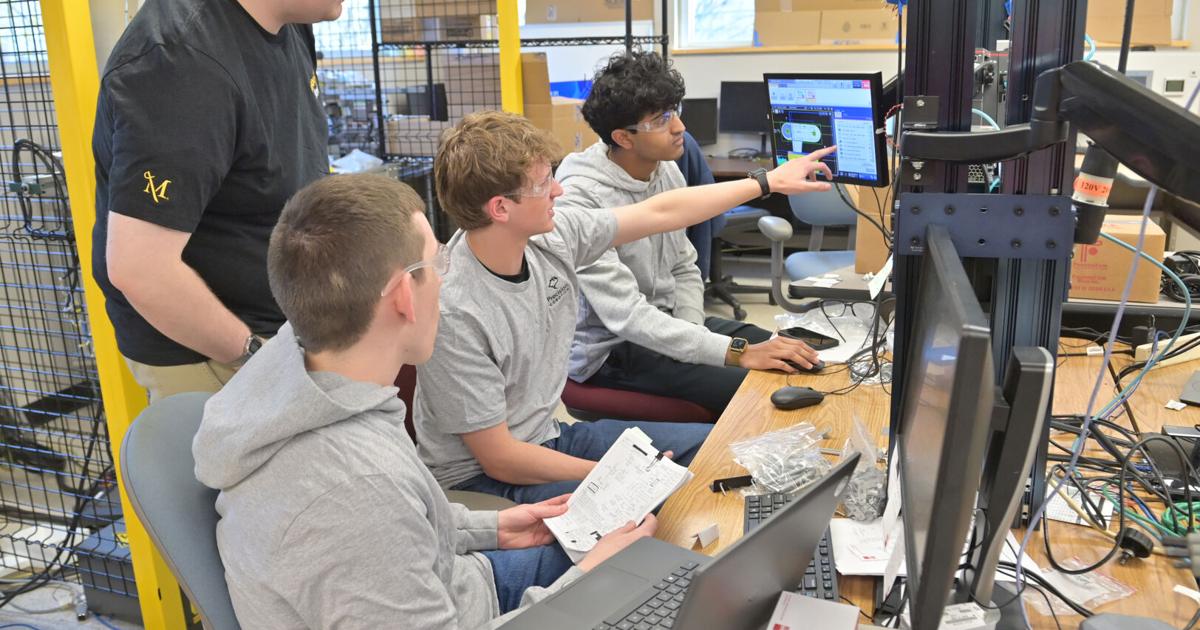
Launched in 2023, the Robotics WorX initiative was designed to address a persistent gap in the robotics workforce: the disconnect between academic curricula and the practical demands of manufacturing automation. According to the official Millersville University press release, the program “provides high school and university students with hands-on experience solving real-world manufacturing problems via the application of state-of-the-art robotic and automated technologies.” This focus on applied research is evident in the newly outfitted robotics Solutions Lab, where students collaborate on proof-of-concept projects under the mentorship of Precision Cobotics engineers.
What sets Robotics WorX apart is its emphasis on end-to-end automation workflows. While many internship programs focus on isolated tasks, the initiative requires participants to engage with the full lifecycle of robotics deployment, from conceptual design to prototyping and testing. “The program is structured to mirror the challenges of industrial automation,” explains Dr. John Haughery, the program’s coordinator. “Students aren’t just coding algorithms—they’re troubleshooting sensor fusion, optimizing control loops, and ensuring system resilience against real-world variables like thermal drift and mechanical wear.”
The Hardware/Spec Breakdown: A Closer Look at the Lab Infrastructure
While the primary sources do not provide detailed specifications, the program’s reliance on “state-of-the-art robotic and automated technologies” suggests integration with platforms like ROS (Robot Operating System) and industrial-grade robotic arms. A typical setup might include:

| Component | Example | Key Metrics |
|---|---|---|
| Robotic Arm | KUKA LBR iiwa | 6-axis, 13 kg payload, 0.01 mm repeatability |
| Sensors | Intel RealSense D455 | Depth resolution: 1280×720 @ 30fps, 10m range |
| Control System | NVIDIA Jetson AGX Xavier | 384-core GPU, 12 TOPS AI performance |
Such configurations align with industry standards for collaborative robotics (cobots), where safety and precision are paramount. The integration of NVIDIA’s Jetson platform also suggests an emphasis on edge computing and real-time decision-making, critical for applications like quality inspection and adaptive manufacturing.
Cybersecurity Implications: A Hidden Layer of Complexity
While the program’s technical focus is on mechanical and software systems, the underlying infrastructure raises important cybersecurity questions. Robotics systems, particularly those connected to industrial networks, are increasingly targeted by threat actors. According to a 2025 report by the Cybersecurity and Infrastructure Security Agency (CISA), 34% of industrial control system breaches in the past decade involved unpatched software vulnerabilities in robotic controllers.
“The true challenge lies in securing the software stack that drives these systems,” says Dr. Emily Zhang, a robotics security researcher at MIT. “Even a minor flaw in a sensor driver or communication protocol can lead to catastrophic failures.” While the Robotics WorX program does not explicitly address these concerns in its public documentation, the involvement of Precision Cobotics—a company with a track record in industrial automation—suggests that security considerations are likely integrated into the curriculum.
For enterprises adopting similar programs, the lesson is clear: workforce development must include cybersecurity training. As noted in the AWS security blog, “The convergence of robotics and IoT demands a zero-trust architecture, where every component