
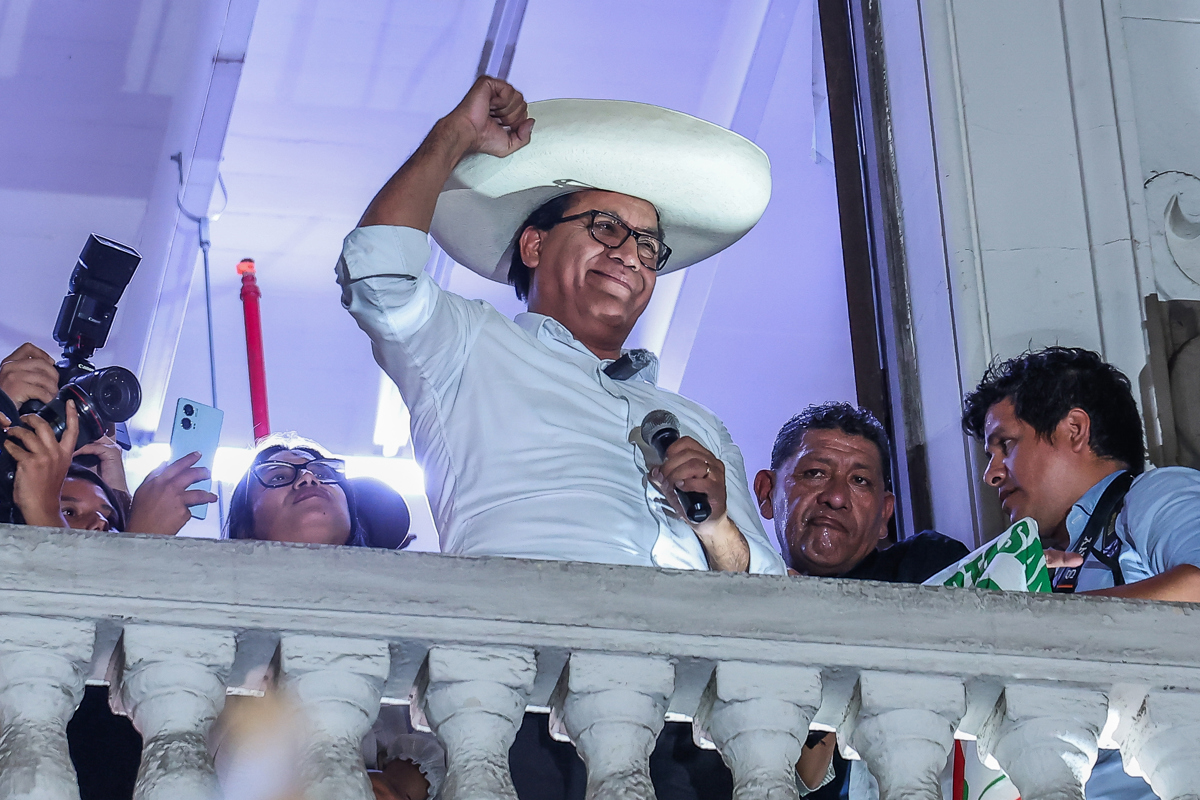
Roberto Sánchez Alleges Fraud and Refuses to Recognize Potential Fujimori Presidency
Peruvian political leader Roberto Sánchez has formally alleged systemic electoral fraud, declaring he will not recognize an administration led by Keiko Fujimori. The move follows his request to annul votes from 119 overseas consulates, prompting mass mobilization efforts and raising significant concerns regarding the stability of Peru’s governance and its standing in regional trade markets.
The Legal Challenge to the Electoral Process
The core of the current dispute rests on a formal petition filed by Roberto Sánchez, which seeks the nullification of ballots cast by Peruvian citizens residing abroad. According to reports from Infobae, Sánchez has specifically targeted 119 consular offices, arguing that irregularities in the handling of these votes undermine the legitimacy of the entire presidential contest. The Jurado Nacional de Elecciones (JNE) has begun reviewing various records, though the official certification of results remains in a state of flux.
.jpg/560px-International_Durastar_4400_(16279366960).jpg "The Legal Challenge to the Electoral Process")
This is not merely a domestic administrative hurdle. For foreign investors and multinational firms, the uncertainty surrounding the JNE’s final verdict creates a “governance vacuum.” When election outcomes are contested through formal litigation, the immediate risk is a freeze on public procurement and a suspension of regulatory approvals. Firms currently exposed to the Peruvian market are often forced to engage International Political Risk Consultancies to model the potential for civil unrest and the resulting impact on localized operational continuity.
Macro-Economic Volatility and Regional Trade
Peru’s economic stability is deeply tethered to its mining sector, which accounts for a significant portion of its GDP. According to data provided by the World Bank, any prolonged period of political instability tends to correlate with a contraction in Foreign Direct Investment (FDI). If a new administration faces a legitimacy crisis from the outset, the cost of capital for major infrastructure projects often spikes, as international lenders re-rate the country’s sovereign risk profile.

The situation is further complicated by the history of the Fujimori political brand. As noted by El País, the refusal to recognize a potential Fujimori government is a signal of deep-seated polarization that could lead to extended periods of social protest. “When the rule of law is perceived as being in competition with the electoral outcome, the primary casualty is the predictability of the business environment,” says Dr. Elena Vance, a senior fellow at the Center for Strategic and International Studies (CSIS). “Investors do not fear a particular candidate as much as they fear the absence of a clear, undisputed transition of power.”
The Threat to Supply Chain Continuity
The planned mobilizations, specifically those announced for this coming Saturday, pose a logistical threat to regional supply chains. In previous instances of civil unrest in the Andean region, blockades have frequently disrupted the transit of commodities from inland mines to coastal ports. For companies managing cross-border logistics, the current climate requires a shift from “just-in-time” to “just-in-case” inventory management.
Global corporations are currently re-evaluating their reliance on local logistics providers who may be hampered by these disruptions. Many are now utilizing Supply Chain Resilience Specialists to map alternative transit corridors and secure private security assets to ensure the safety of personnel and cargo. The failure of the state to guarantee the peaceful transfer of power or maintain the integrity of public infrastructure often forces private entities to internalize costs that were previously assumed to be government-provided.
Comparing Institutional Responses
There is a notable divergence in how domestic and international actors are framing these events. While the JNE continues its formal review of the electoral records, political actors like Sánchez are utilizing the public square to challenge the legitimacy of the outcome. This creates a “dual-track” crisis: one that is settled in the courtroom, and one that is fought in the streets.
| Stakeholder | Primary Strategy | Objective |
|---|---|---|
| Roberto Sánchez | Legal Nullification | Invalidation of overseas vote blocks |
| JNE | Record Verification | Formal certification of the count |
| Keiko Fujimori | Consolidation | Maintaining electoral lead/legitimacy |
Bridging the Gap for Global Stakeholders
As the situation in Lima remains fluid, the imperative for global firms is to move beyond passive observation. The risks associated with contested elections—ranging from currency devaluation to the sudden imposition of emergency decrees—require active monitoring. International trade lawyers are increasingly advising clients to review their force majeure clauses in existing contracts with Peruvian state entities, as the potential for government-induced delays is high.

Furthermore, the volatility of the Peruvian Sol in response to these headlines suggests that currency hedging strategies are becoming essential for firms with significant local exposure. Engaging with Global Financial Advisory Firms can help corporations insulate their balance sheets from the erratic movements of the local market during this period of uncertainty.
The transition of power in Peru is not just a matter of local politics; it is a critical variable in the larger Latin American geopolitical equation. As the country moves toward a potential impasse, the ability of both public and private institutions to navigate the legal and social friction will determine the long-term viability of its economic development. Global actors must prepare for a scenario where the administrative machinery of the state may be temporarily paralyzed, necessitating the use of specialized, third-party oversight and risk management to protect existing capital interests.