
Rithum Report Finds 58% of Shoppers Blame Brands for AI Recommendation Errors
A fresh report from Rithum reveals that 58% of shoppers lose trust in a brand when AI-powered recommendations deliver inaccurate information, a critical vulnerability as agentic commerce expands. This erosion of trust is impacting purchasing decisions, with 16% of consumers abandoning products entirely after a flawed AI interaction. The findings underscore the urgent need for brands to prioritize product data accuracy and consistency, a challenge that presents a significant opportunity for specialized data governance firms.
The Trust Deficit: AI’s Double-Edged Sword
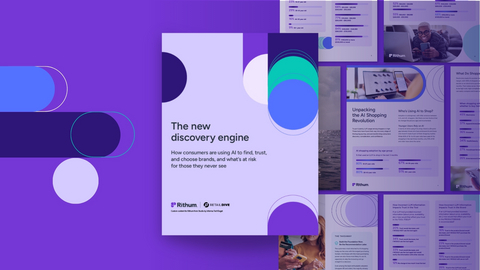
The rapid adoption of Large Language Models (LLMs) as shopping assistants is creating a paradox. While 70% of consumers have utilized AI for shopping-related activities in the last three months, the inherent fallibility of these systems is directly impacting brand perception. The Rithum report, “The New Discovery Engine,” highlights a concerning trend: consumers overwhelmingly blame the retailer or brand – not the AI itself – for inaccurate recommendations. This shifts the onus of responsibility squarely onto businesses, demanding a proactive approach to data integrity.
The financial implications are substantial. Beyond immediate lost sales (16% abandonment rate), the long-term damage to brand equity could significantly impact customer lifetime value. Consider the impact on repeat purchase rates, a key metric for consumer goods companies. A single negative AI-driven experience can easily derail a potential loyal customer. This is particularly acute among younger demographics, with 64% of 18-27 year olds accepting AI recommendations without independent verification. The potential for widespread misinformation and the resulting financial fallout, is a growing concern for risk management teams.
Price Accuracy: The Critical Data Point
The report identifies price as the most crucial element of AI-driven recommendations, with 67% of shoppers prioritizing accurate pricing information. Product reviews (35%) and availability (34%) follow, but the primacy of price is undeniable. This aligns with broader economic trends; with inflation remaining stubbornly persistent in early 2026 – the U.S. CPI registered 3.2% in February, according to the Bureau of Labor Statistics – consumers are hyper-sensitive to pricing discrepancies.
Although, the window for verification is vanishingly small. Only 5% of shoppers return to the retailer’s or brand’s website to confirm product details, indicating that purchasing decisions are often formed before consumers reach owned channels. Instead, 28% turn to search engines, ceding control of the customer journey to third-party platforms. This highlights the critical need for brands to dominate search results with accurate, up-to-date product information.
Small Brands Benefit, But Data Remains King
Interestingly, the rise of AI isn’t solely detrimental. The report reveals that AI is leveling the playing field, enabling smaller brands to gain visibility and compete with established industry giants. One in five shoppers have purchased from a previously unknown brand based on an AI recommendation. This demonstrates the power of AI to disrupt traditional market dynamics and create new opportunities for emerging players. However, this advantage is contingent on accurate product data.
“We’re seeing a fascinating shift in brand discovery. AI is democratizing access to consumers, but only for those who can provide the right information. Brands that treat product data as a strategic asset will thrive in this new landscape.”
— Eleanor Vance, Partner, Crestview Capital, speaking at the Retail Innovation Summit, March 18, 2026.
The Supply Chain & Data Synchronization Challenge
The root of many AI inaccuracies lies in fragmented and inconsistent product data across the commerce ecosystem. Supply chain disruptions, a lingering effect of the geopolitical instability of 2024, continue to exacerbate this problem. According to a recent report by McKinsey, supply chain visibility remains a significant challenge for 63% of global manufacturers, leading to inaccurate inventory data and pricing errors. This data then feeds into AI algorithms, resulting in flawed recommendations.
The problem isn’t simply about having data; it’s about synchronizing it. Brands often manage product information across multiple systems – ERP, PIM, CRM – creating silos and inconsistencies. This lack of a single source of truth is a major contributor to AI-driven errors. Companies are increasingly turning to Product Information Management (PIM) solutions to centralize and standardize their product data, ensuring accuracy and consistency across all channels.
The Legal Landscape: Liability and Transparency
The issue of liability for inaccurate AI recommendations is also gaining traction. While legal precedents are still evolving, brands could face potential lawsuits from consumers who suffer financial harm as a result of flawed AI-driven advice. This is particularly relevant in regulated industries, such as healthcare and finance, where inaccurate information could have serious consequences.
transparency is becoming increasingly important. Consumers are demanding to know how AI algorithms are making recommendations and what data is being used. Brands that can demonstrate a commitment to data accuracy and transparency will build trust and mitigate legal risks. This requires robust data governance policies and a willingness to be accountable for the performance of their AI systems. Navigating these complex legal and ethical considerations often necessitates the expertise of specialized corporate law firms with a focus on AI and data privacy.
Looking Ahead: The Agentic Commerce Imperative
The trend towards agentic commerce – where AI acts as a proactive shopping assistant – is only accelerating. As AI becomes more sophisticated, consumers will increasingly rely on these systems to make purchasing decisions. This will further amplify the importance of accurate product data and the need for brands to invest in robust data governance strategies.
“The future of commerce isn’t about simply selling products; it’s about providing a seamless, personalized shopping experience powered by AI. But that experience is only as good as the data that fuels it. Brands that fail to prioritize data accuracy will be left behind.”
— Sam Griffin, VP, Strategy and Engagement at Rithum, in a statement accompanying the report’s release.
The Rithum report serves as a stark warning: AI is a powerful tool, but it’s also a double-edged sword. Brands that can harness its potential while mitigating the risks of inaccurate information will be best positioned to succeed in the evolving commerce landscape. For businesses seeking to navigate this complex environment, the World Today News Directory offers a comprehensive listing of vetted B2B partners specializing in data management, legal counsel, and technology solutions. Don’t let inaccurate data erode your brand trust – connect with the experts today.