
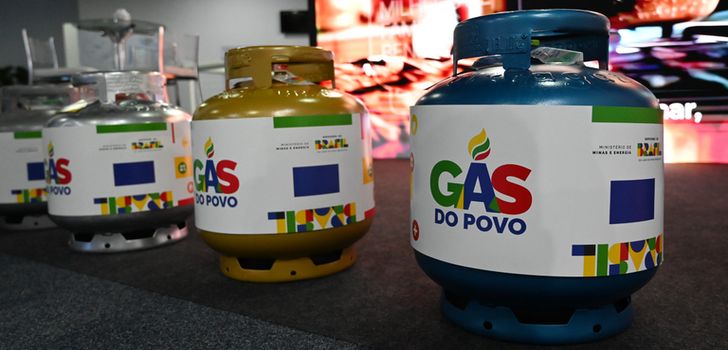
Rising LPG Prices Pressure Brazil’s Free Cooking Gas Program
Rising liquefied petroleum gas (LPG) prices are currently destabilizing Brazil’s flagship free cooking gas program. As the 2026 election cycle intensifies, the federal government struggles to subsidize essential fuel for millions of low-income households, creating a volatile economic gap that threatens both food security and political stability across the nation.
This isn’t just a budgetary hiccup; it is a systemic failure of a social promise. For the millions of Brazilians who rely on the Auxílio Gás (Gas Aid), the promise of affordable energy was a cornerstone of social stability. Now, the global energy market is colliding with domestic campaign promises, leaving the most vulnerable citizens to choose between heating their meals and buying basic groceries.
The volatility of LPG is tied directly to international benchmarks, but the impact is felt most acutely in the favelas of Rio de Janeiro and the rural outskirts of São Paulo. When the price of a 13kg cylinder spikes, it triggers a ripple effect through the local economy, driving up the cost of street food and small-scale catering services.
The Math of a Political Crisis
Brazil’s reliance on imported LPG makes it hypersensitive to geopolitical shifts. While the government attempts to cap prices through Petrobras, the gap between the market price and the subsidized rate creates a massive fiscal hole. This “subsidy trap” means that every cent saved by a citizen is a cent borrowed from a future budget that is already stretched thin by election-year spending.
The problem is compounded by a lack of diversified energy infrastructure. Most low-income households have no alternative to LPG. They cannot simply switch to electric stoves without significant home renovations and an upgrade to the local power grid.
| Impact Factor | Short-Term Effect (2026) | Long-Term Risk (Evergreen) |
|---|---|---|
| Consumer Price Index | Immediate spike in food inflation | Permanent erosion of purchasing power |
| Federal Budget | Increased emergency subsidies | Structural deficit in social welfare funds |
| Political Climate | Voter dissatisfaction in poor regions | Shift toward populist energy policies |
As the cost of living climbs, families are increasingly turning to unregulated, “clandestine” gas distributors who sell refilled cylinders of questionable quality. This creates a public safety nightmare, as these non-compliant tanks are prone to explosions.
“We are seeing a dangerous trend where the inability to afford legal gas is pushing citizens toward the black market. This represents no longer just an economic issue; it is a public health crisis waiting to happen in our most densely populated urban centers.”
To mitigate these risks, many municipalities are now scrambling to find certified safety inspectors and urban planners who can implement safer energy distribution networks in informal settlements.
Regional Fallout and the Infrastructure Gap
The crisis is not uniform across the territory. In the Northeast, where poverty rates are higher, the dependency on federal aid is absolute. In cities like Recife and Fortaleza, the disruption of gas supplies leads to immediate disruptions in local commerce. Small businesses, which form the backbone of the regional economy, are seeing their margins evaporate.
the legal framework governing energy subsidies is currently under review. The tension between the Ministry of Economy and the Ministry of Social Development has led to a legislative stalemate. This uncertainty makes it nearly impossible for local governments to plan long-term energy transitions.
For those attempting to navigate the bureaucracy of energy grants or fighting unfair pricing hikes, the complexity of Brazilian administrative law is a formidable barrier. Many are now seeking guidance from specialized administrative law firms to ensure their rights to social subsidies are upheld during this transition.
The broader context can be found by examining the Associated Press coverage of Latin American economic trends, where the intersection of climate goals and energy poverty is a recurring theme. Brazil’s struggle is a microcosm of a larger global challenge: how to transition to green energy without abandoning the poor who still rely on fossil fuels for basic survival.
The Path Toward Energy Sovereignty
If Brazil is to break this cycle, it must move beyond temporary subsidies. The solution lies in diversifying the energy mix at the household level. This includes:

- Biogas Integration: Utilizing agricultural waste in rural areas to create localized gas grids.
- Induction Transition: Providing low-interest loans for electric cooking appliances to reduce LPG dependency.
- Regulatory Reform: Ending the monopoly on gas distribution to encourage competitive pricing.
However, these transitions require massive capital investment and technical expertise. Local governments are currently vetting renewable energy infrastructure firms to design pilot programs for “energy-independent” communities.
“The dream of free gas was a political tool, not a sustainable policy. Until we decouple basic survival from the volatility of the global oil market, Brazil will remain a hostage to external price shocks.”
This sentiment is echoed by analysts at the World Bank, who emphasize that social safety nets must be built on sustainable production, not just cash transfers. The current model is a bandage on a wound that requires surgery.
The Election Year Pressure Cooker
As the 2026 election approaches, the “free gas” promise has develop into a litmus test for the administration’s competence. If the government cannot secure the most basic necessity—the ability to cook a meal—the political fallout will be severe. We are seeing a shift in voter sentiment where “energy security” is becoming as key as “employment rates.”
The instability of the LPG market is a symptom of a deeper structural fragility. It reveals a nation that is rich in natural resources but poor in distribution efficiency. The gap between the high-tech agribusiness sector and the struggling urban poor has never been more apparent than when a simple gas cylinder becomes a luxury item.
The long-term impact will be defined by whether Brazil uses this crisis to innovate or simply to subsidize. If the latter happens, the cycle will repeat in 2030, 2034, and beyond. The only way out is through a comprehensive overhaul of the national energy grid and a commitment to transparency in how subsidies are managed.
the volatility of the Brazilian gas market is a warning to all emerging economies: social promises made during campaigns are only as strong as the infrastructure supporting them. Those caught in the middle—the citizens and the small business owners—cannot afford to wait for a political solution. They need verified, professional expertise to navigate the current chaos. Whether it is securing legal protections or finding sustainable energy alternatives, the resources found within the World Today News Directory provide the necessary bridge to professionals who can turn this systemic crisis into a manageable transition.