Rising Fuel Prices Drive EV Adoption in Asia
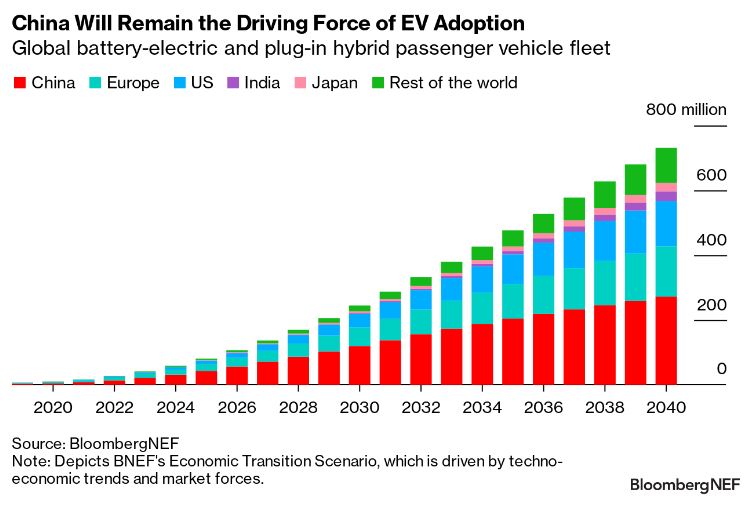
Surging fuel costs across Asia are accelerating the pivot to electric vehicles (EVs) as consumers flee volatile gasoline prices. This structural shift, driven by energy insecurity and aggressive regional pricing, is forcing legacy automakers to overhaul supply chains to maintain market share in the world’s fastest-growing automotive hub.
The fiscal reality is simple: when the cost of internal combustion engine (ICE) operation exceeds the amortized monthly cost of an EV lease, the consumer switches. We are seeing this play out in real-time across Southeast Asia and China. However, this transition isn’t a seamless glide. It is a violent disruption of the traditional automotive value chain. For legacy OEMs, the problem isn’t just a loss of sales—it’s a collapse of the high-margin after-sales service model that once sustained them.
Companies struggling to pivot their operational models are increasingly turning to strategic management consultants to restructure their capital allocation and avoid stranded assets in engine manufacturing.
The Macro Catalyst: Fuel Volatility and Margin Compression
The acceleration isn’t merely a trend; it’s a response to a liquidity crisis at the pump. As fuel subsidies are phased out in several Asian markets to curb national deficits, the “total cost of ownership” (TCO) calculation has shifted decisively. When gasoline prices spike, the delta between ICE and EV operational costs widens, creating a vacuum that Chinese OEMs like BYD are filling with aggressive pricing strategies.
The pressure is manifesting in the EBITDA margins of traditional players. According to the International Energy Agency (IEA) Global EV Outlook, the penetration rate in Asia is no longer about early adopters—it is about mass-market necessity. We are seeing a transition from “green preference” to “fiscal survival.”
This shift triggers a secondary crisis: the need for massive infrastructure deployment. The gap between vehicle sales and charging station availability is a systemic bottleneck. To solve this, governments and private equity firms are scouting for infrastructure development firms capable of scaling grid capacity at a pace that matches consumer demand.
“The volatility in Brent crude isn’t just a headline for traders; it’s the primary driver of automotive procurement in Asia. We are seeing a permanent migration of capital from liquid fuels to electrons, and those who fail to hedge their supply chain against lithium and cobalt volatility will identify themselves obsolete by 2030.”
— Marcus Thorne, Chief Investment Officer at Apex Global Equity
The Macro Explainer: Three Pillars of the Asian EV Pivot
- The Pricing War and Margin Erosion: The entry of low-cost Chinese EVs has triggered a “race to the bottom” in pricing. Legacy brands are facing a squeeze where they must lower MSRPs to remain competitive even as simultaneously investing billions in R&D for battery chemistry. This creates a dangerous dip in free cash flow.
- Energy Sovereignty and Policy Arbitrage: Many Asian nations are leveraging EV adoption to reduce reliance on imported hydrocarbons. By shifting to a domestic electricity grid—often powered by a mix of renewables and coal—they are effectively swapping a volatile external commodity (oil) for a controlled internal one (electricity).
- Supply Chain Re-Localization: The shift is forcing a move toward “near-shoring.” To avoid the bottlenecks seen during the 2021-2022 semiconductor crisis, firms are integrating vertically, moving from outsourced component sourcing to in-house battery cell production.
This vertical integration requires an immense amount of legal oversight. As companies acquire lithium mines or enter joint ventures for battery plants, they are engaging international corporate law firms to navigate the complex regulatory environments of emerging markets and ensure compliance with evolving trade tariffs.
Analyzing the Fiscal Impact: The Cost of Transition
The financial burden is not distributed evenly. While pure-play EV manufacturers are scaling, traditional giants are dealing with “double spending”—maintaining the legacy ICE infrastructure while funding the EV transition. This is a capital expenditure (CapEx) nightmare.
Looking at the latest SEC filings for global automotive conglomerates, there is a clear trend of increasing debt loads to fund “Green Transformation” initiatives. The yield curve for automotive corporate bonds is reflecting this risk; investors are demanding higher premiums for companies that cannot prove a clear path to EV profitability within the next three fiscal quarters.
One sentence takeaway: The ICE engine is no longer an asset; it is becoming a liability on the balance sheet.
The Infrastructure Gap and the B2B Opportunity
The surge in EV demand is creating a desperate need for “smart” energy management. The current grids in many Asian metropolitan areas are not equipped for the peak load of millions of simultaneous prompt-chargers. This is where the next wave of B2B growth resides. We aren’t just talking about plugs in the ground; we are talking about V2G (Vehicle-to-Grid) technology, AI-driven load balancing, and massive energy storage systems.
The problem of grid instability is a goldmine for enterprise energy solution providers. These firms are the invisible architects of the EV revolution, solving the “last mile” of power delivery that prevents the transition from stalling.
“The bottleneck is no longer the car; it’s the kilowatt. The companies that can solve the distribution problem in Jakarta or Bangkok will capture more value than the companies actually building the chassis.”
— Siddharth Mehta, Senior Analyst at Asia-Pacific Energy Research
As we move into the next fiscal year, the focus will shift from vehicle delivery numbers to “ecosystem viability.” Can the charging infrastructure keep pace? Can the battery recycling market scale to prevent a new environmental crisis? The answer to these questions will determine which automotive brands survive the decade.
The Asian automotive market is currently a laboratory for the future of global transport. The catalyst—fuel price volatility—has stripped away the luxury of a slow transition. For the C-suite, the mandate is clear: accelerate the pivot or prepare for a managed decline. For the investor, the opportunity lies not in the brands themselves, but in the B2B infrastructure that makes the transition possible.
Navigating this volatility requires more than just market data; it requires a network of vetted, high-performance partners. Whether you are seeking to hedge against supply chain shocks or scale your energy infrastructure, the World Today News Directory provides the definitive bridge to the global B2B firms capable of solving these industrial-scale challenges.