
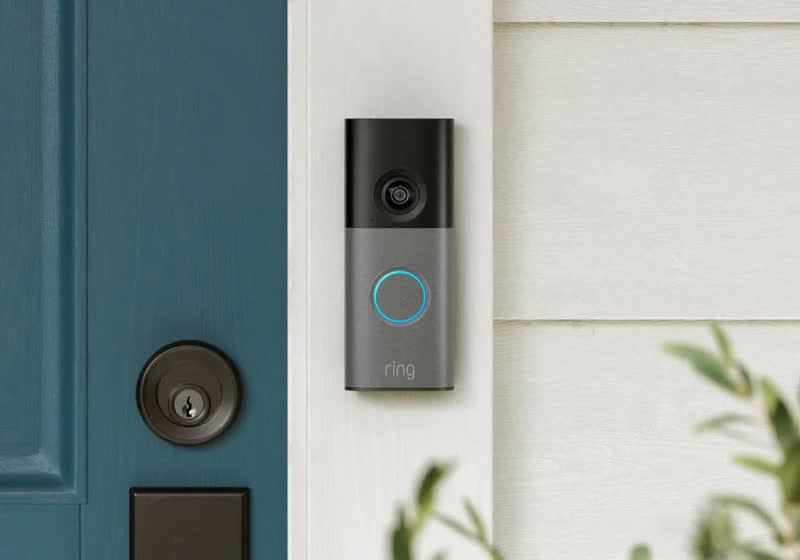
Ring Unveils New Battery Doorbells with 2K and 4K Video
Ring’s 4K Battery Push: Bandwidth Bloat or Security Blind Spot?
Ring just dropped the Battery Video Doorbell Pro 2nd Gen, pushing 4K resolution onto a power-constrained form factor. On paper, 249.99 USD gets you 10x digital zoom and crisp imagery. In practice, pushing that much pixel density over Wi-Fi from a battery source introduces significant latency spikes and expands the attack surface for data exfiltration. We need to talk about the encryption overhead required to stream 4K securely versus the battery drain it incurs.
The Tech TL;DR:
- Power vs. Pixels: 4K streaming on battery models necessitates aggressive sleep cycles, potentially creating gaps in motion capture logs.
- Encryption Overhead: Higher bandwidth requires robust TLS handshakes, increasing CPU load on the edge device and reducing overall battery life.
- Network Exposure: High-resolution IoT devices increase local network congestion, requiring stricter VLAN segmentation for enterpriseadjacent deployments.
The core engineering challenge here isn’t the sensor; it’s the pipeline. Streaming 4K video requires sustained throughput that typically demands wired power or massive battery packs. Ring claims optimization, but any principal engineer knows that compression algorithms like H.265 introduce computational latency. When you add end-to-end encryption (E2EE) into the mix, the device’s NPU has to work harder, generating heat and draining the cell faster. This trade-off often leads to throttled frame rates during critical events.
Looking at the hardware specifications, the disparity between the Pro and the standard model is stark. The Pro model’s 4K capability implies a newer SoC, likely ARM-based, designed to handle on-device preprocessing before uploading to the cloud. Though, higher resolution means more data in transit. If the TLS implementation isn’t optimized, you’re looking at increased handshake times. For security teams, this latency isn’t just an annoyance; it’s a window of vulnerability where packet inspection might fail due to timeout thresholds.
Hardware Specifications and Security Implications
We broke down the three new tiers to understand where the security budget is being allocated. Usually, higher price points correlate with better secure enclave hardware, but consumer IoT often skips dedicated security chips to keep costs down.
| Model | Resolution | Price | Security Architecture | Estimated Battery Drain (Active) |
|---|---|---|---|---|
| Pro 2nd Gen | 4K (2160p) | $249.99 | Hardware-backed Encryption | High (4-5 months) |
| Plus 2nd Gen | 2K (1440p) | $179.99 | Software-based Encryption | Medium (6-7 months) |
| Standard | 1080p | $99.99 | Basic TLS | Low (8-10 months) |
The Pro model’s hardware-backed encryption is a necessary baseline, yet it remains proprietary. Without public documentation on the key management system, we cannot verify if keys are rotated per session or static. This opacity violates the principle of security through transparency. According to the Security Services Authority, cybersecurity audit services constitute a formal segment of the professional assurance market distinct from general IT consulting. Organizations deploying fleets of these devices should not rely on vendor claims alone.
For enterprise environments or high-net-worth residential setups, integrating these devices requires a zero-trust approach. You cannot simply plug a 4K camera into your main VLAN. The bandwidth consumption alone can trigger DDoS-like symptoms on congested networks. This is where cybersecurity consultants and penetration testers become critical. They validate whether the device’s outbound traffic is strictly limited to known CDN endpoints or if it opens arbitrary ports.
The Implementation Reality: Network Segmentation
Deploying high-bandwidth IoT requires strict network hygiene. Before installing these units, administrators should verify open ports, and services. A basic network scan can reveal if the device is exposing unnecessary services like Telnet or unencrypted HTTP.
# Perform a comprehensive port scan on the IoT device IP # Identify running services and version detection nmap -sV -p- -O <device_ip_address> # Check for specific insecure ports often left open on consumer IoT nmap -p 23,21,80,8080 <device_ip_address>Running these commands reveals the exposure level. If port 23 (Telnet) is open, the device is vulnerable to credential stuffing attacks. Many consumer IoT devices ship with hardcoded credentials that are never rotated. This is a classic bottleneck in IT security. To mitigate this, firms often engage cybersecurity risk assessment and management services to systematically evaluate the threat landscape before deployment.
the data privacy implications of 4K streaming are non-trivial. Higher resolution means facial features are more discernible, raising GDPR and CCPA compliance issues. Storing this data requires robust access controls. As noted in industry guidelines, cybersecurity risk assessment and management services form a structured professional sector where qualified providers systematically evaluate these compliance gaps. Relying solely on the vendor’s cloud storage without independent verification is a liability.
“Consumer IoT devices often prioritize feature velocity over security depth. When you introduce 4K streaming, you increase the data payload significantly. Without proper segmentation, a compromised doorbell becomes a pivot point into the entire home network.” — Senior Security Researcher, IoT Threat Intelligence Group.
The latency issue as well impacts real-time monitoring. If the encryption handshake takes too long due to the computational load of 4K encoding, the live view might lag by several seconds. In a security context, seconds matter. This lag is often masked by marketing terms like “HD Video” without disclosing the actual frame rate drops during encryption peaks. Developers should refer to OWASP IoT Top 10 standards to understand common vulnerabilities in such devices.
Vendor Lock-in and API Limitations
Ring’s ecosystem is notoriously walled. Accessing video feeds programmatically often requires unofficial APIs that violate terms of service, leaving developers without stable integration points. For those building custom security dashboards, this lack of official API support is a major bottleneck. You are forced to rely on cloud webhooks rather than direct RTSP streams, adding dependency on Ring’s uptime.

For organizations needing reliable uptime, this architecture is fragile. A cloud outage renders the doorbell useless for remote monitoring. This is why software development agencies often recommend hybrid local storage solutions for critical security infrastructure. Relying entirely on a vendor’s cloud introduces a single point of failure.
the jump to 4K on battery models is an engineering feat, but it shifts the burden of security onto the network administrator. The device itself is only as secure as the VLAN it resides in. Without proper auditing, these high-resolution eyes become high-resolution leaks.
Final Verdict
The Ring Battery Video Doorbell Pro 2nd Gen delivers on resolution but demands a higher security tax from the user. The increased bandwidth and processing requirements necessitate a reevaluation of network perimeter defenses. Do not treat this as a plug-and-play consumer gadget if you value network integrity. Treat it as an untrusted endpoint.
As we move toward higher fidelity IoT, the line between consumer convenience and enterprise risk blurs. Ensure your perimeter is vetted by certified IT and cybersecurity professionals before expanding your digital footprint with 4K endpoints.
Disclaimer: The technical analyses and security protocols detailed in this article are for informational purposes only. Always consult with certified IT and cybersecurity professionals before altering enterprise networks or handling sensitive data.