
Reviewing Past Anime Flops: Spoilers Ahead
Japan’s anime film market is currently defined by a brutal dichotomy: astronomical success for “Jump” properties and catastrophic failures for independent titles. Recent box office receipts reveal a trend where films like Tritsukare Otoko and ChaO collapse financially despite wide releases across hundreds of screens, signaling a precarious bubble for non-franchise IP.
The current industry climate has created a dangerous illusion of stability. For years, the sheer volume of anime consumption suggested a rising tide that would lift all boats, but the reality is far more selective. We are witnessing a “Jump Monopoly” where the brand equity of Shonen Jump titles acts as a shield against market volatility, while everything else is left to the whims of an increasingly fickle audience. When a studio bets on original art or niche IP, they aren’t just fighting for attention—they are fighting a mathematical war against the dominance of established franchises.
Looking at the official box office receipts for films released with 125 or more screens since 2010, the numbers are staggering. The gap between a “hit” and a “bomb” is no longer a slope; it is a cliff. The following data highlights the most severe financial underperformers in recent years, illustrating how wide distribution can actually accelerate a film’s collapse if the initial hook fails to land.
| Film Title (Year) | Screen Count | Box Office Gross (Approx.) |
|---|---|---|
| Tritsukare Otoko (2025) | 263 | 22 million yen |
| AS ONE (2025) | 131 | 27.86 million yen |
| ChaO (2025) | 300 | 34.62 million yen |
| Poppin Q (2016) | 199 | Under 40 million yen |
| 100 Days of Living Crocodile (2021) | 156 | 48 million yen |
| Dr. Rajah in the Attic (2023) | 357 | 238 million yen |
| Alice and Therese’s Illusion Factory (2023) | 323 | 244 million yen |
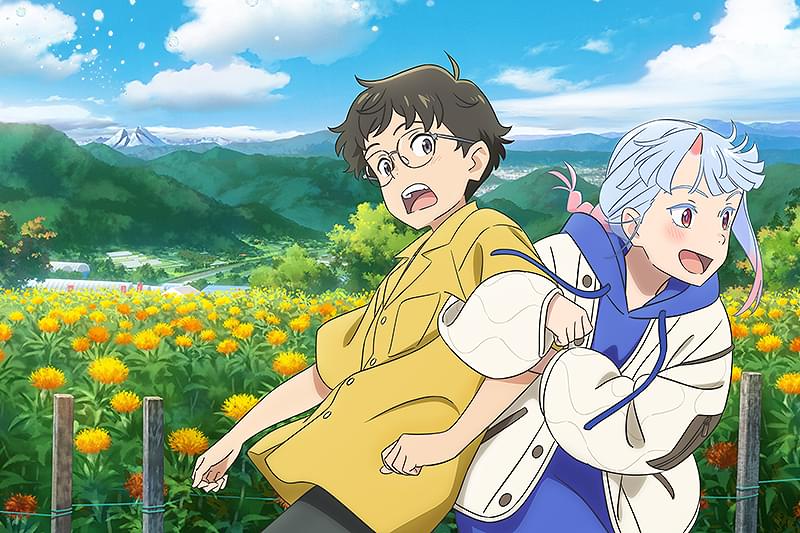
The case of ChaO is particularly instructive. Produced by STUDIO4℃ and distributed by Toei, the film enjoyed a massive launch with over 300 screens. Yet, in its first three days, it managed to attract only about 10,000 viewers, netting a dismal 15 million yen. This is a textbook example of a distribution mismatch. When a production of this scale fails to generate immediate momentum, the backend gross becomes a liability rather than a recovery tool. For studios facing this level of financial hemorrhaging, the immediate priority is often to engage specialized intellectual property lawyers to renegotiate distribution contracts and mitigate the fallout of failed investment guarantees.
Then there is the tragedy of Studio Ponoc’s Dr. Rajah in the Attic. On paper, the film was a triumph of craftsmanship, boasting 100,000 hand-drawn frames—a volume that rivals Ghibli’s Spirited Away (which sat at 112,000). But, the market didn’t care about the frame count. The film suffered from a perception of being a Ghibli derivative and a confusing marketing campaign that led some to mistake the posters for religious propaganda. Despite 357 screens, it stalled at 238 million yen. When a studio pours that much labor into a product that fails to resonate, the brand equity takes a hit that can be terminal. Reports suggest Studio Ponoc has remained largely silent since this release.
The failures aren’t always about the art; often, they are about the optics. Alice and Therese’s Illusion Factory (2023) provides a masterclass in how a botched PR rollout can kill a film before it even opens. Despite 323 screens, it earned only 244 million yen. The film was plagued by a trailer that sparked backlash from feminist critics and a general perception among the public that the tone was too “gloomy.” In the modern media landscape, a trailer isn’t just a preview—it’s a liability. When a project becomes a lightning rod for social media controversy, standard press releases are useless. Studios in this position must deploy elite crisis communication firms and reputation managers to pivot the narrative before the “bomb” label becomes permanent.
Even critically acclaimed works aren’t safe. Listen to the Song of Love (2021) won awards and earned praise from audiences, yet it struggled significantly at the start due to poor promotional materials, barely crossing the 200 million yen mark. It was only through the relentless dedication of a core fan base that it avoided a historical disaster. This highlights a shift in the business model: the “fan-driven recovery.” To maximize these niche successes, studios are increasingly looking toward bespoke event management specialists to organize high-ticket, limited-run screenings and fan experiences that can recoup losses that the general box office cannot.
The overarching lesson here is that the “Anime Bubble” is a myth for anyone not holding a Jump license. The industry is moving toward a winner-capture-all ecosystem where the middle class of anime cinema is being erased. Studios are now forced to choose between the safety of corporate IP or the high-stakes gamble of original storytelling, where a single misstep in marketing or a “gloomy” trailer can result in a 300-screen disaster.
As we look toward the next cycle of releases, the question remains: can independent studios survive without the Jump umbrella? The answer likely lies in a fundamental shift in how these films are funded and marketed. Relying on massive screen counts is a legacy strategy that no longer works for non-franchise titles. The future belongs to those who can cultivate a surgical, targeted audience rather than those who cast a wide, expensive, and ultimately empty net. For the executives and creators navigating this volatility, finding vetted professionals in PR, legal, and event logistics through the World Today News Directory is no longer optional—it is a survival strategy.
Disclaimer: The views and cultural analyses presented in this article are for informational and entertainment purposes only. Information regarding legal disputes or financial data is based on available public records.