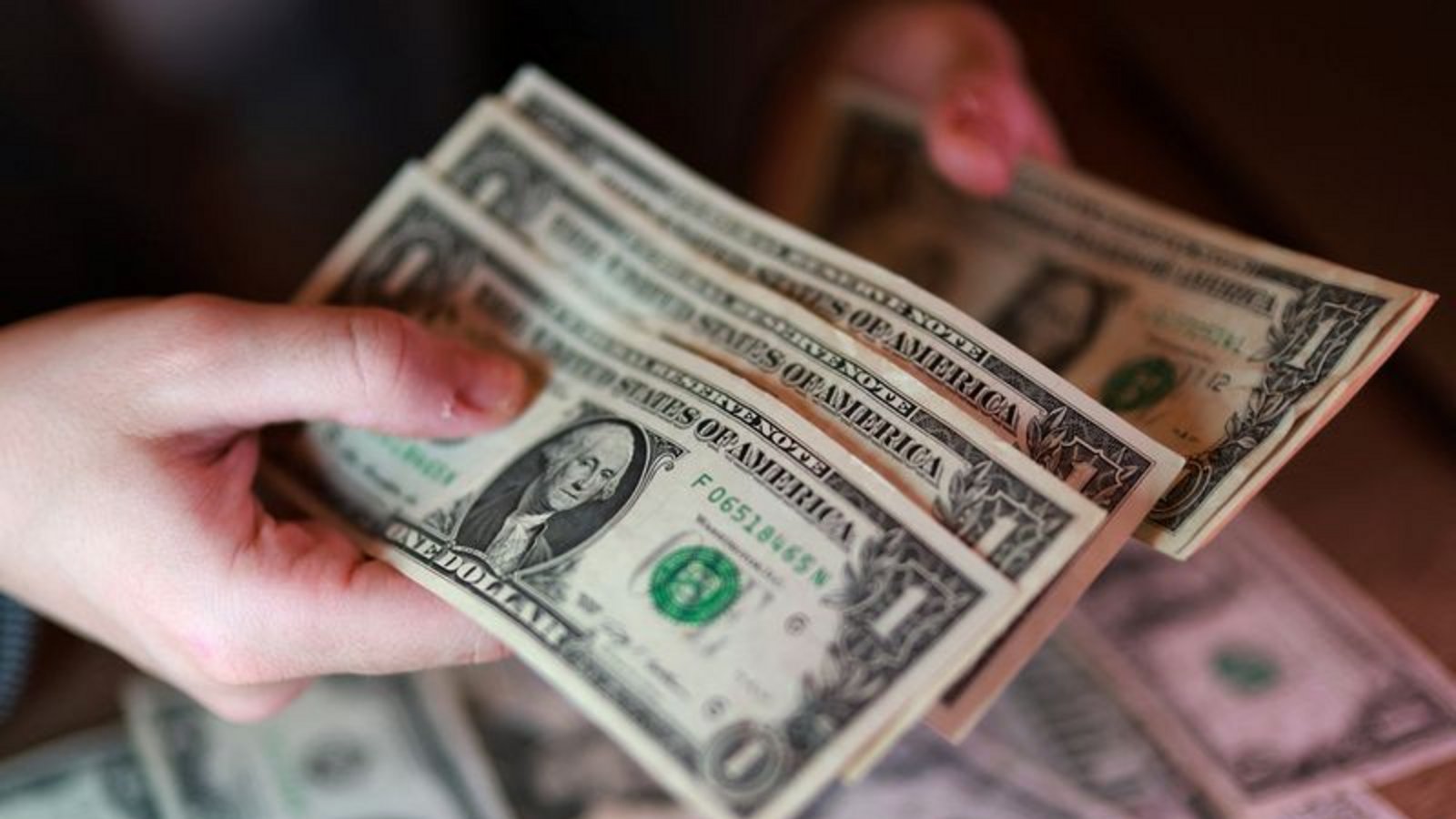
Retail Dollar Withdrawals Surge 45-60% at Argentine Banks, $350M-$400M Daily
Retail dollar buying through home banking rose 45% to 60% above normal levels between Friday and Wednesday at some leading banks, moving an estimated $350 million to $400 million per day across the system, Campo en acción reported, citing banking sources consulted by iProfesional.
On Wednesday alone, purchases ran 20% above the usual pace, the outlet said. The wholesale dollar closed at 1,604 pesos, up 0.7% on the day and 4.6% for November, while the retail rate reached 1,630 pesos, a 0.9% daily gain and 4.5% monthly rise, Campo en acción reported. The reaction of savers coincided with a moment of pressure on the external front and with demands for greater reserve accumulation by the International Monetary Fund, Wall Street banks and City economists, Campo en acción reported.
That combination reduced the Central Bank’s room for maneuver in the exchange market, the outlet said. Since July the dollar had not beaten inflation in a monthly comparison; the November rise more than doubles the 1.9% inflation expected for the month, Campo en acción reported.
During August, September and October, savers bought around $2.5 billion per month through financial entities, a structural floor of demand that persisted even while the dollar systematically lost against inflation, Campo en acción reported.
The BCRA has not purchased dollars in the official market for three consecutive sessions, accumulating just $344 million in November at a daily average of $22.9 million, iProfesional reported. That pace mirrors September, when an International Monetary Fund technical mission urged faster reserve accumulation, before a brief pickup in October. Economy Minister Luis Caputo attributed the volatility to international financial turbulence and said the new official rate above 1,600 pesos was reasonable, iProfesional reported. The change facilitates a $6 billion repo that required a partial cash cancellation last week after the value of pledged bonds fell. Deputy Marcela Pagano warned during the lower house debate that the measure enables the government to use international reserves, including the portion corresponding to savers’ deposits, as collateral for loans, El Destape reported. The Auditor General of the Nation separately revealed that between June and August 2024 the BCRA shipped 1,000 gold bars to the Bank of England and refinished 115 ingots, converting physical holdings into unallocated gold credits that can be pledged as collateral.
Banks requested about $200 million from the Central Bank this week to meet rising cash demand, El Destape reported. According to financial system data, the Central Bank had to deliver about $80 million on Friday, adding to the $30 million sent Wednesday and another $70 million sent Tuesday after the long weekend, El Destape reported. In parallel, the availability of dollar bills in the banks recorded a drop of $449 million during November.
On Thursday, total financial dollar volume reached $722 million, led by $614 million in MEP trades at 1,663 pesos and $108 million in CCL at 1,834 pesos, with 60% executed via the AL30 bond the BCRA uses to intervene.
In the City, suspicions are multiplying that the government is intervening through various channels to contain exchange pressure, via bonds, dollar-linked instruments and the futures market, El Destape reported. While banks seek to guarantee cash to respond to their clients, the evolution of deposits and the demand for foreign currency become central variables for the government, El Destape reported.
The BCRA’s mandate, as outlined in Article 3 of its Organic Charter, includes promoting monetary stability and economic development, which involves intervening in the exchange market to manage the official rate. Typically, the BCRA buys dollars from the market to absorb trade surpluses and maintain a competitive rate for exports, as seen in 2006 when reserves reached US$32 billion through such interventions.
Related reading
- 12 First Nations Acquire Coastal GasLink Stake With $168M Federal Loan Guarantee
- Iran Foreign Minister Warns South Korea Against Foreign Troop Deployment
- China Industrial Profits Surge 20.1% in October, Fastest Since May, Stats Bureau Says (newsy-today.com)
- Dollar General's Four Test Buys: 30 Price Errors, 21 Against the Shopper (daybreakwire.com)