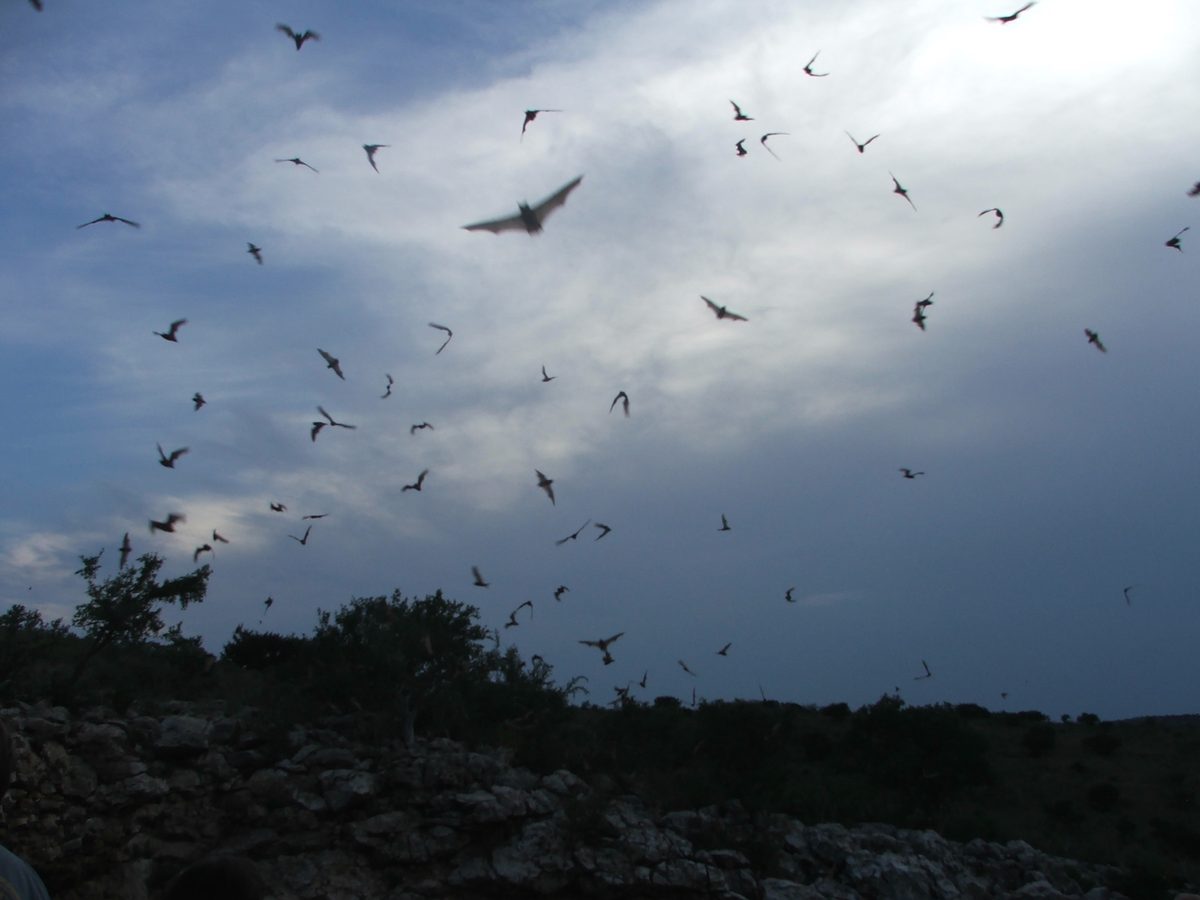
Researchers Find Brazilian Free-Tailed Bats Hit 100 MPH in Level Flight
Brazilian free-tailed bats reach horizontal speeds of up to 100 miles per hour, surpassing swifts, albatrosses, and peregrine falcons in level flight according to Discover Wildlife.
The Tech TL;DR:
- Brazilian free-tailed bats achieve speeds up to 100 miles per hour in short bursts during level flight, according to Discover Wildlife.
- Researchers in 2016 tracked the mammals using radio transmitters and a Cessna 172 plane near the Frio Bat Cave in Texas.
- The species adjusts its flight speed based on wind conditions, gliding more frequently at higher velocities.
Challenging aerodynamic dogma in Texas
For a long time, scientists underestimated bats by assuming their sticky-out ears and weird noses specialized for echolocation hindered airflow and made them less efficient than birds. A group of scientists from the US and Germany challenged this dogma in 2016 by studying a 10 million-strong colony of Brazilian free-tailed bats at the Frio Bat Cave in Texas.
Every night for a week at twilight, a researcher netted a single female outside the cave mouth and attached a tiny radio transmitter to her back. Twenty miles away, another scientist waited in a Cessna 172 plane equipped with radio antennae to follow the flying mammal for hours, recording flight data.
Bats adjust flight speed and glide in wind
The tracking data revealed that bats adjust their flight speeds in response to wind conditions just like birds and insects do. Increased wind support caused the bats to fly more slowly, while crosswinds prompted them to speed up.
At higher speeds, the bats frequently paused between wing beats, indicating a switch to gliding behavior. While peregrine falcons reach speeds of 200 miles per hour, that feat relies on gravity during a downhill plunge, whereas their horizontal speed sits closer to 70 miles per hour.
Flight performance has been underappreciated
Swifts and albatrosses cruise at speeds similar to horizontal falcons, but Brazilian free-tailed bats leave them behind by hitting 100 miles per hour in short bursts. This agility establishes the walnut-sized mammals as the fastest living, flying animals in level flight.
“flight performance in bats has been underappreciated.”
Frio Bat Cave, located in the Texas Hill Country, hosts a colony of up to 10 million Mexican free-tailed bats, one of the largest in the state. The cave provides the specific conditions mother bats require to give birth and raise pups each year.
Predators such as peregrine falcons, merlins, and zone-tailed hawks regularly hunt the bats as they exit the cave at dusk. The site is on private land and access requires advance reservations through the landowner.
Researchers published these findings in Royal Society Open Science, noting that the physical capabilities of bats had long been misunderstood by the scientific community.