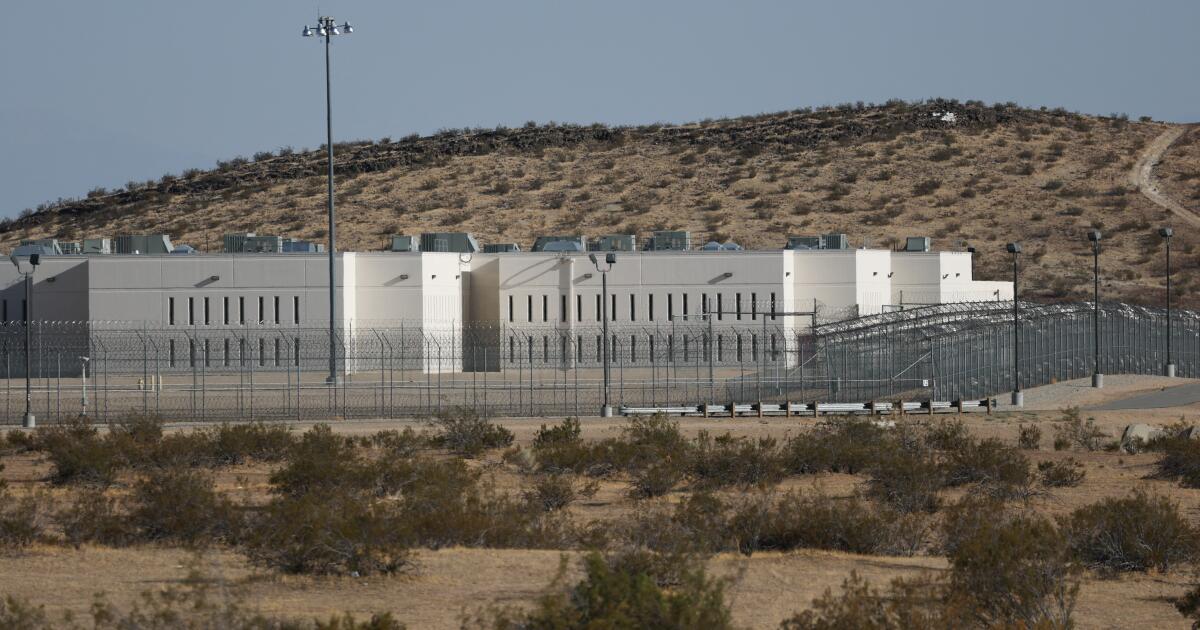
Report: Mail Delays at California ICE Centers Cost Appeals
Immigrants detained in California are losing appeals and facing deportation because legal mail routinely arrives days or weeks late, a report released Wednesday by the California Collaborative for Immigrant Justice found.
The delays span four Immigration and Customs Enforcement facilities in Kern County — California City Detention Facility, Mesa Verde ICE Processing Center in Bakersfield, and the Golden State Annex and Central Valley Annex in McFarland — and coincide with a federal rule taking effect Dec. 17 that will cut the time to appeal to the Board of Immigration Appeals from 30 days to 10, Los Angeles Times reported.
Detainees who lack attorneys depend entirely on facility mail systems to file evidence and appeals. At Central Valley Annex, one person mailed evidence by regular mail 10 days before a Sept. 18 hearing; the court never received it in time and ordered removal. The same detainee gave staff a Board of Immigration Appeals filing on Oct. 6; as of Oct. 19 the board had no record of it, attorney Priya Patel told Los Angeles Times.
At California City, an appeal placed in an express mailbox on Sept. 13 reached the board on Sept. 21 — four days past the Sept. 17 deadline — and was denied. Another detainee received a board letter dated Aug. 31 with a Sept. 21 filing deadline one day after the deadline passed; he lost his appeal and is now seeking review in the 9th Circuit.
Facilities limit supplies and computer access
The collaborative’s report also found too few law‑library computers for the number of unrepresented detainees, outdated legal forms and case‑law databases, and caps on paper, envelopes and postage. Indigent detainees are supposed to receive free postage, but stamps are sometimes sold out, forcing detainees to pay for express or certified mail to try to meet deadlines, Los Angeles Times reported.
Detainees at two facilities said they lost access to legal research, communications and stamps after staging protests or complaining about conditions, the report says. Since this month, the California City facility has given detainees the contents of incoming mail without the original envelopes.
“Those envelopes have the date of when the post office got the mail,” said Alejandro, a California City detainee who gave his first name only. “That’s the evidence we could have that demonstrates that the issue is right here — not the post office,” he told Los Angeles Times.
A Department of Homeland Security spokesperson said the envelope practice “was implemented to prevent the introduction of contraband, including controlled substances, into the facility” and “was never intended to conceal mail-processing delays, and that practice has since been discontinued,” according to a statement provided to Los Angeles Times.
Agencies and contractors deny the findings
The Department of Homeland Security said mail processing times comply with policy and called claims about delays, computer shortages and supply limits “completely UNFOUNDED,” adding that access “may be limited if they are maliciously involved in property destruction on more than one occasion,” Los Angeles Times reported.
The GEO Group, which operates Mesa Verde, Central Valley Annex and Golden State Annex, referred questions to DHS. CoreCivic, which runs California City Detention Facility, said detainees have access to legal mail, printing and research consistent with federal standards, that law‑library computers are “mostly always” available, and that people in restrictive housing retain access.
“We are not aware of any individual at the facility being removed because of a delay in legal mail,” a CoreCivic spokesperson wrote to Los Angeles Times.
The collaborative alleges the lags are by design. “These private prison companies are profiting off their detention, profiting off the barriers that they impose on people trying to fight their cases,” said Mariel Villarreal, an attorney at the collaborative.
CoreCivic rejected the allegation: “The suggestion that legal mail or legal resources are restricted to increase profit is untrue. CoreCivic has no role in decisions about whether an individual is detained, released, granted bond or removed, or in the timing or outcome of immigration proceedings,” its spokesperson wrote.
Detainees document delays themselves
Six detainees interviewed by Los Angeles Times shared handwritten logs showing when they gave mail to staff and when courts received it. They said they filed grievances with no meaningful response. At California City, some detainees began holding envelopes up to facility cameras to create a record of when mail left their possession.
Luis Castillo, 43, detained at California City, said he handed his Board of Immigration Appeals filing to an officer on Sept. 23 for standard shipping with an Oct. 1 deadline. Court records show the board denied the appeal on Oct. 14; a board document stamped Oct. 16 states it arrived late.
CoreCivic said it is reviewing the handling of Castillo’s correspondence. Castillo, arrested by ICE in December 2025 after living in New York, has appealed to the 9th Circuit — his last chance to fight deportation to Peru.
A report released Wednesday by the California Collaborative for Immigrant Justice, a coalition of legal service providers that offers coordination, advocacy, and free legal services to detained immigrants in northern and central California, found that legal mail routinely arrives days or weeks late at four ICE facilities in Kern County.
The organization operates detention-center visit programs, pro se assistance, “attorney of the day” court support, and rapid-response data collection, and its data infrastructure previously enabled class counsel in the Zepeda Rivas litigation to access information on more than 400 unrepresented detainees prior to the COVID-19 pandemic, supporting individualized bail applications and declarations for release efforts.
“I had hope that the BIA would review my case, because I had included evidence and everything,” Castillo told Los Angeles Times. “Sadly, they couldn’t review it because my envelope arrived late. They simply denied it.” Of the mail delays, he wondered aloud: “I’m not sure if it’s a trick so they can deport us faster.”