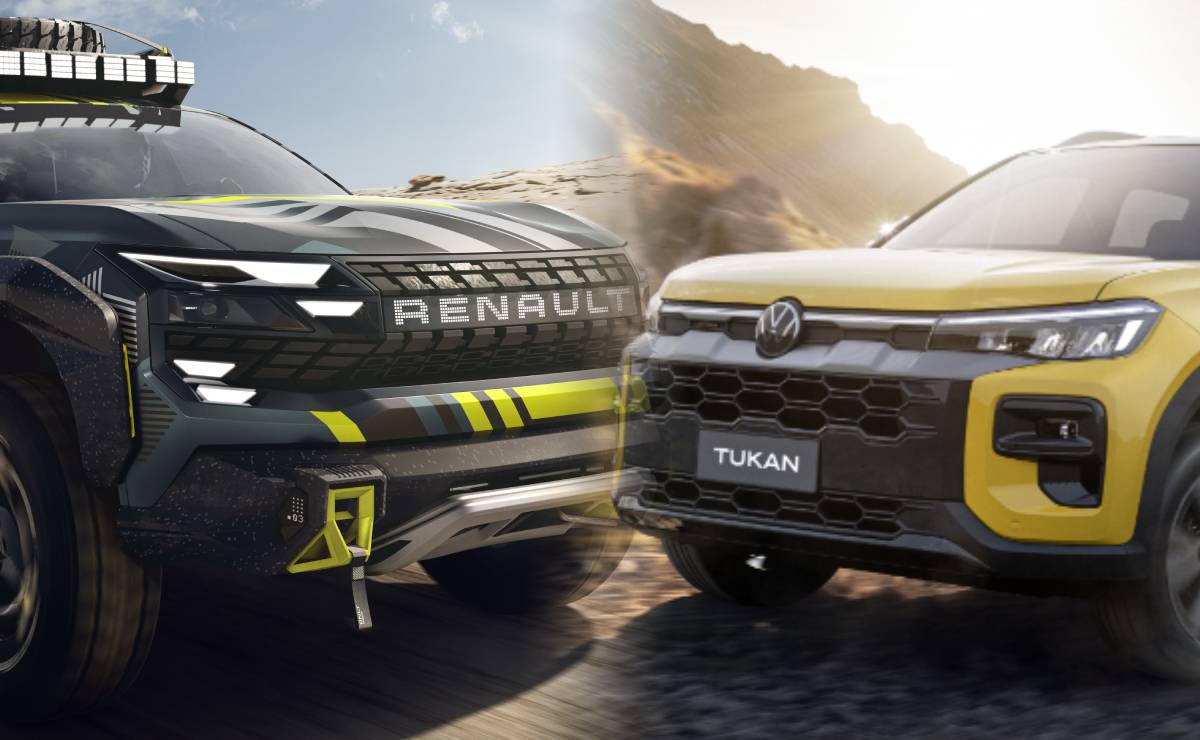
Renault Niagara and Volkswagen Tukan to Shake Up Compact Pickup Market
Renault and Volkswagen are preparing to launch two new compact pickup trucks, the Niagara and the Tukan, intensifying competition against established models like the Fiat Toro, Ford Maverick, and Ram Rampage across regional markets.
Production Footprint and Industrial Strategy
The industrial strategies behind both vehicles highlight contrasting regional footprints. The Renault Niagara will be manufactured at the Santa Isabel plant in Córdoba, serving as a direct replacement for the aging Oroch. Meanwhile, the Volkswagen Tukan is undergoing development in Brazil, slated to occupy a market space significantly larger than the Saveiro while positioning itself to challenge models like the Chevrolet Montana.
Powertrain Specifications and Architectural Platforms
Engineering details released across regional reports outline distinct mechanical approaches for each truck. The Volkswagen Tukan utilizes an architecture derived from the MQB platform, pairing a rigid rear axle with semi-elliptic leaf springs designed to maximize load capacity. Entry-level variants are projected to feature a 1.6-liter MSI naturally aspirated engine delivering 110 horsepower mated to a five-speed manual transmission, alongside higher-tier turbo configurations.
Conversely, the Renault Niagara relies initially on a 1.3-liter turbocharged four-cylinder powerplant generating 163 horsepower and 270 Nm of torque. A subsequent phase of the Niagara’s rollout will introduce an electrified variant featuring all-wheel drive, though precise specifications regarding whether the system will be a 48V mild hybrid or a full hybrid electric vehicle remain unconfirmed by the manufacturer.
Market Positioning and Strategic Naming Rationale
Both manufacturers are segmenting their offerings to capture distinct commercial and recreational demographics. The Tukan is projected to offer both single-cab and double-cab configurations, with the single-cab variant potentially adopting the Robust moniker to target fleet and utility operators. The Niagara debuts exclusively in a double-cab format characterized by rugged, adventure-oriented styling derived from the brand’s initial concept vehicle.
Corporate identity and branding decisions carry substantial financial weight when entering crowded segments. Sylvia dos Santos, Head of Naming Strategy at Renault, detailed the cultural derivation of the flagship vehicle’s badge in official communications. «The name Niagara is of origin native american. It refers to the powerful sound of the water and to the immensity of the earth. Suggests the greatness, the power and the robustness of the elements, while also inviting us to explore the greatness of nature. Transmits the promise of a vehicle designed both for daily use and for trips outside of home», dos Santos stated.
Financial Outlook and B2B Advisory Integration
As commercial production timelines approach, inventory management, dealership network financing, and localized marketing expenditures will dictate early profitability.

Corporate restructuring and debt optimization frequently accompany major industrial retooling phases.
- The Copay Yachting Metaphor Exposes American Healthcare Realities
- New Ruling Strips Freeholders of Power to Block Resident-Led Takeovers
- New Compact Pickups Coming to Argentina: Renault Niagara and Volkswagen Tukan (newsdirectory3.com)
- Housing Market’s K-Shaped Economy Lifts Luxury Sales While Starter Buyers Struggle (archyde.com)