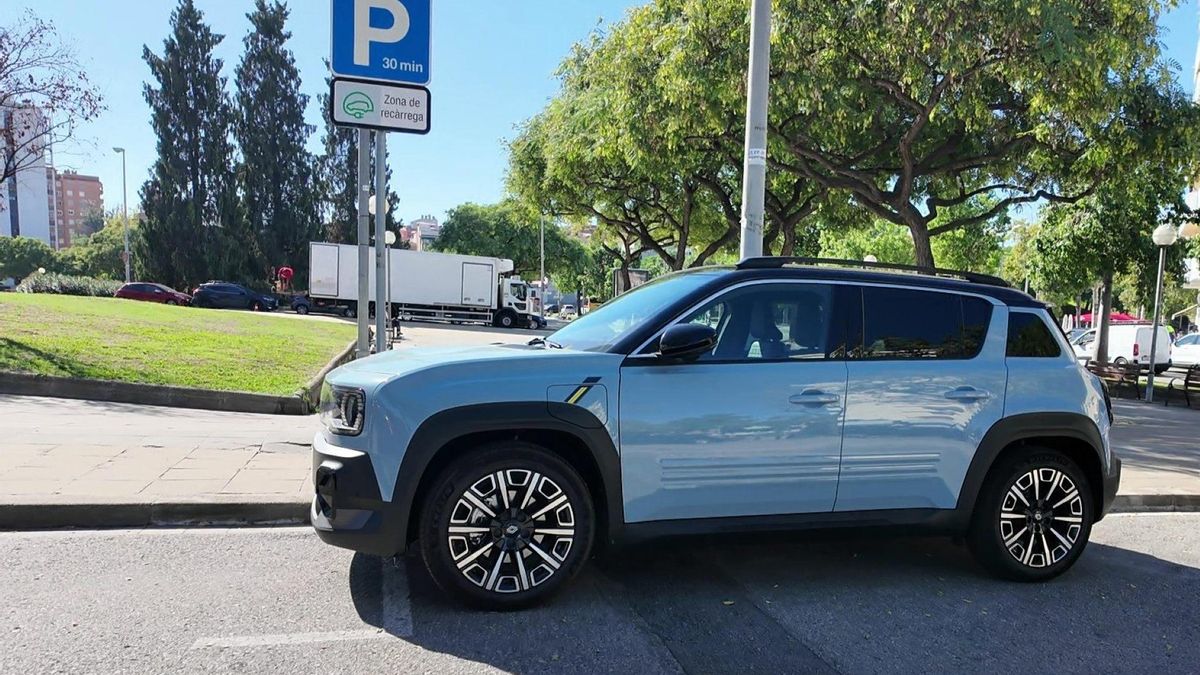
Renault 4 E-Tech features 52 kWh battery and 150 horsepower
The electric Renault 4 E-Tech has arrived as a 4.14-meter-long compact vehicle featuring a 52 kWh battery, delivering 150 horsepower and registering a tested real-world consumption of 15.1 kWh per 100 kilometers during long-duration evaluations.
Thirty Years of History Meet a 52 kWh Battery Pack
More than three decades after the final original 4L model left production lines, Renault has revived the nameplate with an all-electric interpretation. The original vehicle sold more than eight million units worldwide, serving families, farmers, and public administrations as a symbol of accessible mobility while nearly a million units were produced in Valladolid, Spain. Paula Fabregat, Renault’s design projects director, noted during the Paris Motor Show that this historical reinvention carried an added layer of responsibility given the popularity of the original car.
Retrofuturism and Cargo Capacities Versus Interior Space Limits
The digital layout combines the instrument cluster and multimedia screen into a single horizontal panel featuring integrated Google functionality and access to services like Maps. Transport versatility is aided by a 420-liter trunk featuring a low loading threshold set at 61 centimeters from the ground, alongside rear folding seats that expand transport possibilities.
150 Horsepower Engine Provides Smooth Power Delivery
The tested variant develops 150 horsepower and utilizes a 52 kWh battery pack. Immediate power delivery assists with highway merging and passing maneuvers, supported by a smooth throttle response and a turning radius of 10.8 meters that aids maneuverability on narrow streets. The suspension system prioritizes ride comfort over sporty dynamics, filtering road irregularities effectively. Depending on the specific trim level, the vehicle includes a one-pedal driving mode that uses regenerative braking to slow the car when the accelerator is released, capturing electrical energy while requiring a brief adaptation period for drivers transitioning from internal combustion engines.
Real-World Energy Consumption Beats Official Figures
Long-term evaluation figures recorded a real-world energy consumption of 15.1 kWh per 100 kilometers, coming in slightly below the 15.5 kWh/100 km official homologation figure for this configuration. During rapid charging tests, the battery capacity increased from 25% to 80% in approximately 25 minutes. Initial charging speeds approached 100 kW before tapering off progressively as the state of charge rose, delivering an estimated 312 kilometers of remaining range at the 80% threshold.