
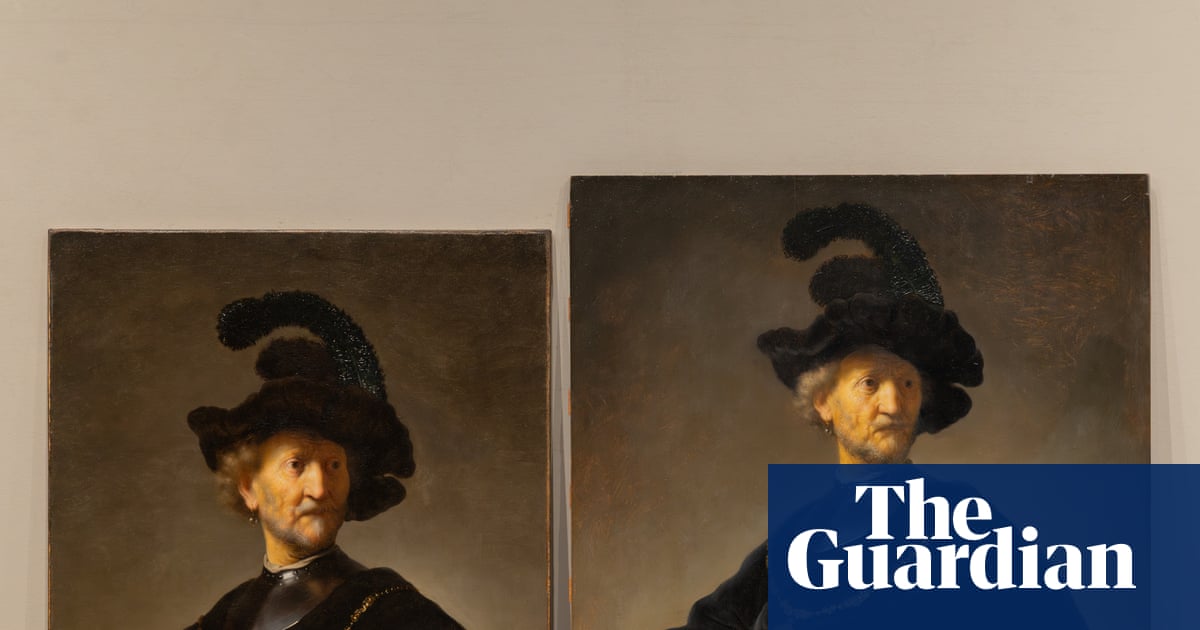
Rembrandt Painting Rediscovered: UK Portrait Attributed to Dutch Master
A portrait long dismissed as a workshop copy of a Rembrandt masterpiece has been authenticated as a genuine work by the Dutch master himself, reigniting debate around artistic attribution and the complexities of 17th-century studio practices. The rediscovery, spearheaded by scholar Gary Schwartz, challenges established art historical consensus and underscores the enduring power of Rembrandt’s brand equity, even centuries after his death.
The Authentication & The Case for Rembrandt’s Replication
For nearly four centuries, the painting, titled “Aged Man with a Gold Chain,” resided in a UK private collection, labeled as a product of Rembrandt’s workshop. Its near-identical twin, painted on panel, has long been housed at the Art Institute of Chicago and considered the undisputed original. The recent re-evaluation, detailed in reporting by The Guardian, hinges on Schwartz’s argument that Rembrandt routinely created replicas of his own successful compositions – a common practice among Dutch artists of the period. Schwartz, who will present his findings at the National Gallery in London on Monday, points to a 1699 observation from a contemporary of Rembrandt noting that Dutch painters frequently replicated their own work, either for personal satisfaction or upon direct commission. This challenges the traditional view that copies were solely the work of less-skilled studio assistants.
Brushwork & Technical Analysis: The Devil in the Details
The authentication isn’t based on a single “smoking gun,” but rather a convergence of evidence. Schwartz highlights the exceptional quality of the brushwork in the UK version, arguing that it’s unlikely a workshop assistant could have achieved such fidelity without significant correction from Rembrandt himself. Crucially, the canvas painting lacks the corrections visible in the Chicago panel version – adjustments to the man’s costume revealed through X-ray and infrared imaging. This suggests Rembrandt directly executed the canvas, rather than overseeing a student’s attempt. Further bolstering the claim, a study by the Hamilton Kerr Institute at the University of Cambridge confirmed that the canvas and pigments used in the UK painting align with those employed by Rembrandt and his studio, including the same oil-bound, double-ground layer found in eight other authenticated Rembrandt works from the 1630s.
The History of Doubt & The Bode Disagreement
The painting’s journey to rediscovery has been fraught with skepticism. In 1898, Sir Francis Newman’s great-grandfather purchased the work as a genuine Rembrandt from the prestigious Agnews gallery in London, for a “sizeable sum,” according to Schwartz. However, its status was downgraded in 1912 when German art historian Wilhelm Bode declared it a “clever reproduction” after the Chicago version came to light. Bode, however, offered “no serious reasoning for his contention,” Schwartz asserts. The painting resurfaced briefly in 1952 at a Royal Academy exhibition in London, where it was again labeled an original, only to be corrected by visiting experts and subsequently dismissed in an article published in the Burlington Magazine.
The Economic Implications of Attribution & Intellectual Property
The re-attribution of this painting isn’t merely an academic exercise; it has significant economic implications. A confirmed Rembrandt can command prices in the tens of millions of dollars. The shift in provenance dramatically alters the painting’s value and raises complex questions about intellectual property and the rights of ownership. “Attribution is everything in the art world,” explains Eleanor Vance, a partner specializing in art law at Vance & Sterling, Intellectual Property Attorneys. “A work initially considered a copy can suddenly become a centerpiece of a museum collection or a highly sought-after investment. This case highlights the importance of rigorous due diligence and the potential for significant financial gains – or losses – based on scholarly consensus.” The potential sale of the painting, as indicated by current owner Sir Francis Newman, would likely attract intense bidding from major museums and private collectors globally.
The Broader Context: Rembrandt’s Market & Brand Resilience
Rembrandt’s enduring appeal is a testament to his artistic genius and the savvy cultivation of his brand. Recent years have seen a surge in interest in his work, evidenced by the record-breaking sale of a newly discovered Rembrandt at auction in 2026 (as reported by Artnews) and the Rijksmuseum’s recent unveiling of another early work attributed to the master. This renewed attention underscores the artist’s continued relevance in the contemporary art market. The market for Old Master paintings, while historically volatile, has demonstrated remarkable resilience, particularly for works by established masters like Rembrandt. According to the Art Basel and UBS Global Art Market Report 2025, sales of Old Master paintings accounted for 22% of the total global art market, demonstrating sustained demand from collectors and institutions.
“The art world operates on perception as much as provenance. A re-attribution like this isn’t just about brushstrokes; it’s about narrative, prestige, and value. It’s a masterclass in brand rehabilitation, centuries in the making.”
– Julian Bellwether, Senior PR Consultant, Bellwether Arts PR
Navigating the Aftermath: PR & Legal Considerations
The authentication process and potential sale of the painting will undoubtedly attract significant media attention. Sir Francis Newman, and any future owner, will need to proactively manage the narrative and address potential scrutiny from art historians and the public. A robust public relations strategy, focusing on the scholarly research and the painting’s historical significance, will be crucial. The legal complexities surrounding ownership and potential claims from other parties necessitate expert legal counsel. The potential for disputes over authenticity or ownership underscores the importance of securing comprehensive title insurance and engaging experienced art dispute resolution specialists.
The story of “Old Man with a Gold Chain” serves as a potent reminder that art history is not a static discipline. New discoveries, coupled with advancements in scientific analysis and evolving scholarly perspectives, can reshape our understanding of the past. As the art world continues to grapple with questions of attribution and authenticity, the need for rigorous research, expert analysis, and proactive legal and PR strategies will only intensify. The World Today News Directory offers a comprehensive network of vetted professionals – from art law experts to crisis communication specialists – to navigate the complexities of this dynamic landscape.
*Disclaimer: The views and cultural analyses presented in this article are for informational and entertainment purposes only. Information regarding legal disputes or financial data is based on available public records.*