
Red Bull’s Zero-G Pit Stop: How They Filmed F1 in Weightlessness
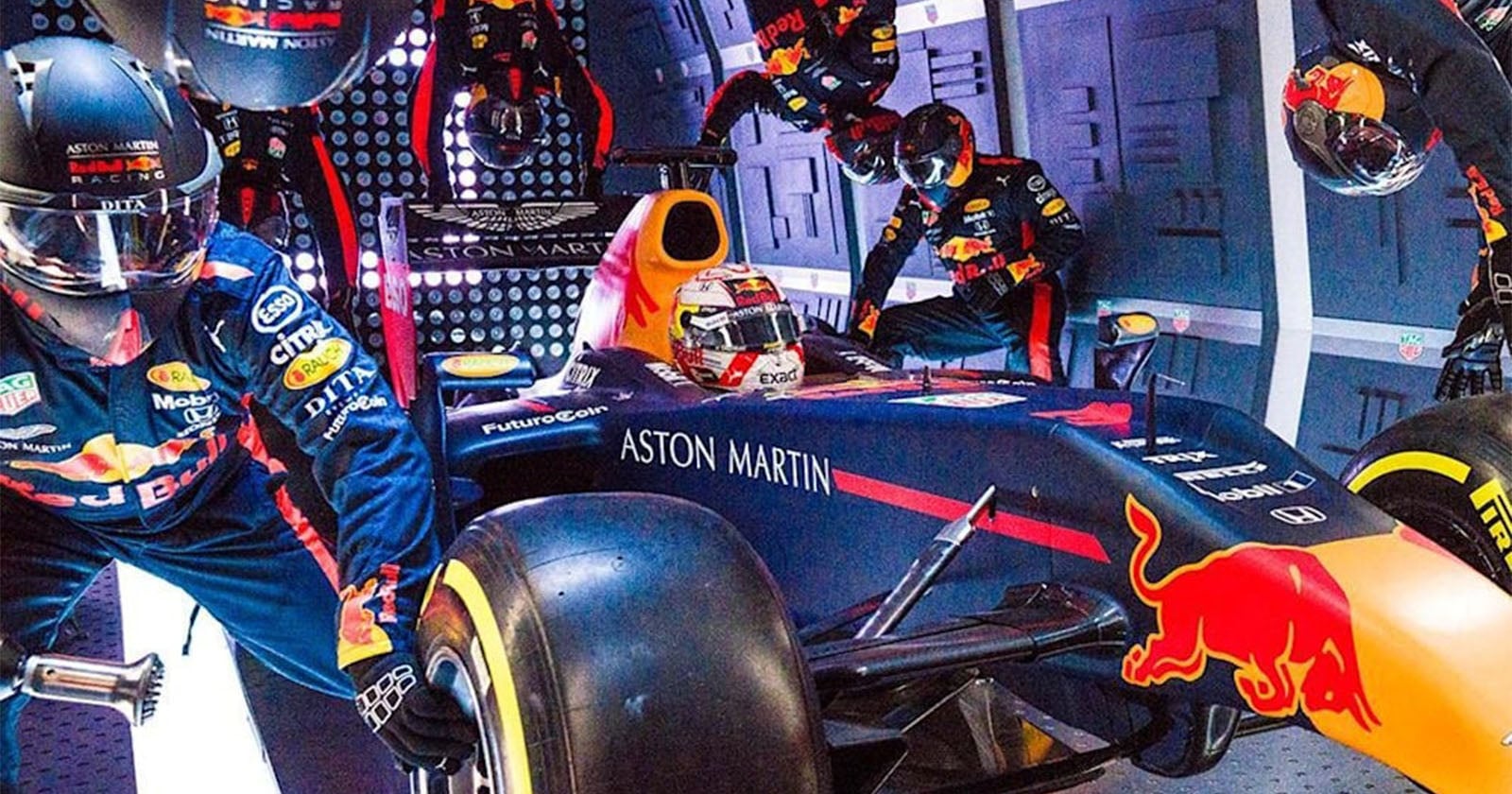
A Formula 1 pit stop, reimagined in zero gravity, is once again captivating audiences as Red Bull Racing resurfaces footage of the ambitious 2019 project coinciding with the start of the 2026 Formula 1 season. The visually stunning endeavor, executed inside a modified Ilyushin Il-76 MDK aircraft in collaboration with the Russian space agency Roscosmos, wasn’t simply a demonstration of visual effects, but a complex undertaking blending motorsport, aerospace physics, and filmmaking.
The project centered around recreating a pit stop – the rapid tire change and adjustments performed during a race – in a weightless environment. The challenge wasn’t merely aesthetic. it was fundamentally architectural. Inside the aircraft’s cargo bay, engineers constructed a bespoke rig to house a 2005 RB1 chassis, selected for its narrower dimensions and greater resilience compared to contemporary Formula 1 cars, maximizing space within the already crowded fuselage filled with lighting, cameras, and safety equipment. Every component had to withstand both the intense 2G forces experienced during ascent and the sudden transition to weightlessness.
Director Andreas Bruns employed an analog approach to pre-visualization, creating a full-scale Styrofoam mock-up in Russia to allow the pit crew and cosmonaut trainers to rehearse the choreography and movements required for the unique conditions. In zero gravity, traditional footwork became irrelevant; instead, mechanics focused on anchoring themselves to perform their tasks. Filming took place over seven flights and approximately 80 parabolic arcs, each providing roughly 22 seconds of weightlessness. This limited timeframe meant the production team had only around 15 seconds of usable footage per attempt, demanding meticulous planning and execution.
The technical demands extended to the cinematography. Bruns utilized Arri Alexa Mini cameras with anamorphic lenses to achieve a cinematic look, supplemented by DSLRs and action cameras for specific angles. Traditional filmmaking roles blurred as camera operators had to stabilize themselves mid-air, often tethered or wedged into position. A custom-built camera slider, combining motion control with safety features, was crucial to prevent equipment from becoming a projectile in the zero-gravity environment. Bruns described the aircraft as a “Sardine Can,” necessitating a storyline that overcame the spatial limitations and gradually revealed the full potential of the zero-gravity pit stop.
The physics of a pit stop fundamentally changed in the absence of gravity. On Earth, mechanics leverage their body weight against the ground. In zero-G, every action created an equal and opposite reaction, threatening to destabilize the entire operation. The solution involved inverting the crew and the car, creating opposing forces that provided stability. Mechanics secured themselves with foot straps, relying on ankle strength for resistance, resulting in a pit stop that appeared both precise and precarious.
The cinematography also had to adapt to the lack of a fixed horizon. Composition shifted to focus on motion, with the floating car serving as the only constant in a dynamic spatial field. Lighting fixtures were strategically rigged for both safety and aesthetic purposes, and shadows behaved differently without a gravitational reference point. Zero-G producer Dmitry Timonov noted the team installed over four tonnes of equipment and set constructions within the aircraft.
The project wasn’t without its physical challenges. The parabolic motion, whereas creating weightlessness, also induced disorientation, earning the Ilyushin Il-76 MDK the nickname “vomit comet.” Crew members underwent training, including exposure to roller coasters, to prepare for the G-forces, but adaptation varied. The vestibular system, accustomed to gravity, struggled to recalibrate during the brief periods of weightlessness.
Red Bull Racing has recently highlighted the Zero-G pit stop online, framing it not merely as a marketing spectacle, but as a continuation of the company’s history of ambitious and unconventional projects. The enduring appeal of the footage, as noted by Red Bull, lies in its authenticity – a testament to confronting the challenges of physics rather than relying on post-production manipulation.