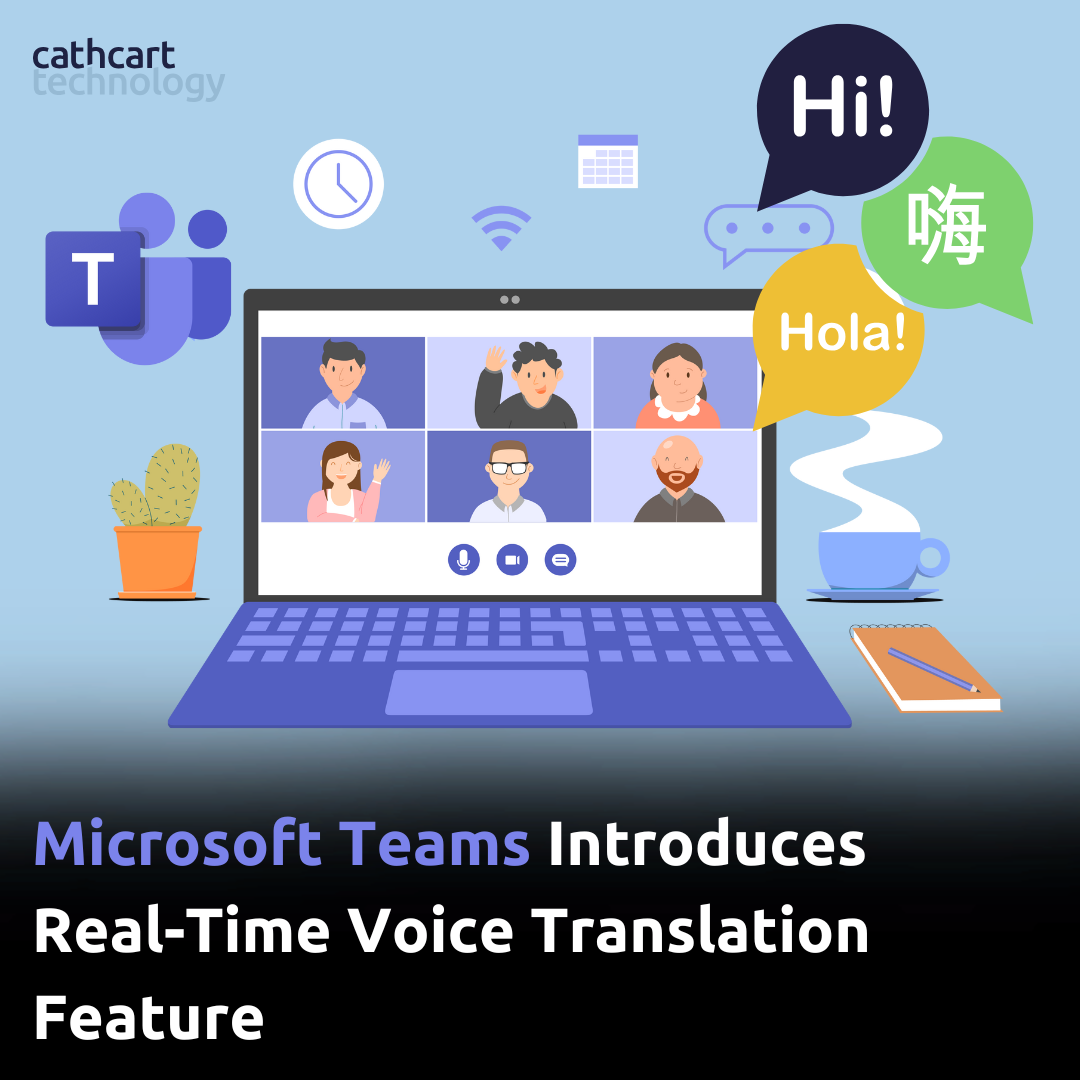
Real-Time Microsoft Teams Speech to Speech Translator for Seamless Collaboration
Microsoft has integrated a real-time speech-to-speech translation “Interpreter Agent” into Microsoft Teams, allowing participants to communicate across different languages with near-instantaneous audio overlays. According to Microsoft’s technical demonstrations, the system utilizes a pipeline of automatic speech recognition (ASR), machine translation (MT), and text-to-speech (TTS) synthesis to bridge linguistic gaps during live enterprise collaboration.
The Tech TL;DR:
- Latency: Reduces translation lag by processing speech in streaming chunks rather than waiting for full sentence completion.
- Deployment: Integrated directly into the Teams ecosystem, removing the need for third-party translation plugins.
- Enterprise Risk: Introduces new requirements for SOC 2 compliance and data residency regarding the processing of voice biometrics in the cloud.
The deployment of the Interpreter Agent solves a critical bottleneck in global operations: the “translation lag” that typically kills the flow of synchronous communication. Traditional translation tools often require a speaker to stop, allow a transcript to generate, and then read the result. Microsoft’s approach attempts to mimic a human interpreter by overlapping the translated audio, though this introduces significant challenges regarding audio ducking and packet loss in high-latency network environments.
How does the Interpreter Agent handle real-time latency?
The system relies on a sophisticated orchestration of Large Language Models (LLMs) and specialized neural networks. To minimize the “time to first token,” Microsoft utilizes streaming ASR. Instead of waiting for a complete utterance, the system predicts the end of a phrase and begins translating the initial segments of the sentence while the speaker is still talking. This is a move toward reducing the perceived latency that often plagues cloud-based speech services.

From an architectural standpoint, this requires massive compute overhead at the edge. For CTOs managing global infrastructure, this shift emphasizes the need for robust network optimization. Firms are increasingly relying on [Managed Service Providers] to optimize SD-WAN configurations to ensure that the voice-over-IP (VoIP) packets for these AI agents don’t suffer from jitter, which would result in “robotic” or fragmented audio output.
Translation Architecture Comparison
| Feature | Standard Live Captions | Interpreter Agent (S2S) | Human Interpreter |
|---|---|---|---|
| Output Mode | Text-only | Synthetic Audio | Natural Audio |
| Processing | Asynchronous | Streaming / Real-time | Simultaneous |
| Latency | Low (Visual) | Medium (Audio) | Low (Cognitive) |
| Accuracy | High (Contextual) | Variable (Nuance loss) | Highest |
What are the cybersecurity implications of cloud-based voice translation?
The primary risk involves the “blast radius” of sensitive data leakage. Because the Interpreter Agent must process voice data in the cloud to perform translation, the audio stream is effectively being intercepted and analyzed by a third-party AI model. This raises immediate questions about end-to-end encryption (E2EE). While Teams offers encrypted transit, the decryption happens at the translation layer.
According to Microsoft’s Trust Center, data is handled according to enterprise privacy agreements, but the risk of “prompt injection” or “model hallucination” in a business context—such as misinterpreting a legal term in a contract negotiation—remains a liability. Consequently, organizations are deploying [Cybersecurity Auditors] to perform rigorous data flow mapping to ensure that voice data processed by these agents doesn’t violate GDPR or HIPAA residency requirements.
For developers looking to integrate similar capabilities or audit the API triggers, the interaction typically follows a RESTful pattern via the Microsoft Graph API. A simplified request to manage meeting settings or check for available translation capabilities might look like this:
curl -X GET "https://graph.microsoft.com/v1.0/me/onlineMeetings" \
-H "Authorization: Bearer {access_token}" \
-H "Content-Type: application/json"
Why does this matter for the future of the enterprise stack?
The transition from “Captions” to “Interpreter” marks a shift from passive assistance to active agency. By removing the visual requirement (reading captions), Microsoft is targeting a “heads-up” workflow where the AI manages the cognitive load of translation. This is part of a broader trend toward NPU-driven (Neural Processing Unit) hardware, where more of this translation may eventually move from the cloud to the local device to eliminate latency and improve privacy.

However, the reality of deployment is often messier than the demo. Integration with existing Kubernetes-managed VoIP clusters or legacy PBX systems can create bottlenecks. This is why many enterprises are hiring [Software Development Agencies] to build custom middleware that can bridge these AI agents with proprietary internal communication tools.
The trajectory is clear: the “language barrier” is being replaced by a “latency barrier.” The winner in this space won’t be the company with the best dictionary, but the one with the most efficient inference pipeline and the lowest packet loss. As these agents evolve, the focus will shift from mere translation to cultural localization—adjusting tone and idiom in real-time to avoid diplomatic friction in high-stakes negotiations.
Disclaimer: The technical analyses and security protocols detailed in this article are for informational purposes only. Always consult with certified IT and cybersecurity professionals before altering enterprise networks or handling sensitive data.